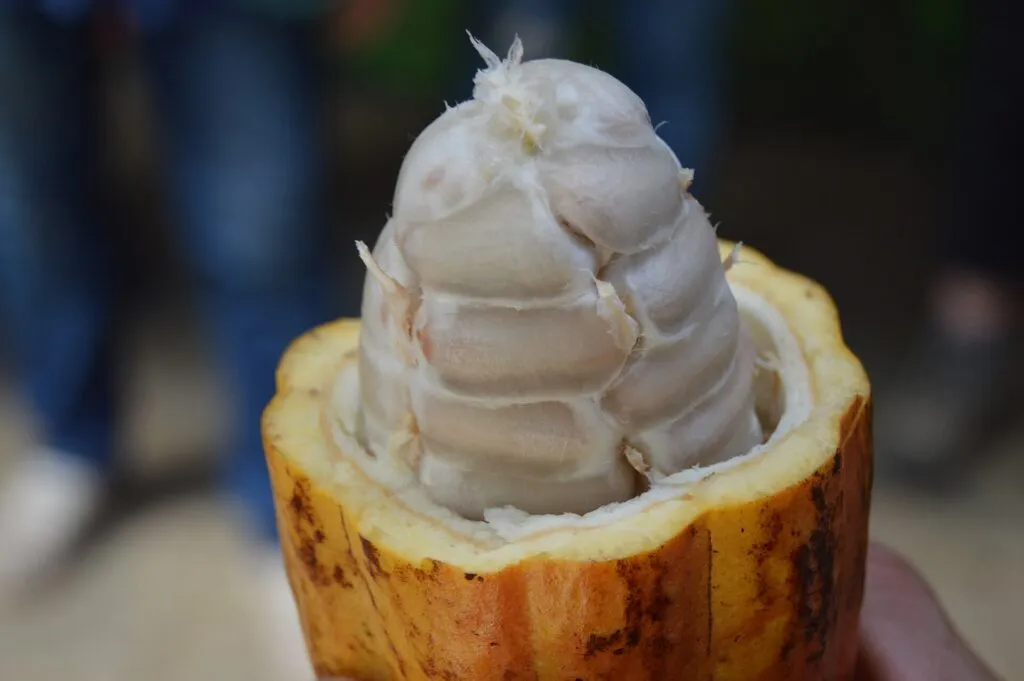
The guide splits a yellow cacao pod with a machete and hands you a seed still wrapped in white pulp. It tastes nothing like chocolate: sweet, sour and fruity, like lychee or mango. An hour later you are grinding roasted beans on a stone and tasting the same seeds as a cup of thick, bitter hot chocolate.
A chocolate tour in Costa Rica takes you from tree to bar in about two hours: you see cacao growing in the rainforest, taste the fresh fruit, learn how beans are fermented, dried and roasted, and usually make and taste your own chocolate. Most tours cost roughly USD 30–60 in 2026 and run in La Fortuna (Arenal), Monteverde, Puerto Viejo and the Caribbean coast, and Sarapiquí.
This guide explains what happens on a tour, which region to choose, how Costa Rica’s cacao history shaped what you see, how to pick a good tour, and dietary notes for families, vegans and halal-conscious visitors.
What Happens on a Chocolate Tour
- The cacao tree. You walk through a small farm or forest garden where cacao grows in the shade of taller trees, with pods sprouting straight from the trunk.
- The fruit. The guide opens a ripe pod, and you taste the sweet white pulp around the seeds.
- Fermentation and drying. You see how the seeds ferment in their pulp for several days, which develops the chocolate flavour, then dry in the sun.
- Roasting and grinding. Dried beans are roasted, peeled and ground, often on a traditional stone, into a thick paste.
- Tasting. You try the paste plain, then mixed with sugar, spices or chilli, often as a traditional hot chocolate drink, and finish with chocolate made on the farm.
Many tours let you make your own small bar or chocolate drink to take away. Some combine chocolate with coffee or sugar cane on the same farm.
Costa Rica’s Cacao History in Brief
Cacao has been grown in Costa Rica for centuries. Indigenous peoples, including the Bribri of the Talamanca region, used it in ceremonies, and cacao seeds were once valuable enough to be used as currency.
In colonial times the Caribbean lowlands, around Matina, were a centre of cacao growing. In the late 1970s a fungal disease known as frosty pod rot (monilia) swept through the country and destroyed most of the cacao crop. Many farmers switched to bananas and other crops, and only in recent decades have small farms revived cacao, often for tourism and fine chocolate.
That history is why many tours today take place on small family farms and forest gardens rather than large plantations.
Where to Take a Chocolate Tour
| Region | What it is like | Combine with |
|---|---|---|
| La Fortuna (Arenal) | The most tours and the easiest logistics; farms a short taxi ride from town | Arenal Volcano, hot springs, coffee tours |
| Monteverde | Cloud-forest farms, often combined with coffee and sugar cane | Cloud-forest reserves, hanging bridges |
| Puerto Viejo and Talamanca (Caribbean coast) | Bribri Indigenous-led cacao tours with traditional preparation and culture | Cahuita National Park, beaches |
| Sarapiquí | Farms in the lowland rainforest, often linked to river and wildlife trips | Rafting, rainforest walks |
| Central Pacific and Mastatal | Small family farms and craft chocolate makers | Manuel Antonio, the central valley |
Travellers on forums often ask whether to do their chocolate or coffee tour in La Fortuna or Monteverde. Both are good: La Fortuna has more chocolate-focused farms, while Monteverde is stronger for coffee. If you are visiting the Caribbean coast, an Indigenous-led tour in Talamanca offers the deepest cultural context.
How to Choose a Good Tour
- Look for a working farm, not only a demonstration room. Seeing trees, fermentation boxes and drying racks makes the process real.
- Check the group size. Smaller groups mean more hands-on time and better questions.
- Choose Indigenous-led or family-run tours when you can; more of your money stays in the community.
- Ask what is included: transport, tasting, a bar to take home, coffee or lunch.
- Read recent reviews for how hands-on the tour is, especially if you are travelling with children.
Tips for the Day
- Wear closed shoes and insect repellent; farms can be muddy and buggy.
- Bring a rain jacket in the green season, roughly May to November.
- Morning tours are cooler and often less crowded.
- Bring cash in colones or US dollars for chocolate to buy at the end; prices for farm chocolate are usually fair compared with souvenir shops.
- Book ahead in the busy dry season, roughly December to April.
Dietary, Family and Halal Notes
Halal note: chocolate tours are generally easy for Muslim visitors. Cacao, sugar and spices are plant-based, and the fermentation of cacao seeds is part of making the beans, not of making a drink; chocolate is widely accepted as halal. Some tours end with a tasting that includes cacao liqueur, chocolate with rum, or a sip of the local cane spirit guaro; you can simply skip it, or ask before booking. Milk chocolate and some fillings may contain dairy or, rarely, gelatin. If lunch is included, ask for a vegetarian or fish option, because meat at ordinary places is not halal-slaughtered. See our halal food travel guide.
- Children: most tours welcome families, and making chocolate is a hit with kids. Ask about minimum ages for longer forest walks.
- Vegans: pure dark chocolate and traditional cacao drinks are usually dairy-free; ask about milk in the tasting.
- Gluten-free: chocolate itself is gluten-free; check any snacks served with it.
- Caffeine: cacao contains caffeine and theobromine; strong tastings can affect sensitive people.
Cacao Tours Elsewhere in Latin America
If you love the experience, other countries offer it too: Ecuador and Peru are famous for fine-flavour cacao, Mexico’s Tabasco and Chiapas are where chocolate drinking began, and Belize and Grenada have well-known farm tours. Each has its own varieties and traditions.
For more South American food, see Amazonian food, where cacao’s wild relatives grow, and alfajores, a chocolate-coated favourite.
What It Costs in 2026
| Tour | Typical price |
|---|---|
| Standard chocolate tour (1.5–2 hours) | About USD 30–45 per adult |
| Coffee and chocolate combination tour | About USD 45–70 |
| Tour with lunch or transport included | About USD 55–100 |
| Bar of farm-made chocolate | About USD 5–10 |
Plan your budget with our food budget calculator and check tipping customs for guides in our tipping guide.
Frequently Asked Questions
Is a chocolate tour in Costa Rica worth it?
Yes, for most visitors. It is a short, hands-on activity that combines nature, history and tasting, and works well on a rainy day or with children.
How long is a chocolate tour?
Most last 1.5 to 2.5 hours. Combination tours with coffee or lunch can take half a day.
Which is better, a chocolate tour in La Fortuna or Monteverde?
La Fortuna has more dedicated chocolate tours; Monteverde is better known for coffee and often combines both. Choose based on where you are staying.
What does raw cacao fruit taste like?
The white pulp around the seeds is sweet and tangy, often compared to lychee, mango or citrus. The seeds themselves are bitter until fermented and roasted.
Is cacao the same as cocoa?
Both come from the same plant. Cacao usually refers to the tree, pods and minimally processed beans; cocoa usually refers to roasted, processed powder and products.
Do Costa Rica chocolate tours include tasting?
Almost always, from fresh pulp to roasted nibs, paste, hot chocolate and finished chocolate. Some include making your own bar.
Are chocolate tours good for kids?
Yes. Most are family-friendly and very hands-on. Check walking distances and minimum ages for longer forest tours.
Is chocolate halal?
Plain chocolate made from cacao, sugar and cocoa butter is widely accepted as halal. Check labels for alcohol-based flavourings, liqueur fillings and gelatin.
Why is fermentation part of chocolate making?
Fermenting the seeds in their pulp for several days kills the seed and starts chemical changes that create chocolate flavour. Without it, beans taste flat and bitter.
Can I bring Costa Rican chocolate home?
Yes. Packaged chocolate is fine in luggage for most countries. Raw cacao pods and fresh seeds may be restricted by plant import rules.
When is cacao harvest season in Costa Rica?
Cacao trees produce pods for much of the year, with main harvests varying by region. Tours run year-round.
What should I wear on a chocolate tour?
Comfortable closed shoes, light clothing, insect repellent and a rain jacket in the green season.
Do I need to book in advance?
In the dry season and holidays, yes, especially for small Indigenous-led tours. In quieter months you can often book a day or two ahead.
More from the region: all Latin America and Caribbean food guides.
Sources
- Chocolate tours in Costa Rica, Go Visit Costa Rica (history, tour types)
- Coffee and chocolate tours in La Fortuna, 22places (tour lengths and prices)
- La Iguana Chocolate, family cacao farm in Mastatal