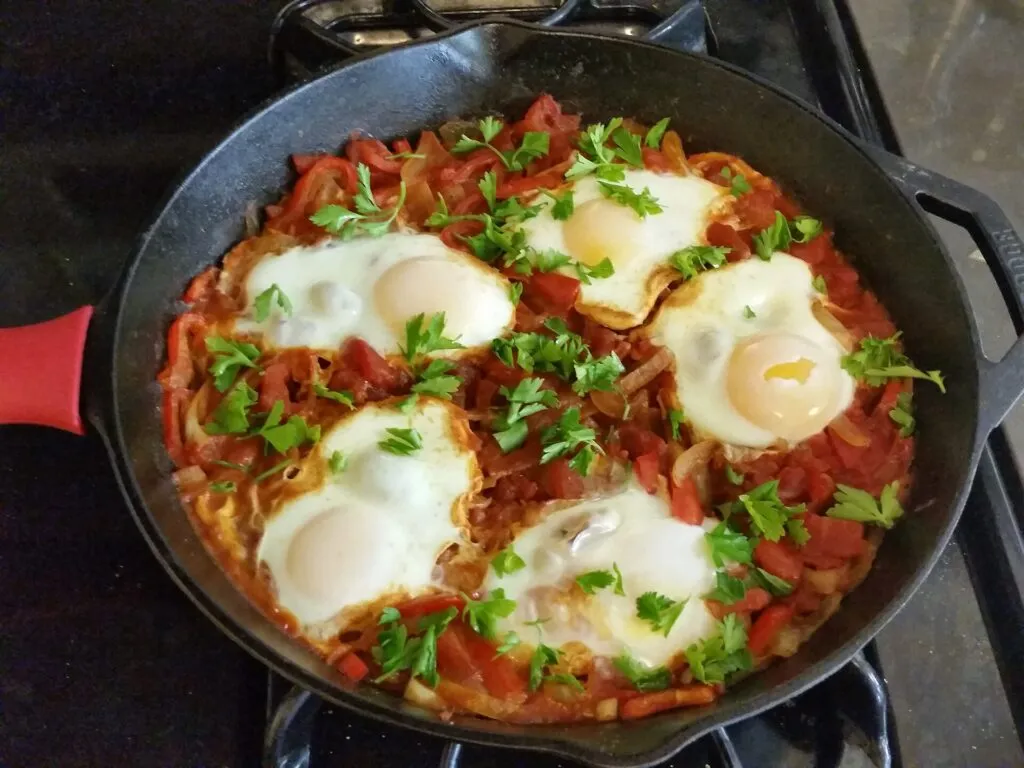
Shakshuka arrives still bubbling, in the pan it was cooked in. A thick red sauce of tomatoes and peppers, three or four eggs set into it with the yolks still soft, a dusting of paprika, and a basket of bread to tear and dip.
Shakshuka is eggs poached in a spiced tomato and pepper sauce, a dish from North Africa that became a breakfast and lunch favourite in Tel Aviv and across the Middle East. In Tel Aviv-Jaffa it is served in cafés and breakfast spots, with the old port of Jaffa especially known for it. In 2026 a pan costs roughly ₪45–75. Classic shakshuka is vegetarian (eggs and vegetables), which makes it an easy choice for Muslim travellers; check versions with added sausage.
This guide covers where shakshuka comes from, what is in it, the versions you will see, how to eat it, where to go, prices and phrases in Hebrew and Arabic.
A North African dish
Shakshuka is cooked across the Maghreb, especially in Tunisia, Libya and Algeria, where versions go by similar names. Jewish families from North Africa brought it to Israel, where it became a national breakfast.
The name is often said to come from a word meaning “mixed up”. Whatever the origin, the method is the same everywhere: cook down the sauce, make wells, crack in the eggs, cover and wait.
What is in it
- Tomatoes, fresh or tinned, cooked down until thick.
- Red peppers and sometimes chilli.
- Onion and garlic in olive oil.
- Cumin and paprika; sometimes caraway or harissa.
- Eggs poached in the sauce until the whites set.
- Fresh herbs on top: coriander or parsley.
Versions you will see
| Version | What it adds | Halal check |
|---|---|---|
| Classic red | Tomato, pepper and spices | Usually fine |
| Green shakshuka | Spinach, chard and herbs instead of tomato, often with feta | Usually fine; rennet in cheese varies |
| With feta or labneh | Salty cheese or strained yoghurt on top | Usually fine |
| With aubergine | Fried aubergine in the sauce | Usually fine |
| With merguez | Spicy North African sausage | Meat not halal unless the restaurant is |
How to eat it
- Eat straight from the pan, which stays hot.
- Tear bread (challah, pita or a crusty loaf) and dip it into the sauce and yolk.
- Pair it with an Israeli salad of chopped cucumber and tomato, tahini and hummus.
- Share: one pan with salads and bread is a big meal for one.
Halal note: classic shakshuka contains eggs, vegetables and spices, with no meat or alcohol. Versions with merguez or other meat are not halal unless the restaurant serves halal meat; in this guide we do not treat kosher meat as halal. Jaffa has a long-established Arab community with Arab bakeries and restaurants, where asking for halal is straightforward. See our halal food travel guide.
Where to eat it
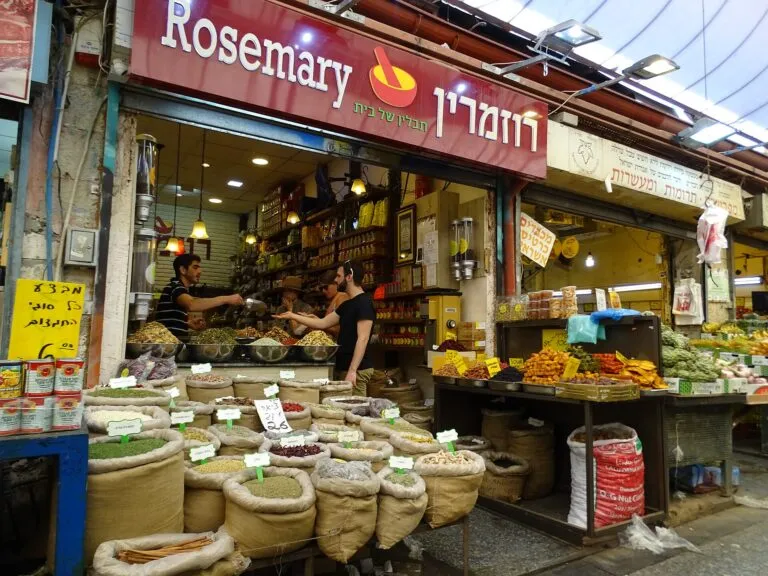
- Jaffa’s old town and flea market area – long-running shakshuka restaurants and cafes, and historic bakeries such as Abouelafia, open since the 19th century, for bread and pastries.
- Tel Aviv breakfast cafés – shakshuka is on almost every breakfast menu, especially around Carmel Market and the Florentin neighbourhood.
- Hotel breakfasts – many hotels serve it at the breakfast buffet.
Many cafés close or change hours on Friday afternoon and Saturday; Jaffa’s Arab-run places often stay open. Check before going.
Make it at home
- Soften a sliced onion and a chopped red pepper in olive oil.
- Add 2 crushed garlic cloves, 1 tsp cumin and 1 tsp paprika; stir for a minute.
- Add 800 g chopped tomatoes and a pinch of sugar and salt. Simmer 10–15 minutes until thick.
- Make four wells and crack in four eggs. Cover and cook on low heat for 5–8 minutes.
- Top with herbs and serve with bread.
What it costs (2026)
| Order | Typical price |
|---|---|
| Shakshuka at a café | About ₪45–75 |
| Breakfast set with shakshuka, salads and bread | About ₪60–95 |
| Bread or pita from a bakery | About ₪5–15 |
Plan your budget with the food budget calculator and check tipping customs.
Phrases
| Hebrew | Arabic | Meaning |
|---|---|---|
| Ze halal? (זה חלאל?) | Hal hādhā ḥalāl? (هل هذا حلال؟) | Is this halal? |
| Yesh ba-ze chazir? (יש בזה חזיר?) | Fīh khanzīr? (فيه خنزير؟) | Is there pork in it? |
| Shakshuka, bevakasha | Shakshouka, min fadlak | Shakshuka, please |
| Bli basar | Bidūn laḥm | Without meat |
Frequently asked questions
Where does shakshuka come from?
North Africa, especially Tunisia and Libya. It became hugely popular in Israel and across the Middle East.
Is shakshuka halal?
The classic version is vegetarian: eggs, tomatoes, peppers and spices. Versions with merguez or other meat need a halal source.
How much is shakshuka in Tel Aviv?
About ₪45–75 in 2026.
What do you eat with shakshuka?
Bread for dipping, salads, tahini and hummus.
More from the region: tagine in Casablanca, koshari in Cairo and baklava in Istanbul. See all Middle East food guides.
Sources
- Shakshouka – origins and versions.
- Jaffa – history of the old port city.