The first meal in a new country is often the hardest. You are hungry, the menu is in a language you cannot read, and you are not sure what is in the sauce.
To eat halal while travelling, look for a recognised halal certificate or the local halal sign, eat in Muslim neighbourhoods and near mosques, fall back on seafood and vegetarian dishes where halal meat is hard to find, and learn three questions in the local language: “Is this halal?”, “Does this contain pork?” and “Is there alcohol in it?” Halal food is easy to find in Muslim-majority countries and in cities with large Muslim communities such as London, Paris, Amsterdam and Singapore; it takes more planning in Japan, Korea, much of China, southern Europe and Latin America.
This guide explains what to check, the hidden ingredients that catch travellers out, how halal signs work in different countries, the phrases you need in 12 languages, and which destinations are easy or hard.
What “halal” means when you are travelling
At home you rarely think about it. Abroad, four things matter most.
- Meat and poultry must come from a halal animal slaughtered the Islamic way. In non-Muslim countries, meat at an ordinary restaurant is usually not halal-slaughtered, even if it is beef or chicken.
- Pork and its products are never halal: ham, bacon, lard, pork stock, pork gelatin.
- Alcohol is avoided in drinks and, for most Muslims, in cooking too: wine sauces, beer batter, rum in desserts, mirin and sake in Japanese food.
- Cross-contamination: the same grill, fryer or oil used for pork. Strictness here varies from person to person.
Seafood is a special case. Most schools accept all seafood; the classical Hanafi position limits it to fish. Our guides feature seafood freely, with a note where it matters. If you are unsure, ask your own scholar.
How sure can you be? Four levels of certainty
| Where you eat | How sure | What to do |
|---|---|---|
| A certified halal restaurant (valid certificate or official logo) | Highest | Check the certificate date and the name match |
| A Muslim-owned restaurant without a certificate | Usually reliable | Ask where the meat comes from |
| Seafood or vegetarian dishes at an ordinary restaurant | Reasonable | Ask about wine, lard, stock and shared fryers |
| Meat at an ordinary restaurant in a non-Muslim country | Not halal | Choose fish or vegetables, or go elsewhere |
Hidden ingredients that catch travellers out
Pork and wine are easy to spot on a menu. These are not.
| Ingredient | Where it hides | Why it matters |
|---|---|---|
| Lard (pork fat) | Pastry, tamales, refried beans, some bread and cakes | Pork |
| Gelatin | Gummy sweets, mousse, cheesecake, marshmallow, some yoghurts | Often pork-derived unless labelled halal or fish/beef |
| Pork stock or bones | Ramen, pho, soups, Chinese dumplings | Pork, even in “vegetable” dishes |
| Wine, sake, mirin, rice wine | French sauces, Japanese glazes and broths, Chinese stir-fries | Alcohol in cooking |
| Rum, kirsch, marsala, brandy | Desserts: tiramisu, Black Forest cake, canelés, cannoli fillings | Alcohol in sweets |
| Beer | Batter for fish, stews in Belgium, Ireland and Germany | Alcohol in cooking |
| Bacon bits, lardons, pancetta, chorizo | Salads, pizzas, pasta, tarts, stews | Pork added as flavouring |
| E120 (carmine), E441 (gelatin), E471 | Packaged food | Animal or insect origin; check labels or halal logos |
Vanilla extract and animal rennet in cheese are areas where scholars differ. Decide your own line before you travel, so you are not deciding at every meal.
Before you go
- Map the Muslim neighbourhoods of the cities you will visit. Most large cities have one or more, often around the main mosque.
- Download a halal restaurant app such as Zabihah or HalalTrip and read recent reviews, since restaurants change hands.
- Book the right flight meal. Most airlines offer a Muslim meal (code MOML) if you request it at least 24–48 hours before departure.
- Choose hotels near halal food, or with a kitchen, if you are staying somewhere halal food is scarce.
- Pack a few snacks for long travel days: dates, nuts, halal-certified bars.
- Save the key phrases (below) on your phone, in the local script if it is not the Latin alphabet.
Halal signs and certification around the world
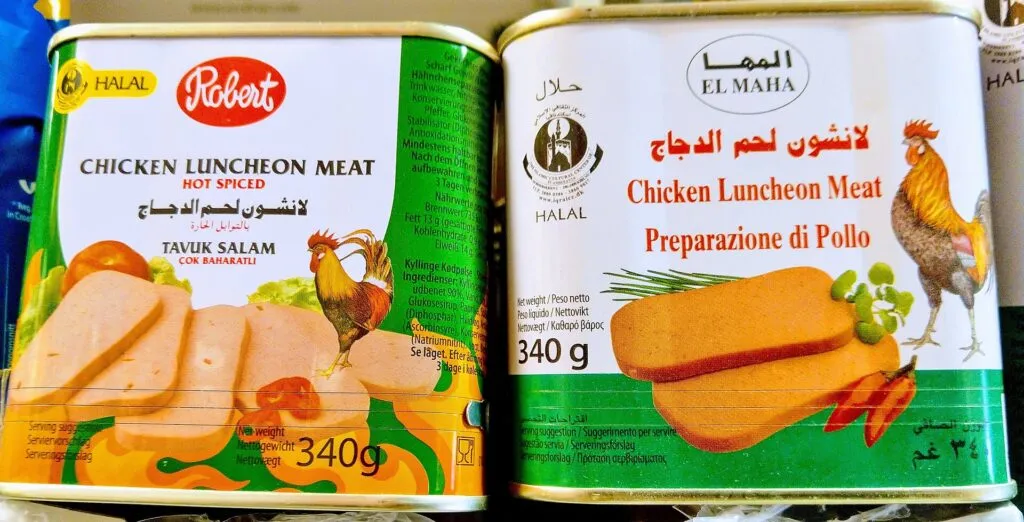
Halal logos are issued by national or private bodies. Trust the ones you recognise, and when in doubt, ask to see the certificate.
| Country or region | What to look for |
|---|---|
| Malaysia | The JAKIM halal logo, issued by the government’s Department of Islamic Development |
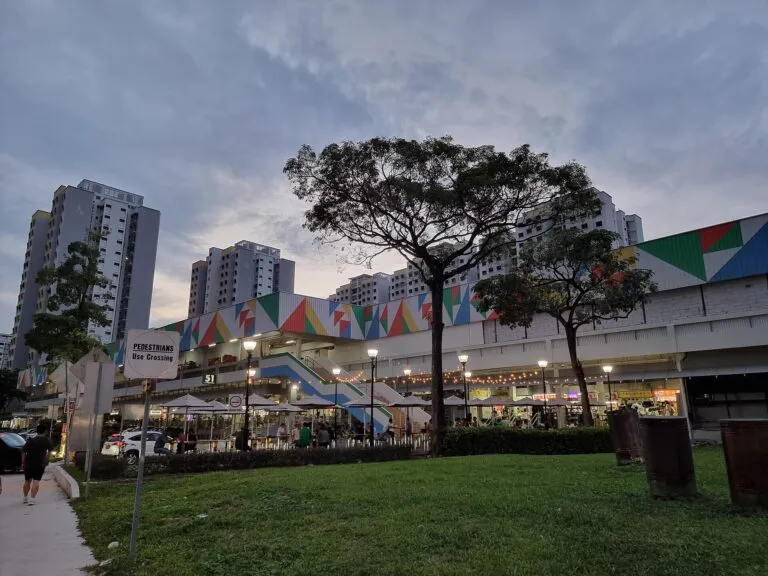
| Singapore | The MUIS halal logo; hawker centres mark certified stalls |
| Indonesia | The national halal label issued by BPJPH |
| Thailand | The halal logo of the Central Islamic Committee of Thailand (CICOT) |
| China | The word 清真 (qīngzhēn) on the sign, often in green, sometimes with Arabic script |
| South Korea | Certification from the Korea Muslim Federation (KMF); Seoul’s Itaewon has the most choice |
| Japan | Several private certifiers; also “Muslim-friendly” menus, which are not the same as certified |
| United Kingdom | HMC or HFA certification, plus many Muslim-owned restaurants in most cities |
| United States | Certifiers such as IFANCA; many independent halal butchers and restaurants |
| Europe | Several private certifiers per country; Turkish, North African and South Asian restaurants are the usual halal options |
“Muslim-friendly” is not “halal”. In Japan, Korea and parts of Europe, a “Muslim-friendly” label usually means no pork or alcohol in the dish, not that the meat is halal-slaughtered. Ask which one they mean.
The phrases you need in 12 languages
| Language | Is this halal? | Does this contain pork? | Is there alcohol in it? |
|---|---|---|---|
| French | C’est halal ? | Il y a du porc ? | Il y a de l’alcool ? |
| Spanish | ¿Es halal? | ¿Lleva cerdo? | ¿Lleva alcohol? |
| Italian | È halal? | C’è maiale? | C’è alcol? |
| Portuguese | É halal? | Tem porco? | Tem álcool? |
| German | Ist das halal? | Ist da Schweinefleisch drin? | Ist da Alkohol drin? |
| Dutch | Is dit halal? | Zit er varkensvlees in? | Zit er alcohol in? |
| Polish | Czy to jest halal? | Czy to zawiera wieprzowinę? | Czy jest w tym alkohol? |
| Japanese | ハラールですか? (Harāru desu ka?) | 豚肉は入っていますか? (Butaniku wa haitte imasu ka?) | お酒は入っていますか? (Osake wa haitte imasu ka?) |
| Korean | 할랄이에요? (Hallal-ieyo?) | 돼지고기 들어가요? (Dwaejigogi deureogayo?) | 술 들어가요? (Sul deureogayo?) |
| Mandarin | 清真吗? (Qīngzhēn ma?) | 有猪肉吗? (Yǒu zhūroù ma?) | 有酒吗? (Yǒu jiǔ ma?) |
| Thai | ฮาลาลไหม (Halal mai?) | มีหมูไหม (Mee moo mai?) | มีเหล้าไหม (Mee lao mai?) |
| Vietnamese | Có halal không? | Có thịt heo không? | Có rượu không? |
Showing the words on your phone often works better than saying them. Staff can read the question and point to safe dishes.
Where halal food is easy, and where it takes planning
Easy: halal is the default
Malaysia, Indonesia, Türkiye, the Gulf states, Egypt, Morocco, Pakistan, Bangladesh and most of Central Asia. Here the question flips: you only need to check hotel bars and international chains. Start with what to eat in Bangladesh, koshari in Cairo or plov in Samarkand.
Good: large Muslim communities
The UK, France, the Netherlands, Belgium, Germany, Singapore, and big cities in India, the US, Canada and Australia. Halal restaurants are common, especially Turkish, North African, South Asian and Middle Eastern ones. In India, cities such as Hyderabad and Kolkata make halal meat easy to find.
Harder: plan ahead
Japan, South Korea, most of China, Thailand outside the south and the Muslim areas of Bangkok, Vietnam, Italy, Spain, Poland and much of Latin America. Pork is central to many local dishes. Plan halal restaurants in advance, and lean on seafood and vegetarian food in between. Useful guides: reading Japanese konbini labels, halal street food in Bangkok and halal stalls in Singapore hawker centres.
Famous dishes and what Muslim travellers should know
Some of the world’s best-known foods are usually made with pork or alcohol. Our guides explain what is in them and what to eat instead.
- Xiaolongbao in Shanghai: pork filling and pork-stock soup; eat beef or lamb dumplings at 清真 restaurants instead.
- Tarte flambée in Alsace: order it sans lardons, or choose cheese and mushroom versions.
- Escargots in Burgundy: snails are treated as not halal, and many Burgundy dishes are cooked in wine.
- Żurek in Poland: usually pork; ask for meat-free Żurek postny.
- Rijsttafel in Amsterdam: learn the word babi (pork) before you order.
And some that are naturally easy: kacchi biryani in Dhaka, fuchka, Delhi chaat (vegetarian), Kolkata kathi rolls and baklava in Istanbul.
Hotel breakfasts, buffets and street food
- Buffets: look for labels, and ask which sausages and bacon are pork, beef or turkey. Eggs, bread, fruit, yoghurt and cheese are usually the safest choice.
- Street food: in Muslim-majority countries it is usually fine. Elsewhere, fried snacks may share oil with pork, and “vegetable” soups may use pork stock.
- Fast-food chains: the same brand can be halal in one country and not in the next. Check the national website or the store sign.
- Bakeries: most bread is fine, but pastries can contain lard, and desserts can contain gelatin or alcohol.
Travelling in Ramadan
In Muslim-majority countries, restaurants may close during the day and open with a rush at sunset. Evening food markets are at their best: think haleem in Hyderabad or iftar stalls in Old Dhaka.
In non-Muslim countries, daytime life goes on as normal. Look up local iftar times and mosque iftars, which often welcome travellers.
Budget and tipping
Halal restaurants are often cheaper than tourist restaurants, especially Turkish, South Asian and North African places. Plan your daily food spend with our food travel budget calculator, and check local customs in the tipping and restaurant etiquette guide.
Frequently asked questions
How do I find halal food in a non-Muslim country?
Search for halal restaurants in advance with an app, eat in Muslim neighbourhoods near mosques, look for the local certification logo, and choose seafood or vegetarian dishes where halal meat is not available.
Is seafood halal?
Most schools accept all seafood. The classical Hanafi position accepts fish only. Follow your own school, and check that seafood is not cooked in wine or with pork.
Is vegetarian food always halal?
Not always. Check for alcohol in sauces, gelatin in desserts, animal rennet in cheese, and pork stock or lard in “vegetable” dishes.
Is kosher food halal?
Scholars differ, and many Muslims do not treat kosher meat as halal. Kosher does exclude pork, but it can include alcohol. Decide according to your own school.
Sources
- JAKIM Halal Malaysia – Malaysia’s official halal portal.
- MUIS Halal – Singapore’s halal certification authority.
- Halal – overview of rules and schools.