Walk into a Singapore hawker centre at lunchtime and you face a wall of noise and choice: dozens of stalls, each doing one thing, a sea of shared tables, and packets of tissues sitting on empty seats. That last detail matters: the seat is taken.
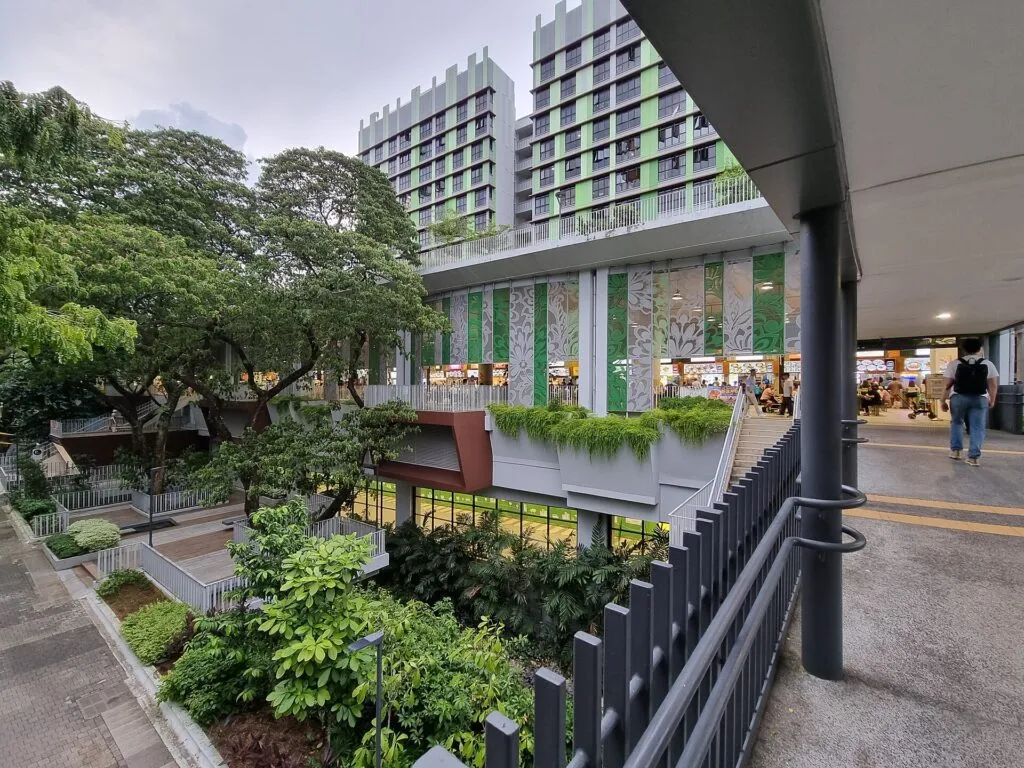
Hawker centres are Singapore’s open-air food courts: dozens of small stalls selling cheap, cooked-to-order local dishes such as chicken rice, laksa, nasi lemak, satay and roti prata, with shared seating. Well-known ones include Maxwell Food Centre, Lau Pa Sat, Tekka Centre, Old Airport Road and Geylang Serai. In 2026 most dishes cost roughly S$4–8. Singapore is one of the easiest places in Asia to eat halal: stalls certified by MUIS display a halal certificate, and Malay and Indian-Muslim stalls are in every centre.
This guide explains the dishes, how to spot halal stalls, hawker etiquette, where to go, prices and the words you will hear.
Why hawker centres matter
In the 1960s and 70s Singapore moved street vendors into purpose-built centres with running water and proper licensing. They became the country’s everyday dining rooms.
In 2020 UNESCO added Singapore’s hawker culture to its list of intangible cultural heritage.
Dishes to know
| Dish | What it is | Halal check |
|---|---|---|
| Hainanese chicken rice | Poached chicken with fragrant rice, chilli and ginger sauces | Halal at certified stalls; many famous stalls are not |
| Nasi lemak | Coconut rice with sambal, fried fish or chicken, egg, peanuts and anchovies | Usually halal at Malay stalls |
| Satay | Grilled skewers with peanut sauce | Halal at Malay stalls; some Chinese stalls sell pork satay |
| Roti prata | Crisp flatbread with curry | Usually halal at Indian-Muslim stalls |
| Mee goreng and nasi biryani | Fried noodles; spiced rice with meat | Usually halal at Indian-Muslim stalls |
| Laksa | Spicy coconut noodle soup with seafood | Check: some use pork or cockles; halal versions exist |
| Char kway teow | Wok-fried flat noodles | Often cooked in lard with Chinese sausage: usually not halal |
| Bak kut teh | Pork rib soup | Pork: not halal |
| Kaya toast | Toast with coconut jam and butter, with soft eggs | Usually fine |
Halal note: look for the MUIS halal certificate displayed at the stall. A sign saying “no pork, no lard” is not the same as halal certification. Malay and Indian-Muslim stalls are in almost every centre, and some centres, like Geylang Serai and Tekka, have many. Seafood: most schools accept all seafood; the classical Hanafi view accepts fish only. See our halal food travel guide.
Hawker etiquette
- Find a seat first at busy times. Locals “chope” (reserve) a table by leaving a tissue packet on it; do not sit where one is placed.
- Order at the stall. Some stalls bring food to your table if you give the table number; others ask you to wait.
- Pay when you order, in cash or increasingly by card or QR code.
- Return your tray and crockery to the return points. It is expected, and there are rules to enforce it.
- Share tables. It is normal to sit with strangers.
Where to go
- Maxwell Food Centre – in Chinatown, famous for chicken rice; busy at lunch.
- Lau Pa Sat – a Victorian cast-iron market in the business district; the street outside becomes a satay street in the evening.
- Tekka Centre – in Little India, full of Indian-Muslim stalls: biryani, prata, curries.
- Geylang Serai Market – the heart of Malay food in Singapore, especially lively in Ramadan.
- Old Airport Road Food Centre – a big, local favourite with many famous stalls.
- Adam Road Food Centre – known for Malay nasi lemak.
Many stalls close one day a week, and popular ones sell out. Go early for lunch (before noon) or dinner (before 7pm).
Drink orders decoded
| Say | You get |
|---|---|
| Kopi | Coffee with condensed milk |
| Kopi O | Black coffee with sugar |
| Kopi C | Coffee with evaporated milk and sugar |
| Teh / Teh O / Teh C | The same options with tea |
| Siu dai / kosong | Less sugar / no sugar |
| Peng | Iced |
| Teh tarik | “Pulled” frothy milk tea, at Indian-Muslim stalls |
| Dabao | Takeaway |
What it costs (2026)
| Item | Typical price |
|---|---|
| Chicken rice or nasi lemak | About S$4–7 |
| Roti prata (two pieces with curry) | About S$3–5 |
| Laksa or noodle dishes | About S$5–8 |
| Satay (10 sticks) | About S$8–12 |
| Kopi or teh | About S$1.50–2.50 |
Plan your budget with the Singapore food budget calculator. No tipping or service charge at hawker stalls; see tipping in Singapore.
Frequently asked questions
What is a hawker centre?
An open-air food court with many small stalls selling cheap local dishes and shared seating.
How do I find halal food at a hawker centre?
Look for the MUIS halal certificate at the stall. Malay and Indian-Muslim stalls are common; “no pork, no lard” is not the same as certified.
How much does hawker food cost?
About S$4–8 per dish in 2026.
What does “chope” mean?
To reserve a seat, usually with a tissue packet left on the table.
For a splurge, try chilli crab. See all Asia food guides.
Sources
- Visit Singapore – Singapore Tourism Board.
- UNESCO: Hawker culture in Singapore and MUIS Halal.