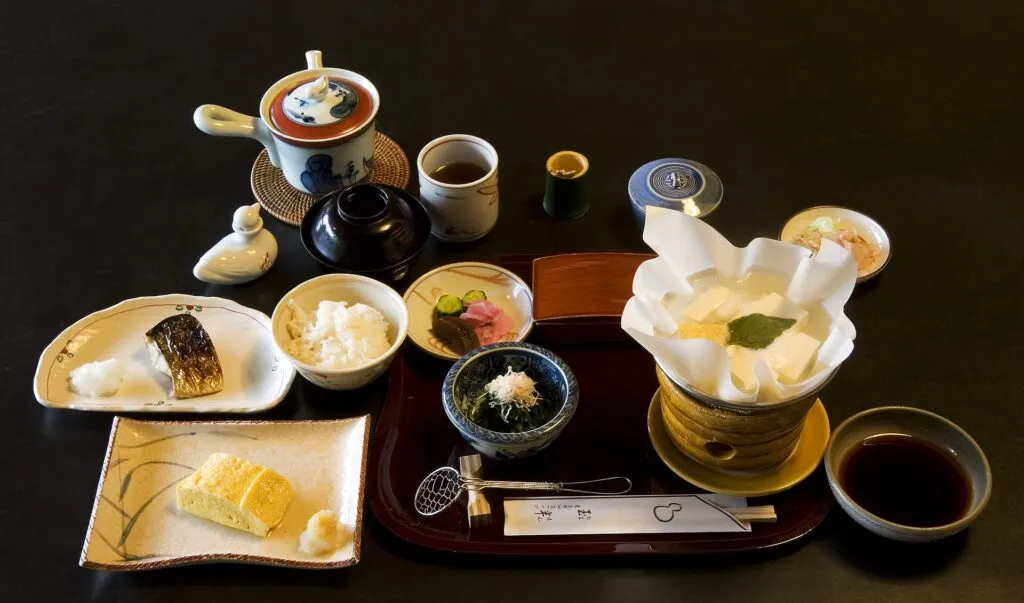
A kaiseki dinner unfolds slowly, one small dish at a time. A single autumn leaf on a lacquer tray, a bite of sesame tofu, a clear soup with a floating flower of carrot, a few slices of sashimi on ice. Each plate is chosen for the season and the tableware as much as the taste.
Kaiseki is Japan’s traditional multi-course dinner: a sequence of small, seasonal dishes (raw, simmered, grilled, steamed) served in a set order, most famously in Kyoto restaurants and in ryokan (traditional inns). In 2026 dinner typically costs roughly ¥10,000–40,000 per person, and much more at top restaurants. Kaiseki relies on dashi (fish and kelp stock), which is fine for most Muslims, but also on mirin and sake in cooking; some Kyoto restaurants and ryokan offer Muslim-friendly or halal kaiseki if you book ahead.
This guide explains the courses, etiquette, where to experience kaiseki, how to arrange a halal-friendly version, prices and phrases.
The courses
| Course | Japanese | What it is |
|---|---|---|
| Appetiser | Sakizuke | A small bite to open the meal |
| Seasonal platter | Hassun | Several small items showing the season |
| Sashimi | Mukozuke | Raw fish, beautifully presented |
| Simmered dish | Takiawase / nimono | Vegetables, fish or tofu simmered in dashi |
| Grilled dish | Yakimono | Often fish, sometimes wagyu |
| Steamed or soup | Mushimono / suimono | Delicate steamed custard or clear soup |
| Rice, pickles and miso soup | Gohan, konomono, tomewan | The end of the savoury meal |
| Dessert | Mizumono | Seasonal fruit or a small sweet |
Etiquette
- Take your shoes off where indicated; some rooms have tatami floors and low tables.
- Wait for each dish to be explained; the order matters.
- Lift small bowls to your mouth; this is polite.
- Never stick chopsticks upright in rice or pass food chopstick to chopstick.
- Do not wear strong perfume; it interferes with the delicate flavours.
- Photography is usually fine, but ask first.
Halal note: kaiseki uses dashi made from bonito (fish) and kelp, which most Muslims accept, but also mirin, sake and sometimes meat that is not halal. When booking, ask for a Muslim-friendly or halal kaiseki with no pork, no alcohol in cooking and fish or halal meat only. Kyoto and Tokyo have a growing number of restaurants and ryokan that can do this with notice. See our halal food travel guide and our guide to reading Japanese food labels.
Where to experience kaiseki
- Kyoto – the home of kaiseki, especially around Gion, Higashiyama and Arashiyama.
- Ryokan – many traditional inns include kaiseki dinner in the room rate, served in your room or a dining hall.
- Kanazawa – a city with a strong kaiseki tradition and excellent seafood.
- Lunch kaiseki – many restaurants offer shorter, cheaper lunch menus.
Book well ahead, especially in cherry blossom and autumn leaf seasons, and state dietary needs at the time of booking.
What it costs (2026)
| Type | Typical price per person |
|---|---|
| Lunch kaiseki | About ¥5,000–15,000 |
| Dinner kaiseki | About ¥10,000–40,000 |
| Top Kyoto restaurants | Often ¥40,000 and up |
| Ryokan stay with kaiseki dinner | Priced per person per night |
Plan your budget with the Japan food budget calculator. There is no tipping in Japan; see our tipping guide.
Japanese phrases for booking
| Japanese | Say | Meaning |
|---|---|---|
| ハラール対応できますか? | Harāru taiou dekimasu ka? | Can you prepare halal food? |
| 豚肉は食べられません | Butaniku wa taberaremasen | I cannot eat pork |
| お酒やみりんも使わないでください | Osake ya mirin mo tsukawanaide kudasai | Please do not use sake or mirin |
| 魚は大丈夫です | Sakana wa daijōbu desu | Fish is fine |
Frequently asked questions
What is kaiseki?
A traditional Japanese multi-course meal of small seasonal dishes served in a set order.
Is kaiseki halal?
Not by default: it often uses mirin and sake, and meat is not halal. Many Kyoto restaurants and ryokan can prepare Muslim-friendly or halal kaiseki with advance notice.
How much does kaiseki cost?
About ¥10,000–40,000 per person for dinner in 2026; lunch is cheaper.
Where is the best place for kaiseki?
Kyoto is the home of kaiseki; Kanazawa and ryokan across Japan are also excellent.
See all Japan food guides.
Sources
- Japan National Tourism Organization – official tourism site.
- Kaiseki.