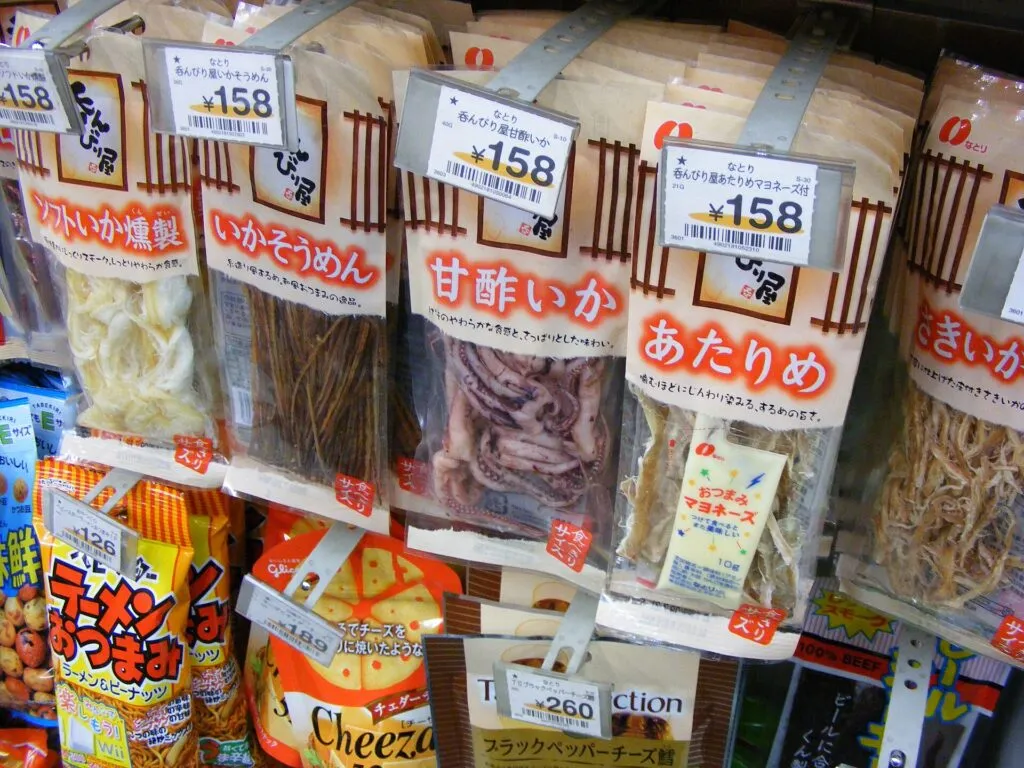
A Japanese convenience store at midnight is brighter than most supermarkets at noon. Shelves of rice balls in neat rows, hot fried chicken by the till, a pot of simmering oden, and a staff member who bows as you leave with your 200-yen dinner.
Japanese convenience stores (konbini), mainly 7-Eleven, FamilyMart and Lawson, sell fresh, cheap, surprisingly good food 24 hours a day: rice balls (onigiri), sandwiches, bento boxes, fried chicken, steamed buns and desserts. In 2026 an onigiri costs roughly ¥150–300 and a bento ¥500–900. For Muslim travellers, konbini food takes care: pork, pork extract, mirin and alcohol (used as a preservative) are common, so learning a few words on the label makes a big difference.
This guide covers what to buy, how to read labels for pork and alcohol, the safest choices, how the stores work, prices and phrases.
What to buy
| Item | What it is | Halal check |
|---|---|---|
| Onigiri | Rice triangles wrapped in nori, with fillings like salmon, tuna mayo, kelp or pickled plum | Often the safest choice; read the label for alcohol and mirin |
| Tamago sando | Soft white-bread egg sandwich | Check for pork (ham) in mixed packs |
| Bento | Boxed meals with rice and mains | Meat is not halal; many contain pork |
| Karaage | Fried chicken from the hot counter | Chicken not halal-slaughtered |
| Nikuman | Steamed bun | Usually pork |
| Oden | Fish cakes, egg, radish and tofu in dashi broth | Some items contain pork; broth may contain mirin |
| Melon pan | Sweet bread with a crisp cookie crust | Check for lard or alcohol |
| Desserts and puddings | Custards, cakes, jellies | Check for gelatin and alcohol |
Reading the label: words to know
Every product lists ingredients (原材料名) on the back. Look for these.
| Japanese | Reading | Meaning |
|---|---|---|
| 豚 / 豚肉 | buta / butaniku | Pork |
| ポーク | pōku | Pork |
| ラード | rādo | Lard |
| ポークエキス | pōku ekisu | Pork extract (in sauces and soups) |
| ゼラチン | zerachin | Gelatin |
| アルコール / 酒精 | arukōru / shusei | Alcohol (often a preservative) |
| みりん | mirin | Sweet rice wine for cooking |
| 酒 / 料理酒 | sake / ryōrishu | Rice wine / cooking wine |
| 洋酒 | yōshu | Western liquor (in cakes) |
Careful with 鮭: the kanji 鮭 (salmon) is also pronounced sake, like rice wine. Salmon onigiri are about fish, not alcohol, but still read the ingredient list for アルコール, 酒精 or みりん.
The safest picks
- Onigiri with salmon, tuna mayo, kelp (kombu) or pickled plum (umeboshi), once you have checked the label.
- Plain rice balls with salt (shio musubi).
- Fruit, yoghurt, nuts and bread without lard.
- Boiled eggs and plain tofu products.
- Halal-certified products: some konbini, especially near airports and in tourist areas, stock halal-labelled items; look for a halal logo.
Halal note: alcohol is widely used in Japanese food, both as mirin in sauces and as a preservative listed as アルコール or 酒精. Scholars differ on small amounts of alcohol used as a preservative; decide your own line before you travel. Pork and pork extract appear in many sauces and soups. For hot halal meals, Tokyo has a growing number of halal restaurants, including around the Tokyo Camii mosque in Shibuya. See our halal food travel guide.
How konbini work
- Open 24/7 in almost every neighbourhood.
- Heating: the staff will ask if you want your bento warmed (atatamemasu ka?). Say yes or no.
- Hot water is available for instant noodles.
- Payment: cash, cards and IC transit cards (Suica, PASMO) are widely accepted.
- Rubbish: there are few public bins in Japan; use the bins at the konbini.
- Eating: some stores have a small counter; eating while walking is frowned upon in some areas.
What it costs (2026)
| Item | Typical price |
|---|---|
| Onigiri | About ¥150–300 |
| Sandwich | About ¥250–450 |
| Bento | About ¥500–900 |
| Karaage (hot counter) | About ¥200–300 |
| Dessert | About ¥150–400 |
| Bottled tea or water | About ¥120–200 |
Plan your Japan budget with the Japan food budget calculator. There is no tipping in Japan; see our tipping guide.
Japanese phrases
| Japanese | Say | Meaning |
|---|---|---|
| ハラールですか? | Harāru desu ka? | Is it halal? |
| 豚肉は入っていますか? | Butaniku wa haitte imasu ka? | Does it contain pork? |
| お酒は入っていますか? | Osake wa haitte imasu ka? | Does it contain alcohol? |
| 温めてください | Atatamete kudasai | Please heat it |
| 袋はいりません | Fukuro wa irimasen | I don’t need a bag |
Frequently asked questions
Is Japanese convenience store food halal?
Most is not certified halal. Onigiri with fish or vegetable fillings are often pork-free, but check labels for alcohol and mirin. Some stores stock halal-certified items.
What should I buy at a Japanese konbini?
Onigiri, egg sandwiches, fruit, yoghurt and desserts are popular. Check labels if you avoid pork or alcohol.
How much is food at a konbini?
About ¥150–300 for an onigiri and ¥500–900 for a bento in 2026.
Which kanji means pork?
豚 (buta). Also look for ポーク and ラード (lard).
More from Japan: kaiseki dining. See all Japan food guides.
Sources
- Japan National Tourism Organization – official tourism site.
- Convenience stores in Japan.