In Bangladesh, the question “Have you eaten?” is a greeting. Visit a home and you will be fed. Refuse a second helping and a third will arrive anyway.
What to eat in Bangladesh, in short: rice and fish, above all ilish (hilsa) in mustard sauce; mashed bhorta dishes and dal; kacchi biryani, tehari and morog polao in Old Dhaka; beef kala bhuna and mezban in Chattogram; fuchka, chotpoti and jhalmuri on the street; winter pitha; and sweets such as roshogolla, chomchom, roshmalai and mishti doi. Food is very good value: in 2026 a street snack costs roughly Tk 20–150, roadside tea Tk 10–30, and a filling rice-and-fish meal Tk 200–500 at an ordinary restaurant.
Bangladesh is a Muslim-majority country, so halal food is the norm. This guide goes dish by dish and region by region, with prices, seasons, table manners and the Bangla you need.
| At a glance | Details |
|---|---|
| Staples | Rice, fish, lentils (dal), vegetables, mustard oil |
| National fish | Ilish (hilsa) |
| Street food | Fuchka, chotpoti, jhalmuri, singara, piyaju |
| Celebration food | Kacchi biryani, morog polao, rezala, borhani, jorda |
| Everyday drink | Cha: sweet milk tea from roadside stalls |
| Typical prices (2026) | Snack Tk 20–150; tea Tk 10–30; rice meal Tk 200–500; biryani Tk 300–700 |
| Halal | The norm; pork is very rare and alcohol is restricted |
Rice and fish: the heart of every meal
Bengalis are called machhe-bhate Bangali, people of fish and rice. A country crossed by hundreds of rivers eats river fish at almost every meal.
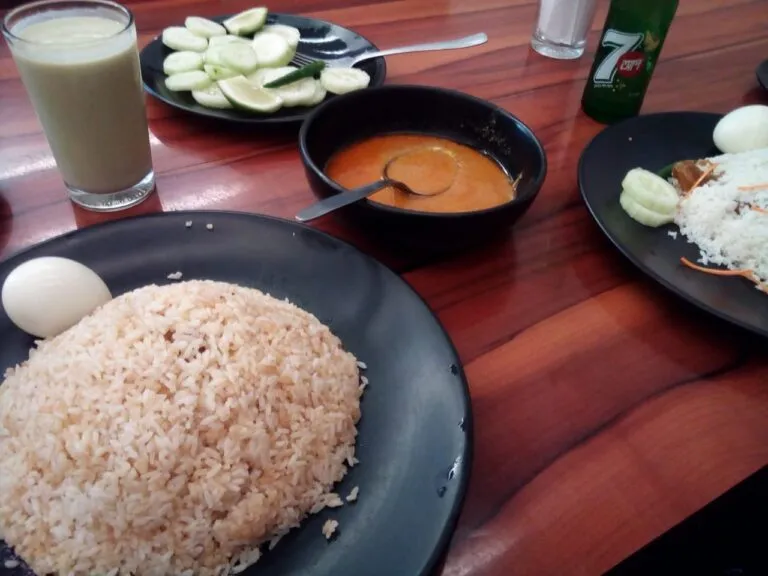
A typical lunch is a mound of plain rice with one fish curry, a vegetable dish, dal and a bhorta or two. Look for simple local eateries, called “hotels”, at lunchtime.
Ilish (hilsa)
Hilsa is the national fish and the most loved. It is oily, rich and very bony, and Bangladeshis eat it with great skill.
- Shorshe ilish – hilsa in a sharp, pungent mustard sauce. The dish to try first.
- Ilish bhaja – fried hilsa, often eaten with the fish-flavoured frying oil poured over hot rice.
- Bhapa ilish – hilsa steamed in mustard paste.
Hilsa is best and most plentiful in the monsoon months. Prices rise steeply outside the season.
Other fish to look for
- Rui (rohu) – the everyday carp, cooked in a light curry with potato.
- Pabda, koi and tengra – small river fish in thin, peppery gravies.
- Chingri (prawns) – especially chingri malai curry, prawns in a coconut-milk sauce.
- Shutki – dried fish, strong-smelling and loved, especially in Chattogram, often mashed into a fiery bhorta.
Bhorta, dal and vegetables
If one thing surprises visitors, it is the bhorta. These are mashed dishes mixed by hand with raw mustard oil, onion, green chilli and salt. A good restaurant may offer a dozen at once.
- Alu bhorta – mashed potato with mustard oil and chilli. Simple and addictive.
- Begun bhorta – smoky roasted aubergine.
- Shutki bhorta – dried fish with chilli. Very strong; try a little first.
- Dal bhorta, tomato bhorta, kalo jeera bhorta – lentil, roasted tomato and black cumin versions.
With them comes dal, a thin lentil soup poured over rice, and shak, stir-fried leafy greens. Vegetable dishes like labra (mixed vegetables) and shukto (a mildly bitter mix) round out a home-style meal.
Biryani, polao and celebration dishes
Dhaka was a Mughal provincial capital, and the rich rice dishes of that time still define celebrations.
- Kacchi biryani – raw marinated goat and rice slow-cooked together with potato. Read our full guide to kacchi biryani in Dhaka.
- Tehari – rice cooked with beef, mustard oil and green chilli; cheaper, everyday and filling.
- Morog polao – a mild, buttery chicken pulao, an Old Dhaka favourite.
- Bhuna khichuri – rice and lentils fried with spices, the classic rainy-day meal.
- Rezala – mutton or beef in a pale, rich yoghurt and cashew gravy, served at weddings.
- Borhani and jorda – a spiced yoghurt drink and sweet yellow rice that accompany most feasts.
Meat dishes worth seeking out
- Kala bhuna – beef slow-fried until almost black, a Chattogram speciality.
- Mezban – beef curry cooked in huge pots for community feasts in Chattogram, with a distinctive spice blend.
- Chui jhal – meat cooked with the peppery stem of the chui vine, famous in Khulna.
- Shatkora beef – beef cooked with shatkora, a sour citrus from Sylhet.
- Nihari – slow-cooked beef shank stew, eaten for breakfast in Old Dhaka with bread.
- Chaap and kebabs – spiced, fried beef or chicken ribs and seekh kebabs, eaten with naan or porota in the evening.
- Haleem – wheat, lentils and meat cooked to a thick porridge, especially in Ramadan.
Street food
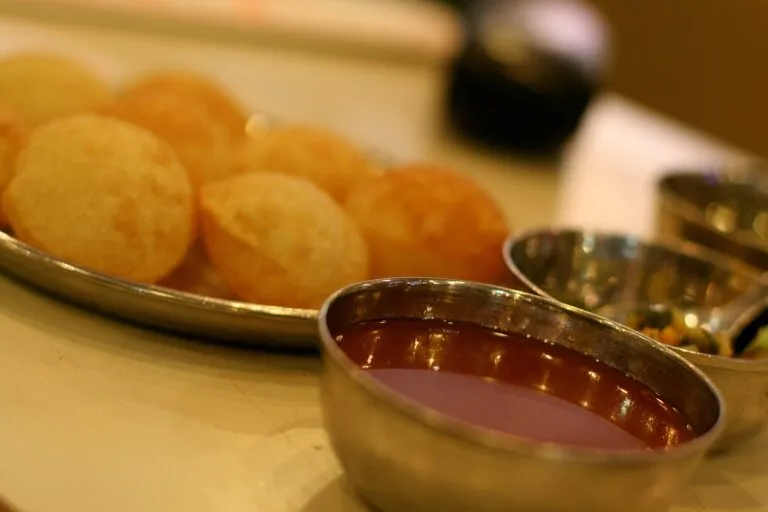
- Fuchka – crisp shells with potato, yellow peas and egg, eaten with tamarind water. See fuchka in Dhaka.
- Chotpoti – warm yellow-pea stew with egg, onion and tamarind.
- Jhalmuri – puffed rice tossed with mustard oil, onion, chilli and peanuts.
- Singara and samosa – fried pastries, the classic tea-time snack.
- Piyaju and beguni – lentil-onion fritters and battered aubergine, stars of the iftar table.
- Bakarkhani – a flaky, crisp Old Dhaka bread, eaten with tea.
Breakfast, Bangladeshi style
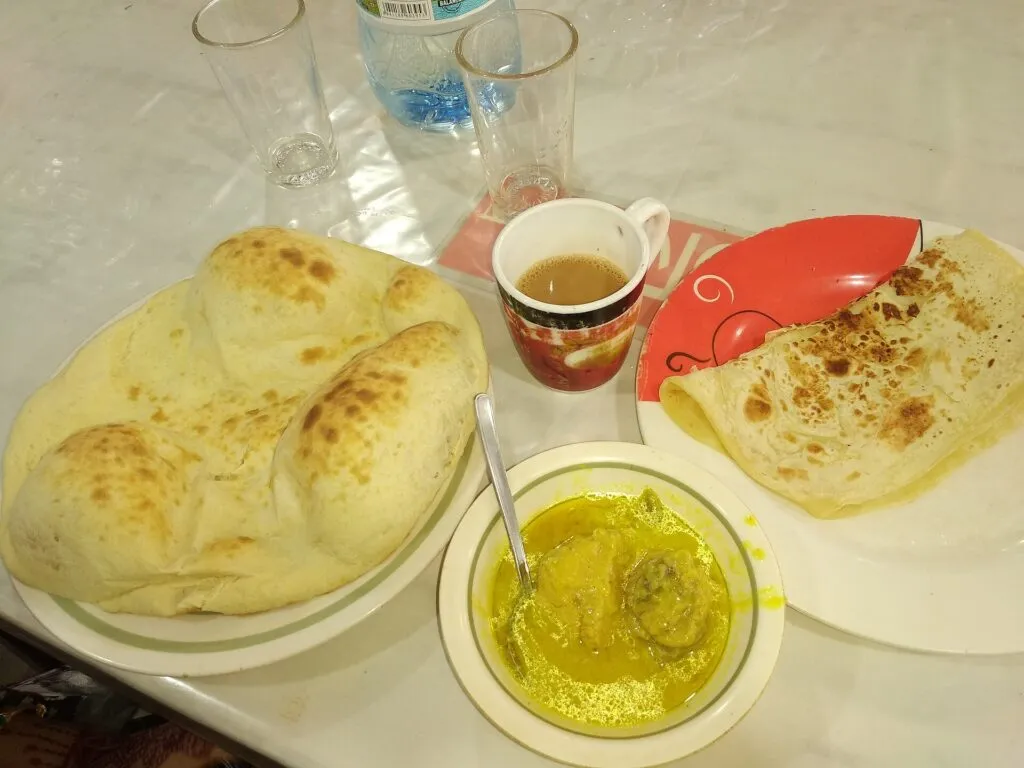
Most people start with porota (flaky fried flatbread) or ruti (plain flatbread) with dal, vegetable bhaji or an omelette, and a cup of sweet tea.
In Old Dhaka, breakfast can be nihari with bread. In the countryside, it may be panta bhat: rice soaked overnight in water, eaten with onion, chilli and fried fish.
Sweets and pitha
Bengal takes sweets seriously, and many towns are famous for one.
- Roshogolla – spongy balls of fresh cheese (chhena) in light syrup.
- Chomchom – dense, oval chhena sweets; the ones from Porabari in Tangail are famous.
- Roshmalai – soft chhena discs in sweet, thickened milk; Cumilla is known for it.
- Mishti doi – sweet, caramel-coloured yoghurt set in clay pots, closely linked with Bogura.
- Kalojam – dark, fried syrup-soaked sweets.
- Payesh – rice pudding, cooked for birthdays and special days.
Pitha are rice cakes, made mostly in winter. Look for bhapa pitha (steamed, filled with jaggery and coconut), chitoi pitha (small griddle cakes eaten with sauces), patishapta (thin rolled pancakes) and puli pitha (dumplings). Roadside pitha stalls appear on cold mornings and evenings.
The sweet tradition is shared with West Bengal; compare it with Bengali sweets in Kolkata.
Tea and drinks
- Cha – sweet milk tea from roadside stalls, drunk all day. Ask for rong cha if you want it without milk.
- Seven-layer tea – a colourful layered tea sold to visitors in Sreemangal, in the Sylhet tea country.
- Borhani – the spiced yoghurt drink served with biryani.
- Lassi – sweet yoghurt drink.
- Akher rosh and dab – fresh sugarcane juice and green coconut water, sold on the street.
Safety note: in winter you may see raw date-palm sap (khejur rosh) sold early in the morning. Raw sap has been linked to Nipah virus outbreaks in Bangladesh, so avoid drinking it raw. Date-palm jaggery (gur) and sweets made with it are cooked and fine.
Food by region
| Region | What to eat |
|---|---|
| Old Dhaka | Kacchi biryani, morog polao, nihari, bakarkhani, Ramadan iftar at Chawkbazar |
| Dhaka (citywide) | Fuchka, chotpoti, bhorta lunches, roadside cha |
| Chattogram | Mezban, kala bhuna, shutki bhorta, seafood on the coast |
| Sylhet and Sreemangal | Tea gardens, seven-layer tea, shatkora beef, akhni pulao |
| Khulna | Chui jhal, prawns and river fish |
| Rajshahi and Chapainawabganj | Mangoes in season, kalai ruti (lentil-flour flatbread) with bhorta |
| Bogura | Mishti doi |
| Tangail | Porabari chomchom |
| Cumilla | Roshmalai |
What to eat by season
- Summer (May–July): mangoes, lychees and jackfruit; Rajshahi mangoes are famous.
- Monsoon (July–October): hilsa season and khichuri on rainy days.
- Winter (December–February): pitha, date-palm jaggery sweets, and the most pleasant weather for street food.
- Ramadan: evening iftar markets with piyaju, beguni, haleem, kebabs and sweets.
How to eat like a Bangladeshi
- Right hand only. Rice meals are eaten by hand; cutlery is always available if you ask.
- Wash before and after. Restaurants have a basin; homes will bring water.
- Mix as you go. Add a little curry or bhorta to a portion of rice at a time, not everything at once.
- Accept seconds. Hosts will insist. A firm but smiling “ar na, dhonnobad” (no more, thank you) is polite.
- Sweets come last, often with tea.
What food costs (2026)
| Item | Typical price |
|---|---|
| Roadside cha | Tk 10–30 |
| Singara or samosa | Tk 10–30 each |
| Fuchka plate | Tk 50–150 |
| Rice, fish, dal and bhorta at a local eatery | Tk 200–500 |
| Kacchi biryani plate | Tk 300–700 |
| Sweets | Tk 20–80 per piece |
Plan a full trip with the Bangladesh food budget calculator, and read the tipping guide for Bangladesh before you go.
Bangla for eating out
| Bangla | Say | Meaning |
|---|---|---|
| ভাত মাছ | Bhat mach | Rice and fish |
| ইলিশ | Ilish | Hilsa |
| ভর্তা | Bhorta | Mashed spiced dish |
| ডাল | Dal | Lentil soup |
| পিঠা | Pitha | Rice cake |
| চা | Cha | Tea |
| Ki ki ache? | What do you have? | |
| Jhal kom diben | Less spicy, please | |
| Pani ki filter kora? | Is the water filtered? | |
| Ar na, dhonnobad | No more, thank you | |
| Koto holo? | How much is it? |
Halal note: halal food is the default across Bangladesh. International hotels may serve alcohol in their bars, and a few restaurants run by or for foreigners may serve pork, but you will rarely meet either. Our halal food travel guide covers countries where it is harder.
Frequently asked questions
What is the national dish of Bangladesh?
There is no single official national dish, but ilish (hilsa) is the national fish, and rice with fish is the everyday staple. Shorshe ilish is often named as the dish to try first.
Is Bangladeshi food spicy?
It can be, especially street food and bhorta made with green chilli. Many dishes rely more on mustard, turmeric and onion than on heat. Ask for jhal kom.
What should I eat first in Dhaka?
A plate of fuchka, a rice-and-fish lunch with bhorta and dal, kacchi biryani in Old Dhaka and a roadside cup of cha cover the essentials in one day.
Is street food safe in Bangladesh?
Choose busy stalls, cooked and hot food, and bottled or filtered water. Avoid raw date-palm sap.
See all Bangladesh food guides, and cross the border for Kolkata kathi rolls and Hyderabadi biryani.
Sources
- Bangladesh Tourism Board – official tourism site.
- Bangladeshi cuisine and Hilsa.
- WHO: Nipah virus fact sheet – on raw date-palm sap.