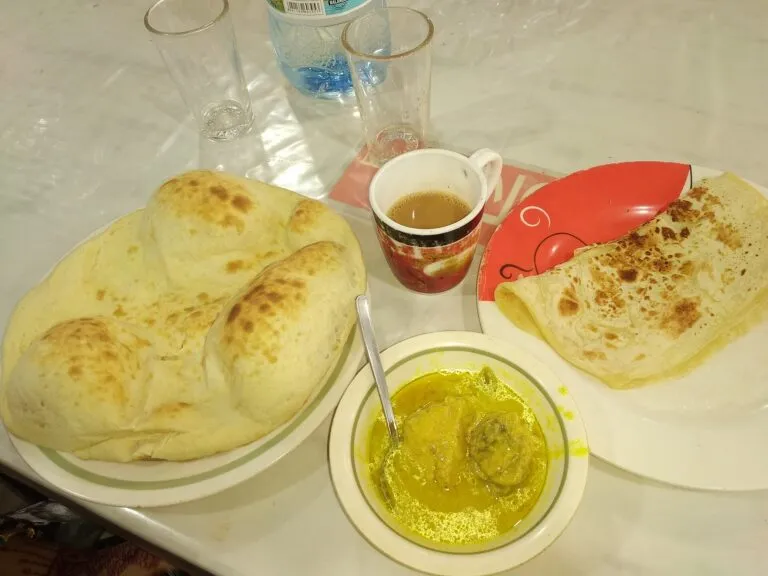
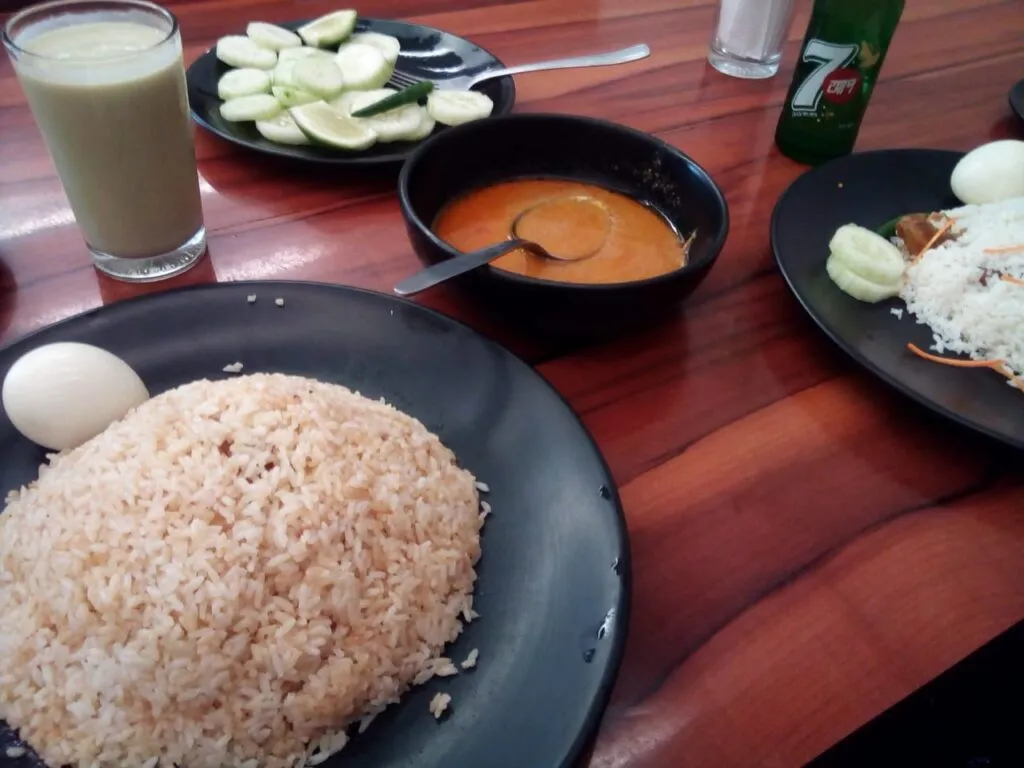
Lift the lid off a pot of kacchi at a Dhaka wedding and the whole room turns. Steam, ghee, saffron and slow-cooked goat, with golden potatoes tucked into the rice.
Kacchi biryani is Dhaka’s celebration dish: marinated raw goat layered with fragrant rice and potato, sealed in a pot and slow-cooked so the meat and rice finish together. You find it in Old Dhaka institutions such as Haji Biriyani and in city-wide names like Fakhruddin and Star Kabab. In 2026 a plate costs roughly Tk 300–700, and cheaper beef tehari about Tk 150–350.
Bangladesh is a Muslim-majority country, so halal meat is the norm. The only question here is which pot to queue for.
Why Dhaka is a biryani city
Dhaka was a Mughal provincial capital in the 17th century, and the rice-and-meat cooking of that court stayed in the old city. Later the Nawabs of Dhaka and the city’s trading families kept it alive at feasts.
Today kacchi is what a Bangladeshi family serves when it wants to say “this day matters”: weddings, Eid, a new job, a guest from abroad.
How kacchi is made
Kacchi means raw. Goat (khashi) is marinated for hours in yoghurt, ginger, garlic, fried onion (beresta), green chilli and whole spices.
The meat goes into a heavy pot first. Fried potato halves come next, then partly boiled aromatic rice, saffron or colour, ghee and more fried onion. Many cooks add a few dried plums (alu bokhara) for a sweet-sour note.
The lid is sealed and the pot cooks slowly on dum. Nobody opens it until it is done, so the cook’s timing is everything.
Kacchi, tehari, morog polao: know your rice dishes
| Dish | What it is | When to order it |
|---|---|---|
| Kacchi biryani | Raw goat and rice cooked together on dum, with potato | The special meal; lunch is best |
| Tehari | Rice cooked with small beef pieces, often with mustard oil and green chilli | Everyday lunch, cheaper and very filling |
| Morog polao | Mild, buttery chicken pulao, usually with a boiled egg | When you want something gentler |
| Bhuna khichuri | Rice and lentils fried with spices, often with beef or egg | Rainy days, a Bangladeshi comfort food |
| Kalo bhuna | Dark, slow-fried beef from Chattogram | With rice or paratha; not a biryani, but often on the same menu |
What comes with it
- Borhani – a thin, spiced yoghurt drink with mint and green chilli. It cuts through the richness and is served at every wedding.
- Salad – cucumber, onion and green chilli with lime.
- Jorda – sweet yellow rice with raisins and nuts, the classic wedding dessert.
- Firni – chilled rice pudding in small clay bowls.
Where to eat biryani in Dhaka
- Haji Biriyani, Nazira Bazar (Old Dhaka) – an Old Dhaka institution going back to the 1930s, known for its goat biryani. Simple, crowded and often sold out by mid-afternoon.
- Fakhruddin – a wedding caterer turned restaurant chain, with branches across Dhaka. Its kacchi and borhani are the standard many people measure others by.
- Star Kabab – a long-running Dhaka chain, popular for kacchi, tehari and kebabs at everyday prices.
- The lanes of Nazira Bazar, Bangshal and Chawkbazar – walk them at lunchtime for long-running biryani, tehari and morog polao shops.
Branches, hours and prices change, and the best pots run out early. Go for lunch and check before crossing the city.
Which part of the city
- Old Dhaka (Puran Dhaka) – the most atmospheric: narrow lanes, rickshaw traffic and shops that have cooked one dish for decades. Go by rickshaw or CNG; parking is impossible.
- Dhanmondi – branches of the big names in calmer surroundings, close to the lake.
- Gulshan and Banani – cleaner, pricier dining rooms, good if you are staying nearby.
What biryani costs in Dhaka (2026)
| Order | Typical price |
|---|---|
| Kacchi, one plate | About Tk 300–700 |
| Tehari, one plate | About Tk 150–350 |
| Morog polao, one plate | About Tk 250–450 |
| Borhani, one glass | About Tk 40–100 |
| Jorda or firni | About Tk 40–120 |
Old Dhaka is usually cheaper than Gulshan. For a full trip budget, use the Bangladesh food budget calculator.
Eating it like a local
- Go at lunch. The pots are ready from late morning, and the best meat pieces go first.
- Eat with your right hand, or ask for a spoon. Both are fine.
- Fight for the potato. It soaks up the ghee and meat juices; many people rate it above the meat.
- Order borhani first and keep sipping. It really does help with a rich plate.
- Share the table. Busy shops seat strangers together; a nod is enough.
In Ramadan: the iftar market at Chawkbazar in Old Dhaka is one of the city’s great food sights, with stalls selling kebabs, haleem, sweets and the famous mixed dish boro baper polay khay. Go an hour before sunset and expect crowds.
Dhaka kacchi vs Hyderabadi biryani
Both use the raw-meat method. Dhaka kacchi is milder and more fragrant, has potato and often dried plum, and comes with borhani. Hyderabadi biryani is spicier, has no potato and comes with mirchi ka salan. Kolkata’s biryani is lighter still.
Bangla for the biryani shop
| Say | Meaning |
|---|---|
| Ek plate kacchi din | One plate of kacchi, please |
| Half plate hobe? | Can I get a half plate? |
| Ek glass borhani | One glass of borhani |
| Alu ektu beshi diben? | Could I have extra potato? |
| Khashi na gorur? | Is it goat or beef? |
| Parcel kore din | Pack it to take away, please |
| Bill din | The bill, please |
Frequently asked questions
What is kacchi biryani?
A biryani in which marinated raw goat is layered with rice and potato and cooked together in a sealed pot, instead of cooking the meat first.
Where is the best biryani in Dhaka?
Old Dhaka is the traditional heart, with names like Haji Biriyani. Fakhruddin and Star Kabab are popular chains. Every Dhaka family has its own favourite.
How much does biryani cost in Dhaka?
Roughly Tk 300–700 for kacchi and Tk 150–350 for tehari in 2026.
Is biryani in Bangladesh halal?
Yes, in practice. Bangladesh is a Muslim-majority country and halal meat is the norm in biryani houses.
Keep eating in Dhaka with fuchka, or read our full guide to what to eat in Bangladesh. Across the border, try Kolkata’s sweet shops. More in Bangladesh food guides and our halal food travel guide.
Sources
- Bangladesh Tourism Board – official tourism site.
- Bangladeshi cuisine and Biryani.