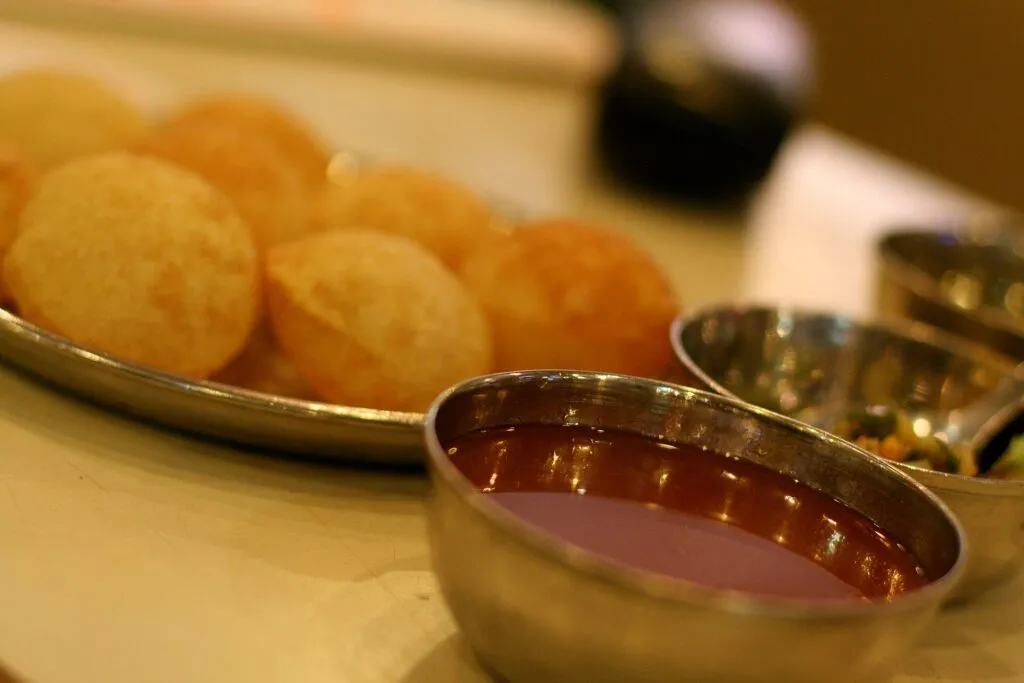
Late afternoon in Dhaka, a fuchka cart sets up on the pavement. A glass case of hollow shells, a steel pot of spiced potato and peas, a tray of grated egg and a bowl of dark, sour tamarind water. Within minutes there is a crowd.
Fuchka is Bangladesh’s favourite street snack: small, crisp hollow shells filled with spiced mashed potato and yellow peas, topped with grated boiled egg, onion and green chilli, and eaten in one bite with sour tamarind water (tok). You find it on carts and in small snack shops all over Dhaka, especially around Dhanmondi Lake, Dhaka University and Bailey Road. A plate of 8–10 pieces costs roughly Tk 50–150 in 2026.
It is vegetarian apart from the egg, cheap, and eaten by everyone from schoolchildren to office workers on their way home.
Part of a big South Asian family
Across the subcontinent the same idea goes by different names: pani puri in Mumbai, golgappe in Delhi, puchka in Kolkata and fuchka in Bangladesh.
Each region guards its own version. The Dhaka style is heavier and more filling, and the egg on top is its signature.
What goes into a plate
- The shells – dough of semolina or flour, rolled thin, cut into small rounds and fried until they puff. Good shells are thin and crackle loudly.
- The filling – mashed potato with boiled yellow peas (motor or dabli), onion, green chilli, coriander and roasted spice.
- The topping – grated boiled egg, sometimes a little more onion and chilli.
- The tok – tamarind water sharpened with roasted cumin, black salt and chilli. Every vendor has a secret mix.
How to eat fuchka
- The vendor cracks each shell with a thumb, fills it and hands over the plate with a small bowl of tok.
- Spoon or pour a little tok into one shell.
- Eat it whole, in one bite, straight away. Wait ten seconds and it goes soft.
- Repeat, fast. The whole plate should be gone in a couple of minutes.
First time? Ask for jhal kom (less spicy). Dhaka fuchka can be very hot, and the tok makes the chilli hit harder.
Fuchka, chotpoti and Kolkata puchka compared
| Snack | What it is | Key difference |
|---|---|---|
| Dhaka fuchka | Shells with potato-pea filling and egg; tok on the side | Drier, heavier filling; egg on top |
| Chotpoti | Warm yellow-pea stew with potato, egg, onion, tamarind and crushed shells | Eaten with a spoon; a small meal |
| Doi fuchka | Fuchka topped with sweet yoghurt and chutney | Cooling, sweet-sour; good for beginners |
| Kolkata puchka | Shells filled with tangy potato, dunked in tamarind water | No egg; spicier, sharper water |
| Mumbai pani puri | Shells with sprouts or potato and minty spiced water | Green mint water; sometimes sweet chutney |
If you are travelling in India, compare it with Delhi’s golgappe and chaat.
Where to eat fuchka in Dhaka
- Dhanmondi Lake and around – a classic evening spot, with carts along the lake and snack shops on nearby roads.
- Dhaka University (around TSC) – student territory: cheap, busy carts and plenty of chotpoti.
- Bailey Road – long known for sit-down fuchka and chotpoti shops, a good choice if you prefer a table.
- Your nearest busy cart – almost every neighbourhood has one, and locals are loyal to theirs.
Carts move and shops change, so ask locally and check opening hours before a special trip.
When to go
- Late afternoon to evening is prime time; many carts only set up after 4pm.
- Winter (roughly December to February) is the most comfortable season for street food in Dhaka.
- In Ramadan, fuchka and chotpoti become part of iftar, bought just before sunset.
Staying healthy
Most visitors eat fuchka without trouble, but the tok is the usual risk.
- Choose busy carts where shells and fillings turn over quickly.
- Prefer vendors who use bottled or boiled water for the tok.
- Start at a sit-down shop if you have a sensitive stomach, and build up.
- Carry hand sanitiser; you eat with your fingers.
What fuchka costs (2026)
| Order | Typical price |
|---|---|
| Fuchka, street cart (8–10 pieces) | About Tk 50–80 |
| Fuchka, sit-down shop | About Tk 80–150 |
| Chotpoti, one plate | About Tk 50–120 |
| Doi fuchka | About Tk 80–150 |
Plan the rest of your spending with the Bangladesh food budget calculator.
Other Dhaka street snacks to try
- Jhalmuri – puffed rice tossed with mustard oil, onion, chilli and peanuts, mixed to order in a paper cone.
- Velpuri – soft puri with a spiced pea topping, a close cousin of fuchka.
- Singara – a triangular fried pastry filled with spiced potato, best with milk tea.
- Piyaju and beguni – lentil-onion fritters and battered aubergine, especially at iftar.
Halal note: Bangladesh is a Muslim-majority country and street food is halal in practice. Fuchka and chotpoti contain no meat; the only animal product is egg.
Order it in Bangla
| Say | Meaning |
|---|---|
| Ek plate fuchka din | One plate of fuchka, please |
| Ek plate chotpoti din | One plate of chotpoti, please |
| Jhal kom diben | Less spicy, please |
| Jhal beshi | Extra spicy |
| Tok ektu beshi diben? | Could I have more tamarind water? |
| Doi fuchka ache? | Do you have doi fuchka? |
| Koto holo? | How much is it? |
Frequently asked questions
What is fuchka made of?
Crisp hollow shells of semolina or flour, filled with mashed potato, yellow peas, grated egg, onion, chilli and coriander, eaten with tamarind water.
Is fuchka the same as pani puri?
They are close relatives. Dhaka fuchka has a heavier potato-and-pea filling, egg on top and tamarind water on the side.
How much does fuchka cost in Dhaka?
About Tk 50–150 a plate in 2026, depending on cart or shop.
Is fuchka safe for tourists?
Usually, if you pick busy vendors and start slowly. The tamarind water is the main risk, so choose places that use clean water.
After fuchka, head for a proper meal of kacchi biryani in Dhaka, or read what to eat in Bangladesh. In Kolkata, try kathi rolls and Bengali sweets. More in Bangladesh food guides.
Sources
- Bangladesh Tourism Board – official tourism site.
- Panipuri – regional names including fuchka and puchka.