Walk into an old Kolkata sweet shop and the first thing you notice is the glass counter: rows of white, cream and brown sweets, some glossy with syrup, some pressed into shells and fish shapes. Behind it, a man with a steel spoon waits for you to point.
Kolkata is India’s capital of mishti (Bengali sweets): soft rosogolla in syrup, fresh sandesh, sweet mishti doi set in clay pots, and dozens more made mostly from chhena, fresh curd cheese. The best way to try them is to walk between long-established shops such as K.C. Das, Bhim Chandra Nag, Girish Chandra Dey & Nakur Chandra Nandy and Balaram Mullick & Radharaman Mullick. Most sweets cost about ₹15–80 a piece in 2026.
This guide explains the main sweets, where the historic shops are, when to go for the seasonal specials, how to buy, and how long each sweet keeps.
Why Bengal became sweet country
Bengal had a long tradition of milk sweets, but the modern Kolkata sweet is built on chhena: milk split with lemon juice or whey, drained and kneaded smooth.
In the 19th century Kolkata’s confectioners turned chhena into an art. The rosogolla in its modern spongy form is credited to Nobin Chandra Das in 1868, and the city’s sweet makers have been inventing ever since.
Odisha has its own rasagola tradition, and both West Bengal and Odisha now hold geographical indications for their versions. It is a friendly argument that nobody will win.
The sweets to know
Syrup sweets
- Rosogolla – spongy chhena balls cooked in light syrup. Squeeze one gently: it should spring back.
- Rajbhog – a larger, richer rosogolla, often saffron-coloured, sometimes with a nut filling.
- Pantua – fried chhena balls soaked in syrup, darker and denser than rosogolla.
- Ledikeni – a dark fried sweet traditionally said to be named after Lady Canning, wife of a 19th-century Governor-General.
- Chomchom – oval and firm, often rolled in grated dried milk.
- Rosomalai – soft chhena discs soaked in sweet, thickened milk.
Sandesh
Sandesh is chhena kneaded with sugar and cooked gently, then pressed into moulds. It is drier than syrup sweets and much more varied.
- Kanchagolla – soft, barely cooked, the freshest-tasting sandesh.
- Karapak – cooked longer until firm; keeps better.
- Jolbhora – a shell-shaped sandesh with a hidden centre of syrup or jaggery.
- Nolen gur sandesh – made with fresh date-palm jaggery in winter; the most anticipated sweet of the year.
Mishti doi
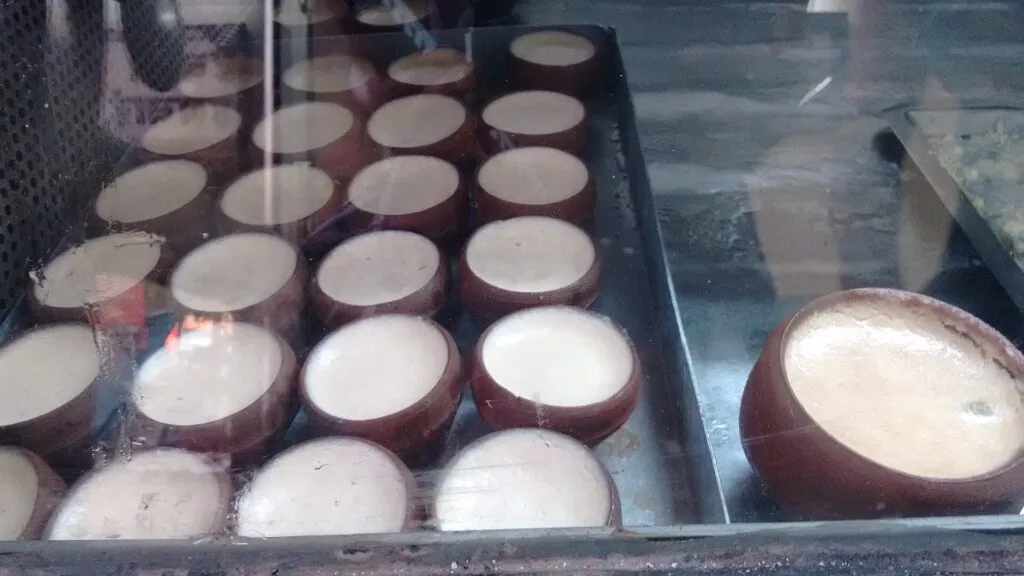
Thick, caramel-coloured sweet yoghurt set in an unglazed clay pot. The pot draws out moisture, so the yoghurt turns firm enough to hold a spoon upright.
Where to buy them
- K.C. Das (Esplanade and branches) – the family business linked to Nobin Chandra Das. The name most people give for rosogolla.
- Bhim Chandra Nag (Bowbazar) – one of the oldest shops in the city, dating back to the 19th century, known for sandesh and ledikeni.
- Girish Chandra Dey & Nakur Chandra Nandy (near Hatibagan, North Kolkata) – a 19th-century shop devoted mainly to sandesh; small, busy, and worth the trip.
- Balaram Mullick & Radharaman Mullick (Bhowanipore and branches) – a long-running name for sandesh, mishti doi and seasonal specials.
Opening hours vary and some shops close early or on certain days, so check before you go.
A simple sweet walk
- Start in North Kolkata in the morning for sandesh near Hatibagan, then explore the old lanes of Shyambazar and Bagbazar.
- Head to Bowbazar and Esplanade for ledikeni and rosogolla.
- Finish in Bhowanipore in the south for mishti doi and seasonal sandesh.
Break it up with savoury food: a kathi roll near New Market is the classic reset.
When to go
- Winter (roughly December–February) – nolen gur season. Sandesh and rosogolla made with fresh date-palm jaggery appear in every shop.
- Poila Baishakh (Bengali New Year, mid-April) – shops are packed as families buy boxes for visits.
- Durga Puja and Bijoya (October) – the biggest sweet-buying season of the year.
- Any morning – sandesh is made fresh daily; earlier is fresher.
How to buy
- Sweets are sold by the piece or by weight. Pointing works fine.
- Eat a few in the shop, when they are at their best, then buy a box.
- Syrup sweets come in a container with syrup; ask for it to be sealed if you are travelling.
- Mishti doi is sold in clay pots of different sizes; the small ones are ideal for one person.
How long they keep
| Sweet | Best eaten within | Travels well? |
|---|---|---|
| Kanchagolla, soft sandesh | The same day | No |
| Karapak sandesh | 2–3 days | Fairly well |
| Rosogolla (in syrup) | 2–3 days chilled; longer in sealed tins | Yes, in sealed tins |
| Mishti doi | 1–2 days, kept cool | Not on long trips |
| Pantua, ledikeni | 2–3 days | Reasonably |
What sweets cost (2026)
| Item | Typical price |
|---|---|
| Rosogolla or pantua | About ₹15–40 each |
| Sandesh | About ₹20–80 each; seasonal and premium pieces cost more |
| Mishti doi, small pot | About ₹30–100 |
| Box of mixed sweets | About ₹200–800 |
Plan your trip spending with the India food budget calculator.
Halal note: Bengali sweets are vegetarian, made from milk, sugar and chhena. For halal meat meals, Kolkata is easy: the areas around New Market, Park Circus and Zakaria Street have many Muslim-run restaurants.
Bangla for the sweet counter
| Say | Meaning |
|---|---|
| Duto roshogolla din | Two rosogollas, please |
| Eta ki? | What is this? |
| Shob theke ekta kore din | One of each, please |
| Ek bhanr mishti doi | One clay pot of mishti doi |
| Nolen gurer shondesh ache? | Do you have nolen gur sandesh? |
| Koto din rakha jabe? | How many days will it keep? |
| Koto holo? | How much is it? |
Frequently asked questions
What is the most famous sweet in Kolkata?
Rosogolla, followed closely by sandesh and mishti doi. In winter, nolen gur sandesh is the local favourite.
Where can I buy the best rosogolla in Kolkata?
K.C. Das is the most famous name, but Bhim Chandra Nag and Balaram Mullick & Radharaman Mullick have loyal followings too.
What is the difference between rosogolla and sandesh?
Both are made from chhena. Rosogolla is cooked in syrup and is soft and spongy; sandesh is kneaded with sugar and pressed, so it is drier and denser.
Can I take Bengali sweets home on a flight?
Sealed tins of rosogolla travel well. Soft sandesh and mishti doi do not, and liquid rules may apply to syrup in cabin baggage.
Across the border, Bangladesh shares this tradition; see what to eat in Bangladesh and fuchka in Dhaka. More in India food guides and the Delhi chaat guide.
Sources
- West Bengal Tourism – official state tourism site.
- Rasgulla, Sandesh and Mishti doi.