Bangkok has cooking classes for every budget, from a small market-and-cook morning to a class at a well-known Thai restaurant. This guide compares three schools using their own websites: what you cook, when, what it costs and whether a market visit is included.
Three schools compared
| School | Where | Class times | Price (school’s website) |
|---|---|---|---|
| Silom Thai Cooking School | Silom | Morning 9:00 to 12:20 with market tour; afternoon 14:00 to 17:00 with herb garden | 1,200 baht, cash only |
| Cooking with Poo | Khlong Toey | Monday to Saturday, with a Khlong Toey market visit; pick-up from Phrom Phong BTS | THB 2,000 |
| Blue Elephant Cooking School | South Sathorn Road (BTS Surasak) | Sessions of about 3.5 to 4 hours | ฿2,800++ (฿3,296 net) |
Silom Thai Cooking School
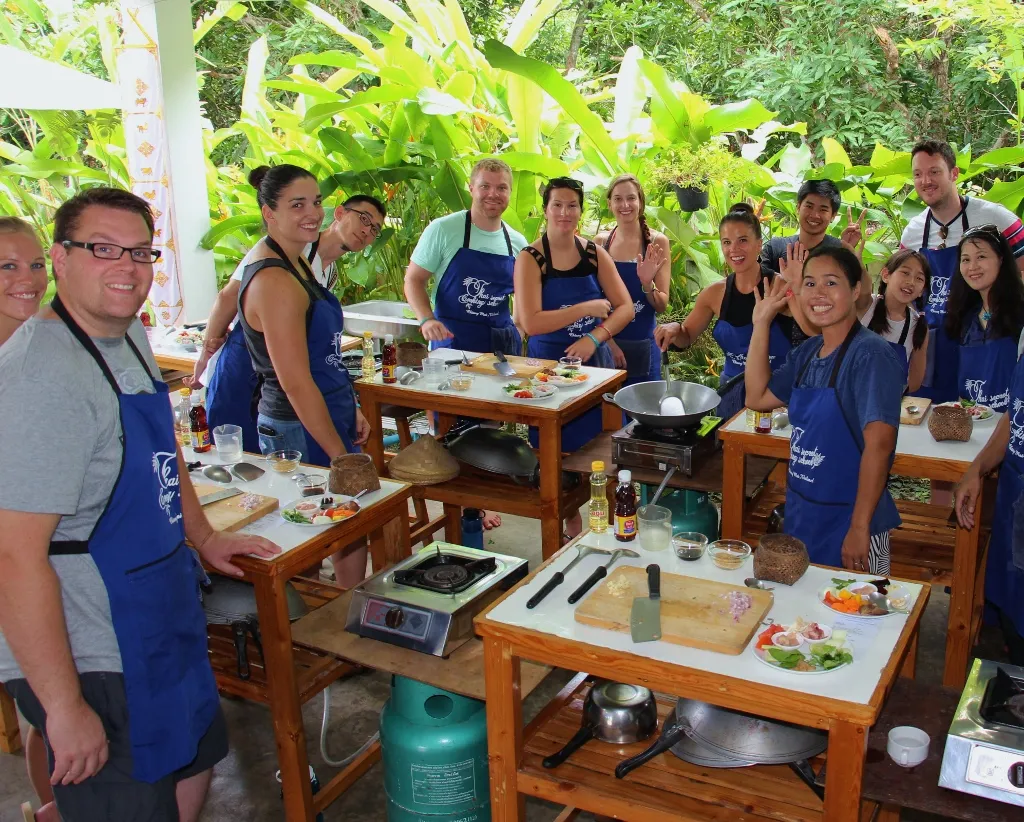
Silom Thai Cooking School runs small classes of no more than 9 to 10 people. Its website says courses are held mainly in the morning to make the most of the cooler hours for shopping and cooking: the morning class (9:00 to 12:20) includes a market tour, and the afternoon class (14:00 to 17:00) tours the school’s herb garden instead. You eat everything you cook, take the recipes home and receive a certificate. Vegetarian versions and halal ingredients are available for private classes.
Cooking with Poo
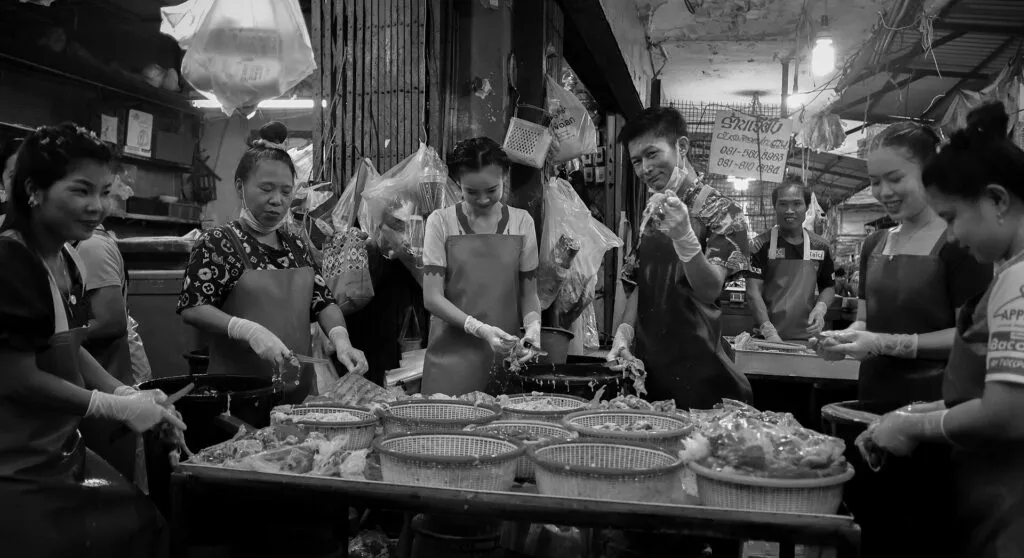
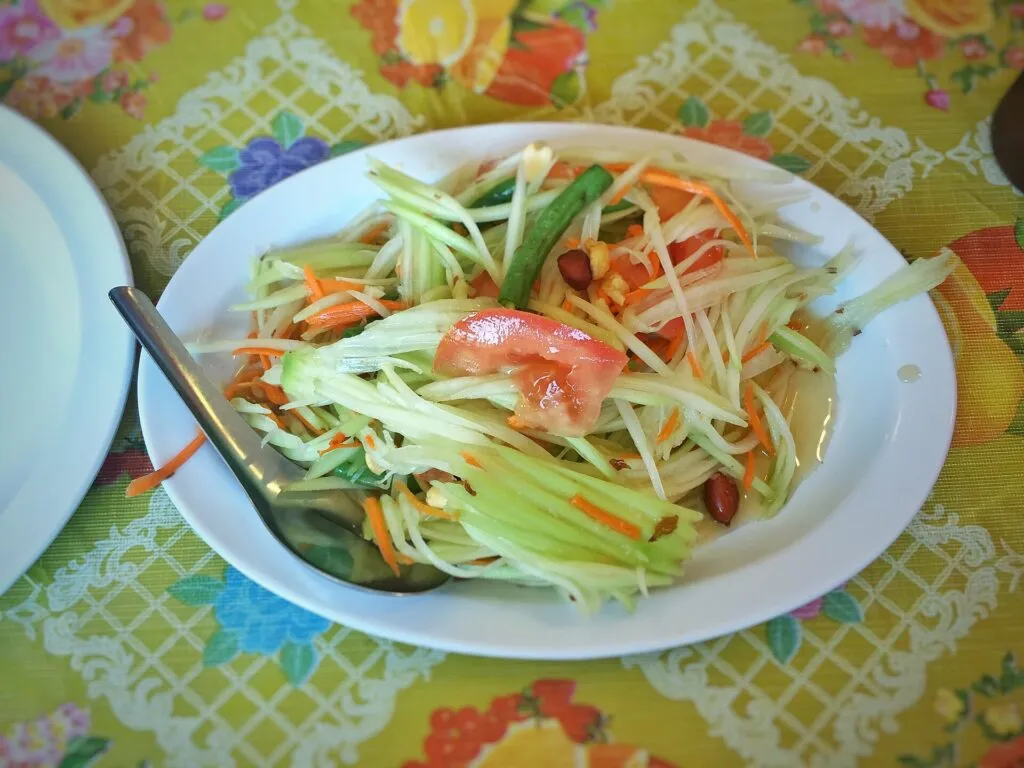
Cooking with Poo is based in the Khlong Toey community and starts with a tour of Khlong Toey market. Classes run Monday to Saturday for groups of up to 12 to 16 people, with a different set menu each day; for example, Monday is tom yum goong, pad Thai and som tum, and Tuesday is green curry, pad see ew and beef with cashew nuts, with mango and sticky rice to finish. The price includes pick-up from Phrom Phong BTS station, and the school says vegetarian, vegan and other dietary needs can be accommodated.
Blue Elephant Cooking School
Blue Elephant’s cooking school is part of its Thai restaurant at 41 South Sathorn Road, near BTS Surasak. Classes are led by Master Chef Nooror and her team, you prepare four to five dishes in about 3.5 to 4 hours, and lessons are available in English, Thai, French, Dutch and Chinese. It is the most expensive of the three.
How to choose
Our advice: choose a morning class if you want the market visit, since markets open early and that is when these schools schedule their market tours. Pick by menu as much as by price: if you want to learn curry pastes and noodle dishes you can cook at home, compare each school’s dish list before you book. Check whether the price is per person, whether it is cash only, and whether transfers are included.
- On a budget: Silom Thai Cooking School has the lowest listed price of the three.
- Want a market and community setting: Cooking with Poo’s class is built around Khlong Toey market.
- Want a restaurant kitchen and other languages: Blue Elephant teaches in five languages.
Frequently asked questions
How much is a cooking class in Bangkok?
Among these three schools, prices range from 1,200 baht (Silom Thai Cooking School) to ฿2,800++ (Blue Elephant), according to their websites.
Do Bangkok cooking classes include a market visit?
Two of these three do. Silom Thai Cooking School’s morning class and Cooking with Poo’s classes both include one.
Can vegetarians take a cooking class in Bangkok?
Yes. Cooking with Poo accommodates vegetarian and vegan diets, and Silom Thai Cooking School offers a vegetarian version for private classes.
Sources
- Silom Thai Cooking School, course times and prices
- Cooking with Poo, schedule, menus and price
- Blue Elephant Cooking School Bangkok, rates and class details
Facts checked on 7 November 2026. Prices and times are from each school’s website on that date and can change.