The boat from Aswan drops you at a sandy bank on the west side of the Nile, where houses painted sky blue, yellow and pink climb the slope. Inside one courtyard, a woman pulls round loaves from a clay oven, a pot of okra stew bubbles on the fire, and a glass of cold red hibiscus is pressed into your hand.
Nubian food is the cooking of the Nubian people of southern Egypt and northern Sudan: thick okra stews (bamia and wika), clay-pot tagens of fish, meat or vegetables, sun-risen shamsi bread and thin gurusa flatbread, dates, and hibiscus and ginger drinks. Visitors usually taste it on a lunch or dinner in a Nubian village near Aswan such as Gharb Soheil, typically USD 25–60 per person in 2026 including the boat.
This guide explains the dishes, how to get a genuine Nubian meal rather than a tourist set menu, the history behind the villages, and practical, halal and dietary notes.
Who Are the Nubians?
Nubians are an indigenous people of the Nile Valley whose civilisation is as old as ancient Egypt’s, with their own languages and traditions. In the 1960s, the building of the Aswan High Dam created Lake Nasser and flooded much of Old Nubia, and many families were resettled. Today, Nubian villages near Aswan and on the islands of the Nile keep the culture, architecture and food alive.
Dishes to Try
| Dish | What it is |
|---|---|
| Bamia | A thick okra stew with tomato, onion and garlic, heartier than northern Egyptian versions, eaten with rice or bread |
| Wika | A green stew of dried okra, earthy and slightly slippery, a Nubian classic |
| Tagen | Slow-cooked clay-pot dishes: river fish with chilli and coriander, meat with vegetables, or lentils and vegetables |
| Shamsi bread | “Sun bread”, a thick, chewy loaf left to rise in the sun, typical of southern Egypt |
| Gurusa | A thin Nubian flatbread, often eaten with stews |
| Fatta | Bread and rice layered with broth, garlic and meat, cooked for celebrations |
| Grilled meat and fish | Common on village menus, with rice and salads |
| Dates | Aswan’s dates are famous and served with tea or as dessert |
Drinks
- Karkade: hibiscus, served cold in summer and hot in winter; Aswan’s market is full of dried hibiscus flowers.
- Ginger and cinnamon drinks: warming and often freshly made.
- Tea: strong, sweet and served in small glasses.
- Doum palm juice: made from the fruit of the doum palm, with a sweet, ginger-like taste.
How to Have a Genuine Nubian Meal
TripAdvisor reviewers often say that many village restaurants serve the same tourist set menu of rice, grilled meat and small salads. To taste real Nubian home cooking:
- Ask for Nubian dishes by name: bamia, wika, tagen and shamsi or gurusa bread.
- Book a home meal through a Nubian-run guesthouse rather than a large tour group.
- Eat at a family-run Nubian restaurant on Elephantine or one of the islands, or in Gharb Soheil.
- Go at lunchtime, when food is freshly cooked, and stay for tea.
- Ask what is cooked that day; home-style menus change with what is available.
Visiting a Nubian Village
- Getting there: most visitors take a motorboat or felucca from Aswan to Gharb Soheil, about 30–60 minutes depending on the boat.
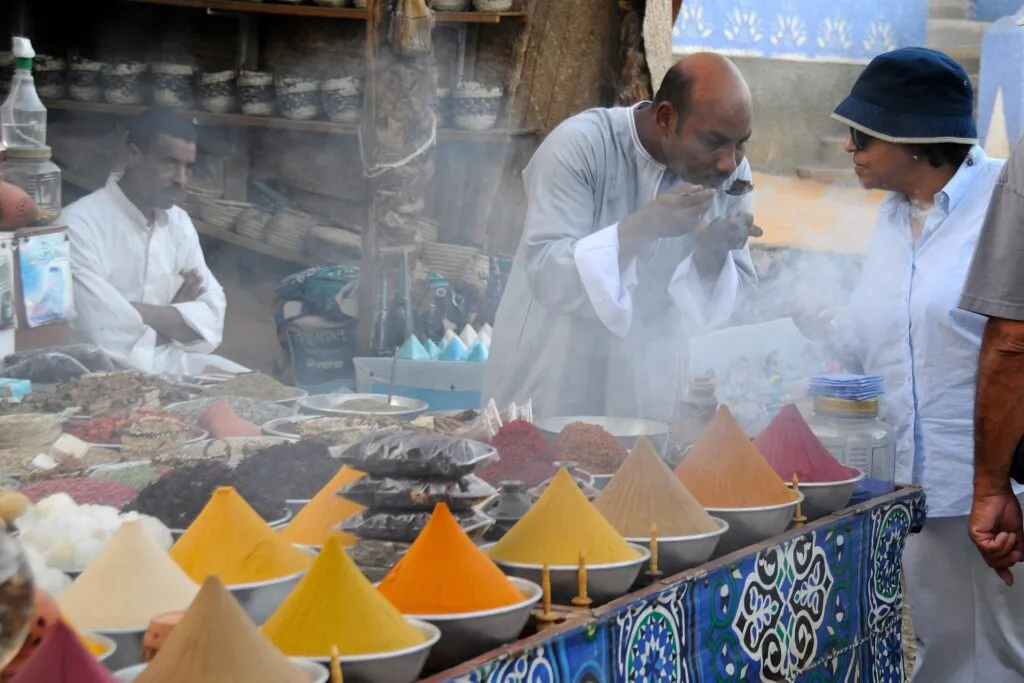
- What to expect: colourful houses, a small market selling spices, scarves and crafts, henna painting and a meal in a family home or restaurant.
- Crocodiles: some houses keep small crocodiles for tourists to hold. If animal welfare matters to you, you can politely decline.
- Respect: ask before photographing people, dress modestly and remember these are homes, not museums.
Halal and Dietary Notes
Halal note: Nubians are Muslim, and the meat served in Nubian homes and restaurants near Aswan is halal; pork is not eaten. Some tourist venues offer alcohol, but family homes and most village restaurants do not. Camel meat, occasionally served, is halal; raw camel liver, a rare special-occasion dish, carries the same food-safety risks as any raw organ meat. See our halal food travel guide.
Vegetarians eat well on bamia, wika, lentil tagens, bread, salads and dates; ask whether stews are made with meat stock. Bread contains wheat, so gluten-free travellers should choose rice.
What It Costs in 2026
| Option | Typical price |
|---|---|
| Nubian village lunch or dinner tour from Aswan, with boat | About USD 25–60 per person |
| Meal at a Nubian restaurant in a village | About USD 8–20 per person |
| Karkade or tea | A few Egyptian pounds |
| Boat to Gharb Soheil | Agree the price before boarding; shared boats are cheaper |
Plan your Egypt budget with our food budget calculator and check tipping in Egypt.
Frequently Asked Questions
What is the famous food in Aswan?
Nubian dishes such as bamia and wika, clay-pot tagens, shamsi bread, Aswan dates and hibiscus drinks.
Is a Nubian village visit worth it?
Yes for most visitors: the boat ride, colourful houses and a home-cooked meal are highlights of Aswan. Choose Nubian-run options to get the most authentic experience.
What is the difference between Nubian and Egyptian food?
Nubian food shares ingredients with Egyptian food but has its own breads, okra stews such as wika, clay-pot tagens and spicier, heartier flavours.
What is shamsi bread?
A thick, chewy loaf from southern Egypt, left to rise in the sun before baking, which is how it gets its name, “sun bread”.
What is wika?
A Nubian green stew made with dried okra, garlic and spices, eaten with bread or rice.
Is Nubian food spicy?
Some dishes are, especially fish tagens with chilli, but most are warmly spiced rather than very hot.
Is Nubian food halal?
Yes. Nubians are Muslim and do not eat pork, and meat is halal-slaughtered.
How do I get to the Nubian village in Aswan?
By motorboat or felucca from Aswan’s Corniche to Gharb Soheil, or as part of an organised tour. Agree prices before setting off.
Can I visit a Nubian home?
Yes. Many families welcome visitors for tea or a meal, often arranged through guides, guesthouses or tour operators.
What should I buy in Aswan?
Dried hibiscus, spices, dates and Nubian crafts from the Aswan souk and village markets.
When is the best time to visit Aswan?
October to April, when temperatures are pleasant. Summer is extremely hot.
More from Egypt: seafood in Alexandria, koshari in Cairo and our halal food travel guide.
Sources
- Nubian food and cuisine, Egypt United Tours (breads, stews, tagens)
- Nubian food, Aswan Visit (shamsi bread, bamia)
- Nubian village in Aswan, Nile Empire