A cooking class is one of the best ways to understand Balinese food, with its spice pastes, coconut and rice, and the offerings that go with daily life. Ubud has many classes. This guide compares three established schools using their own websites, and explains what you will actually do and how to choose.
Three schools compared
| School | Where | Format | Price (from the school’s website) |
|---|---|---|---|
| Casa Luna Cooking School | Jalan Bisma, central Ubud | A different menu each day; market tour on Tuesday and Thursday; about 3.5 to 4 hours, mostly mornings | IDR 500,000 to 600,000 per person |
| Paon Bali Cooking Class | Laplapan village, near Ubud | Morning class from 08:30 with an Ubud market visit; afternoon class from 15:30 | Not listed; book by WhatsApp |
| Jambangan Bali Cooking Class | Ubud area | Hands-on cooking at a family home, plus coconut oil making, offerings and palm-leaf weaving | Not listed |
Casa Luna Cooking School
Casa Luna has run classes in Ubud since 1992, at the Honeymoon Guesthouse on Jalan Bisma. Each day of the week has its own menu, which its website lists as:
- Monday: barramundi in banana leaves, a fish curry and greens (IDR 500,000)
- Tuesday and Thursday: market tour and cooking, 4 hours (IDR 550,000)
- Wednesday: ceremonial dishes, with food, offerings and ritual (IDR 500,000)
- Friday: Indonesian classics, described as beginner friendly (IDR 500,000)
- Saturday: plant-based cooking (IDR 500,000)
- Sunday: Twilight Smoked Duck, a shared-table class (IDR 600,000)
If you want to choose your class by dish, this is the easiest school to plan around.
Paon Bali Cooking Class
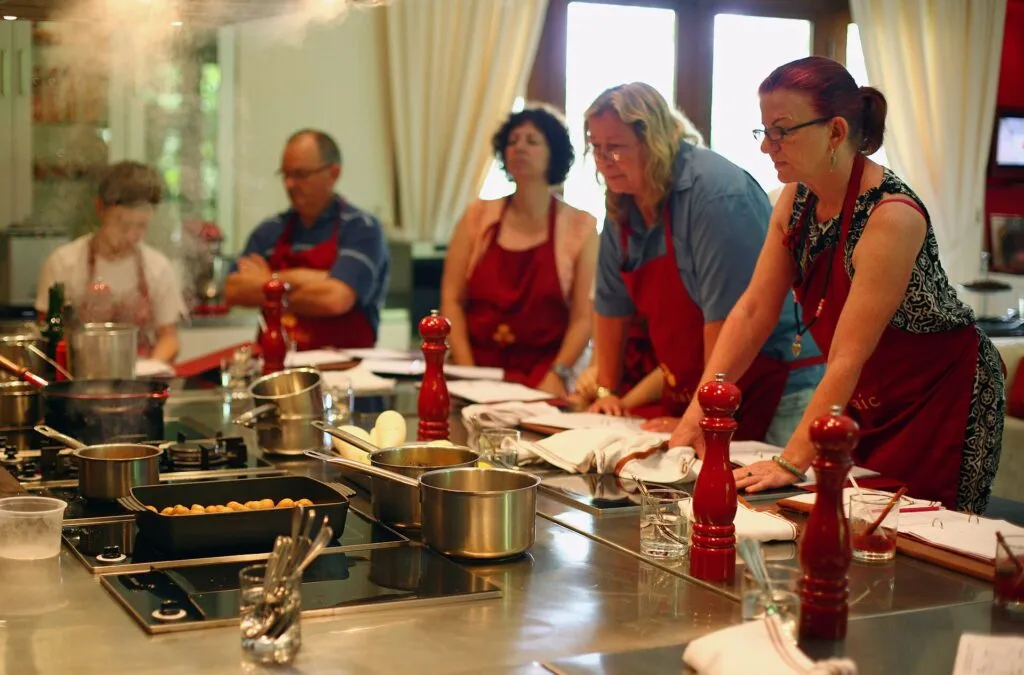
Paon Bali teaches in a village kitchen in Laplapan. According to its website, the morning class starts at 08:30 at the Ubud market, where you pick herbs, spices, vegetables and meat, then continues with a walk through the rice fields before cooking in Laplapan with your host, Puspa. The afternoon class starts at 15:30. Both offer vegetarian and non-vegetarian menus, and you get a recipe book to take home.
Jambangan Bali Cooking Class
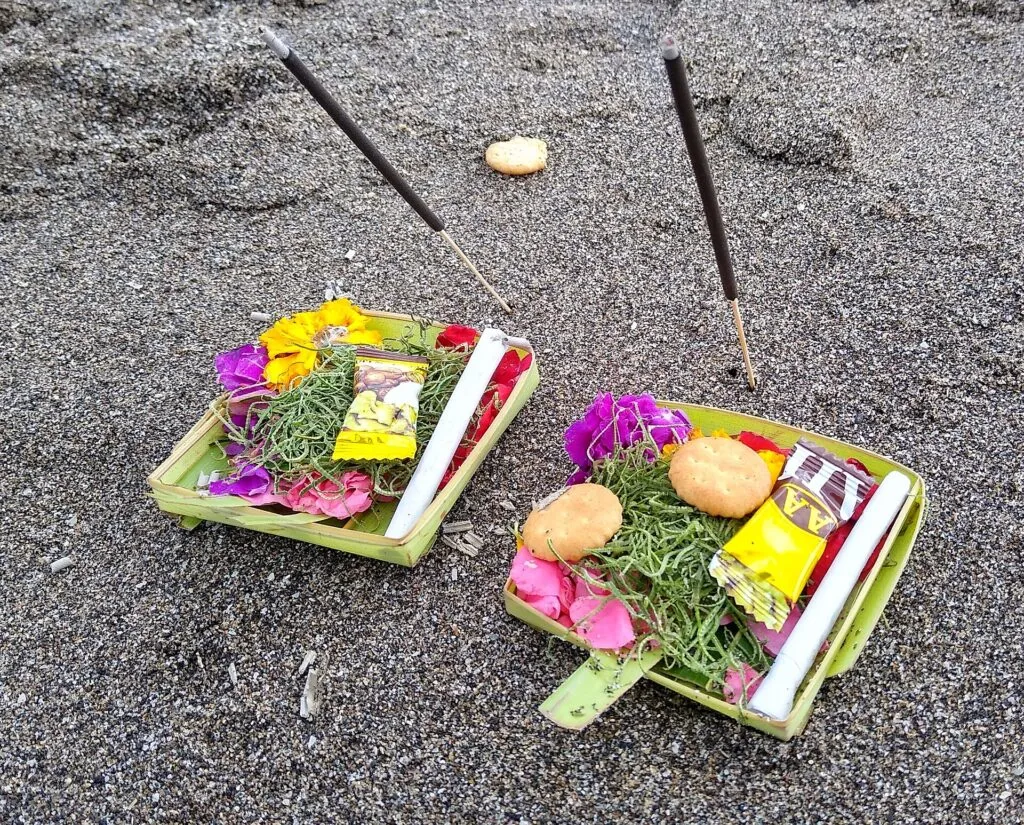
Jambangan runs hands-on classes at the family’s home and adds traditional household activities: its website lists making coconut oil, making a simple offering and watching the daily house offering, and weaving coconut leaves into the mats used for roofs and temple cooking.
How to choose
Our advice: if seeing the market matters to you, book a morning class, because the market visits these schools describe happen in the morning (at Casa Luna, only on Tuesdays and Thursdays). Tell the school about any diet when you book; Casa Luna and Paon Bali both advertise vegetarian or plant-based options. Check whether hotel pick-up is included for where you are staying, as schools outside central Ubud may charge extra for transfers.
- Want a specific dish or theme? Casa Luna’s daily menus make it easy to choose.
- Want village life and the rice fields? Paon Bali’s morning class combines the market, a rice-field walk and a village kitchen.
- Want the household traditions? Jambangan adds coconut oil, offerings and weaving.
Frequently asked questions
How much does a cooking class in Ubud cost?
Casa Luna lists IDR 500,000 to 600,000 per person. Other schools set their own prices; check the school’s own website or ask when booking.
Do Ubud cooking classes include a market visit?
Usually only the morning classes. Paon Bali’s morning class starts at the market, and Casa Luna’s market tours run on Tuesdays and Thursdays.
Are there vegetarian cooking classes in Ubud?
Yes. Casa Luna has a plant-based class on Saturdays, and Paon Bali offers vegetarian and non-vegetarian menus.
Sources
- Casa Luna Cooking School, class list and prices
- Paon Bali Cooking Class, programme and class times
- Jambangan Bali Cooking Class, activities
Facts checked on 7 November 2026. Prices and times are from each school’s website on that date and can change.