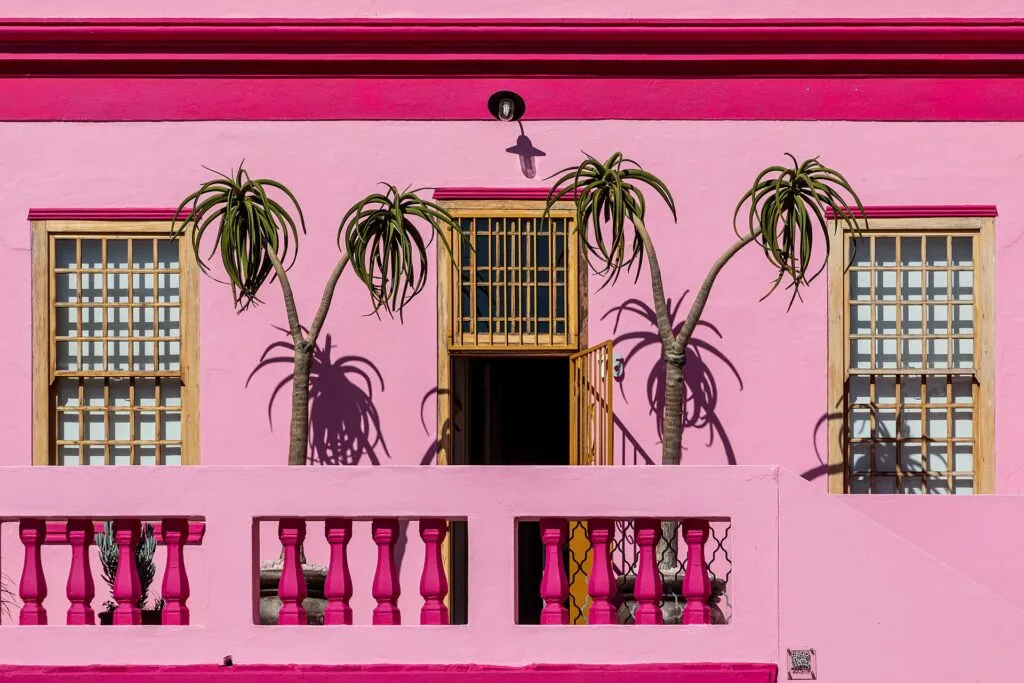
On a Sunday morning in the Bo-Kaap, the brightly painted houses on the slopes of Signal Hill smell of cinnamon, cardamom and frying dough. Families are making koesisters, and neighbours drop by with plates. This is the heart of Cape Malay cooking, and of Muslim Cape Town.
Cape Malay food is the cooking of Cape Town’s long-established Muslim community: mildly spiced, sweet-and-savoury dishes such as bobotie (baked spiced mince with an egg topping), tomato bredie (lamb stew), Cape Malay curry, samoosas and coconut-dusted koesisters. The Bo-Kaap neighbourhood is the best place to taste it, and cooking classes there teach the recipes. Cape Malay food is traditionally halal, and Cape Town has one of the easiest halal food scenes in Africa. In 2026 a bobotie or curry plate costs roughly R120–220.
This guide covers the history, the dishes, where to eat and learn, the South African braai the halal way, prices and useful phrases.
A cuisine born from history
From the 17th century the Dutch East India Company brought enslaved people, political exiles and craftspeople to the Cape from Indonesia, Malaysia, India, Sri Lanka and East Africa. Many were Muslim, and their descendants became known as the Cape Malay community.
They blended spices from the East with local ingredients and Dutch techniques. The Bo-Kaap is home to the Auwal Mosque, founded in 1794 and regarded as South Africa’s oldest mosque.
Dishes to know
| Dish | What it is |
|---|---|
| Bobotie | Minced meat baked with curry spices, dried fruit and an egg custard topping; often called South Africa’s national dish |
| Tomato bredie | Slow-cooked lamb and tomato stew |
| Cape Malay curry | Mild, fragrant and slightly sweet, with lamb, chicken or fish |
| Breyani | Layered spiced rice with meat and lentils |
| Sosaties | Marinated, curry-spiced kebabs |
| Samoosas and dhaltjies | Triangular pastries and chilli bites (spiced fritters) |
| Koesisters | Spiced, syrup-soaked doughnuts rolled in coconut; different from the plaited Afrikaner koeksister |
| Falooda | Sweet rose-flavoured milk drink |
Halal note: Cape Malay restaurants and home cooking are traditionally halal. Cape Town has well-established certification from the South African National Halaal Authority (SANHA) and the Muslim Judicial Council Halaal Trust; look for their logos on restaurants, butchers and supermarket products. Outside Muslim-run places, check as usual. See our halal food travel guide.
Where to eat and learn
- The Bo-Kaap – small restaurants and takeaways serving curries, bobotie, samoosas and koesisters.
- Cooking classes and food walks in the Bo-Kaap – local hosts teach samoosa folding, roti and curry, often in their own kitchens.
- Athlone and other Cape Flats neighbourhoods – many Muslim-run takeaways, known for gatsbys (huge filled sandwiches) and curries.
- Halal butchers and supermarkets – easy to find if you want to cook.
Respect the neighbourhood: the Bo-Kaap is a living community, not a set. Ask before photographing people and dress modestly when visiting mosques.
The braai, halal-style
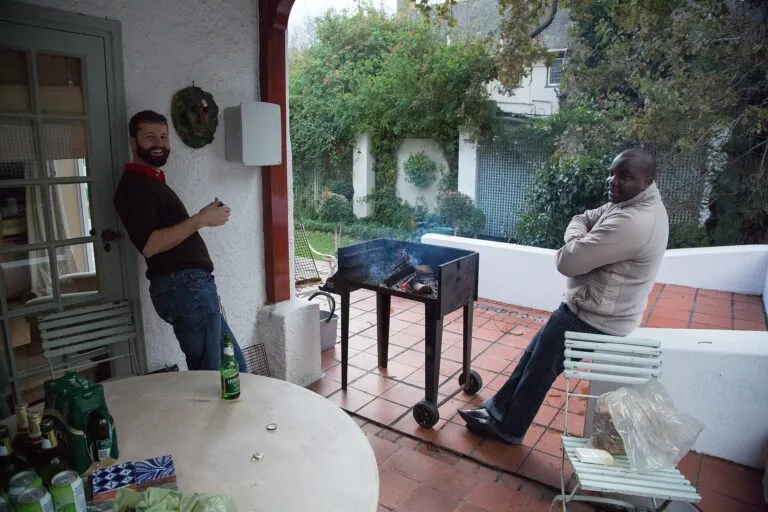
The braai (barbecue) is a South African institution. For a halal braai, buy boerewors (spiced sausage), lamb chops and sosaties from a certified halal butcher; many Cape Town butchers sell halal boerewors. Public parks and many holiday rentals have braai stands.
When to go
- Sunday mornings – koesister time in the Bo-Kaap.
- Ramadan – iftar tables, fresh samoosas and a warm community atmosphere.
- Late summer to autumn (roughly February to May) – warm and settled weather.
What it costs (2026)
| Order | Typical price |
|---|---|
| Bobotie or curry plate | About R120–220 |
| Samoosas (each) | About R8–20 |
| Koesister | About R8–20 |
| Gatsby (shared) | About R100–250 |
| Bo-Kaap cooking class | Priced per person; book ahead |
Plan your budget with the South Africa food budget calculator and read tipping in South Africa.
Useful phrases
| Say | Language | Meaning |
|---|---|---|
| Is dit halaal? | Afrikaans | Is it halal? |
| Bevat dit varkvleis? | Afrikaans | Does it contain pork? |
| Assalamu alaikum | Greeting | A common greeting in the Bo-Kaap |
| Baie dankie | Afrikaans | Thank you very much |
Frequently asked questions
What is Cape Malay food?
The cooking of Cape Town’s Muslim community: mildly spiced dishes such as bobotie, bredie, curries, samoosas and koesisters.
Is Cape Malay food halal?
Traditionally yes. Look for SANHA or MJC Halaal Trust certification at restaurants.
What is bobotie?
Spiced minced meat with dried fruit, baked under an egg custard topping.
Where can I try Cape Malay food?
In the Bo-Kaap, at Muslim-run restaurants and takeaways, and in cooking classes.
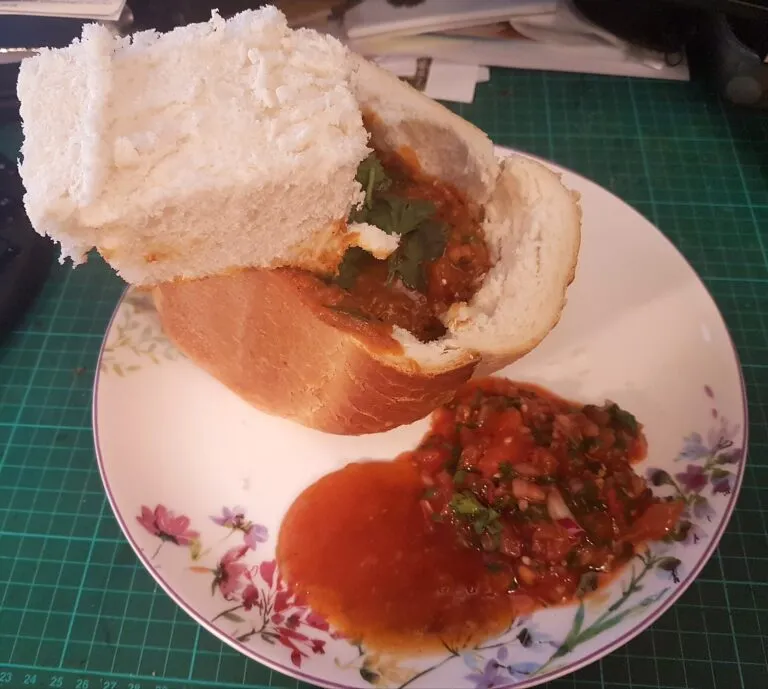
More from South Africa: bunny chow in Durban. See all South Africa food guides.
Sources
- Cape Town Tourism – official tourism site.
- Cape Malay cuisine and Auwal Mosque.