In a park in Porto Alegre on a Sunday afternoon, people walk with a thermos under one arm and a gourd in the other hand. Groups sit in circles on the grass, and one gourd goes round and round, refilled with hot water each time.
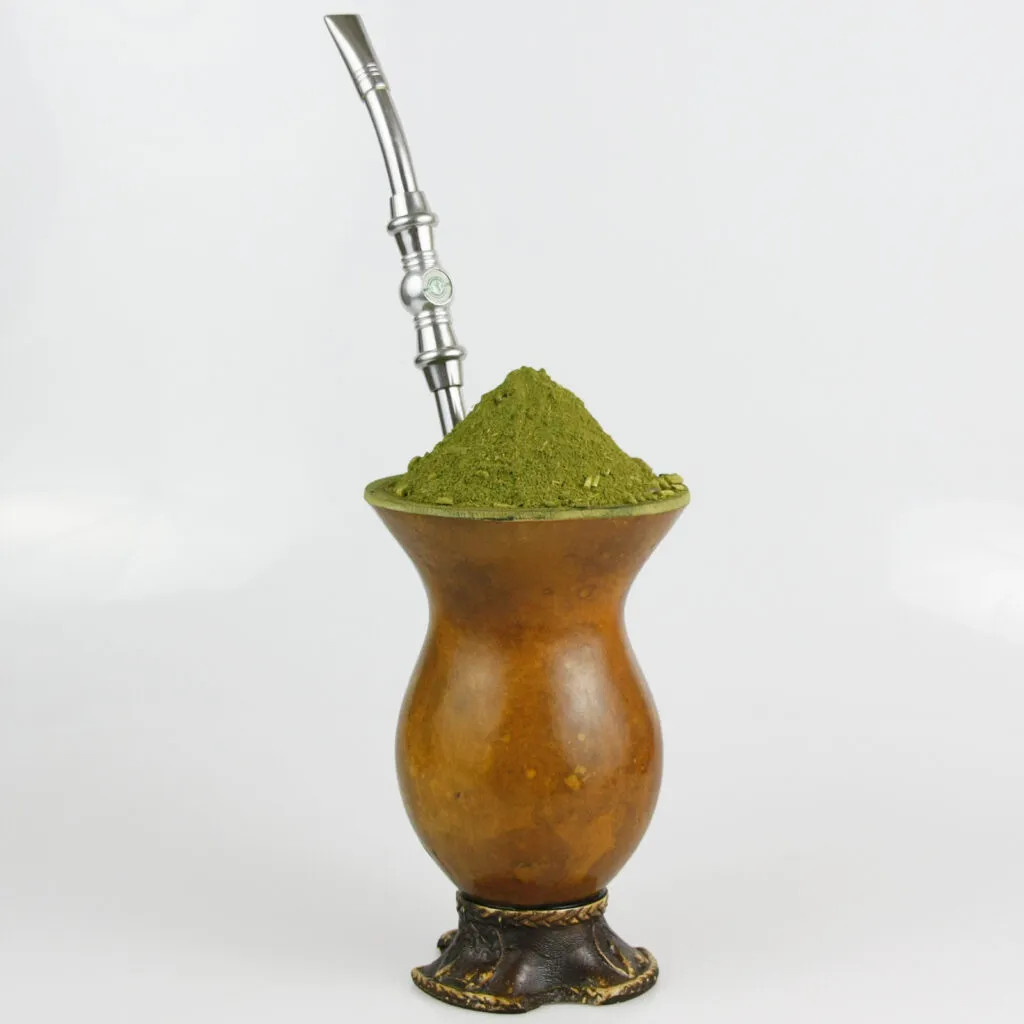
Chimarrão is southern Brazil’s version of mate: a bright green, finely ground herb (erva-mate) steeped in hot water in a gourd called a cuia and sipped through a metal straw called a bomba. It is the daily drink of Rio Grande do Sul and much of Santa Catarina and Paraná, shared at home, at work and in the street.
This guide explains what chimarrão is, how it differs from other mate, how to prepare it, the etiquette of the sharing circle, and where travellers can try it. A kilo of erva for chimarrão costs only a few dollars in a southern Brazilian supermarket in 2026.
What Chimarrão Is Made Of
Chimarrão uses just two ingredients: erva-mate and hot water. Nothing else is added in the traditional version, and it is drunk without sugar.
Erva-mate comes from the leaves and thin stems of Ilex paraguariensis, a holly tree native to the forests of southern Brazil, Paraguay, northeastern Argentina and Uruguay. The Guaraní people drank it long before Europeans arrived.
The erva sold for chimarrão is different from most mate sold elsewhere. It is dried quickly, ground very fine, almost to a powder, and sold fresh rather than aged, which keeps it a vivid green colour. The taste is grassy, fresh and bitter.
Chimarrão vs Yerba Mate: What Is the Difference?
This is the most common question people ask about it, on forums and in search. The short answer: chimarrão is a way of preparing mate, and also the name for the style of erva used for it in Brazil.
| Details | Brazilian chimarrão | Argentine and Uruguayan mate |
|---|---|---|
| Erva colour | Bright green | Olive to brownish green |
| Grind | Very fine, powdery, few stems | Coarser, often with more stems |
| Ageing | Sold fresh, not aged | Often aged for months |
| Flavour | Fresh, grassy, vegetal | Earthier, often smokier |
| Gourd | Large cuia with a wide mouth | Usually a smaller gourd |
| Name of the straw | Bomba | Bombilla |
Cold mate is a different drink again. Tereré, made with cold water or juice, is the classic in Paraguay and in Brazil’s Mato Grosso do Sul.
The Cuia, the Bomba and the Thermos
- Cuia: the gourd. Traditionally it is made from a dried calabash (porongo), often with a wide mouth and a carved or metal-trimmed rim. Wooden and ceramic versions are also sold.
- Bomba: a metal straw, often stainless steel or silver-coloured, with a filter at the bottom that keeps the fine powder out of your mouth. Brazilians prefer bombas with a rounded, spoon-shaped filter for fine chimarrão erva.
- Garrafa térmica: the thermos of hot water that goes everywhere with chimarrão drinkers.
A new calabash cuia is usually cured before first use by filling it with erva and hot water for a day or two. This seals the inside and reduces bitterness.
How to Prepare Chimarrão
Preparing it well takes practice. Fine Brazilian erva clogs easily, which is the most common beginner’s complaint.
- Fill the cuia a little over halfway with erva.
- Cover the opening with your hand, tip it upside down and shake gently, so the finest powder moves away from the bottom.
- Tilt the cuia to about 45 degrees so the erva forms a slope, with an empty space on the lower side.
- Pour a little lukewarm water into the empty space and wait a minute or two while the erva absorbs it.
- Cover the top of the bomba with your thumb and push it into the wet side, down to the bottom. Do not move it after this.
- Fill the space with hot water, not boiling: about 70–80 °C. The first sips are the strongest.
Boiling water burns the leaves and makes the drink harsh. Many Brazilian kettles have a chimarrão setting for this reason.
The Roda de Chimarrão: Sharing Etiquette
Chimarrão is usually shared in a circle, a roda. One person, the server, prepares it and refills the cuia for everyone in turn. Visitors are welcome to join, and a few habits help:
- The server drinks first. The first cuia is the strongest and most bitter, so the person who prepared it usually drinks it.
- Drink the whole cuia. Sip until you hear a slurping sound, then hand it back to the server for a refill.
- Do not move the bomba. Stirring or lifting it disturbs the erva and clogs the straw. The server sees it as a sign you do not know the ritual.
- Pass it the same way round. The cuia goes back to the server, who refills it for the next person.
- Say thank you only when you have had enough. In many rodas, “obrigado” or “obrigada” means you do not want another round.
Sharing one straw is normal in a roda. If you would rather not share, it is fine to politely decline or to bring your own cuia.
Where Chimarrão Is Part of Daily Life
Rio Grande do Sul is the heart of chimarrão culture, and it is closely tied to the identity of the gaúcho, the cowboy of the southern plains. You will see it most in:
- Porto Alegre: in parks such as Parque da Redenção (Farroupilha Park) and along the Guaíba waterfront, especially at weekends.
- Venâncio Aires: a town in Rio Grande do Sul recognised as Brazil’s national capital of chimarrão, with an erva-mate festival.
- The Acampamento Farroupilha: a gaúcho culture camp held in Porto Alegre each September around Semana Farroupilha, with traditional music, food and plenty of chimarrão.
- Santa Catarina and Paraná: chimarrão is common across the south, especially in the countryside and cooler highland towns.
Pair a visit with southern Brazil’s other great tradition, the gaúcho barbecue: see our churrasco guide.
Caffeine and Health
Erva-mate contains caffeine, along with related compounds also found in tea and cocoa. Many drinkers say it gives a steadier lift than coffee, though the amount you take in depends on how much erva you use and how many refills you drink.
Research on mate is ongoing, and claims online often go beyond the evidence. Studies have linked drinking very hot beverages regularly, including mate, with a higher risk of oesophageal cancer, so let the water cool below boiling. People who are sensitive to caffeine, pregnant or on medication should treat it like strong tea or coffee and check with a doctor if unsure.
Chimarrão is plant-based and alcohol-free, so it suits almost every diet. In winter, watch for quentão at southern Brazilian June festivals: it looks like a hot spiced drink but is made with cachaça, a spirit.
History in Brief
The Guaraní people of the Paraná and Paraguay river basins were drinking mate before the Spanish and Portuguese arrived. Jesuit missionaries in the region first condemned it, then began cultivating the plant themselves in the 17th century, which helped it spread.
The name comes from the River Plate Spanish word cimarrón, meaning wild or untamed, a reference to drinking the mate bitter, without sugar. Some popular websites claim the word means “secret”, but the usual explanation is cimarrón.
Buying Erva and a Cuia
| Item | Typical price in southern Brazil, 2026 |
|---|---|
| 1 kg erva-mate for chimarrão, supermarket | About BRL 15–35 |
| Simple calabash cuia | About BRL 30–80 |
| Stainless-steel bomba | About BRL 20–60 |
| Decorated cuia with metal rim, souvenir shop | BRL 100 and up |
Erva for chimarrão is freshest in southern Brazil; it loses its colour and flavour over a few months. If you take some home, check your country’s rules on bringing plant products through customs.
Plan the rest of your food spending with our food budget calculator for Brazil and check service charges in the tipping guide for Brazil.
Portuguese Phrases for the Roda
| Say | Meaning |
|---|---|
| Aceita um chimarrão? | Would you like some chimarrão? |
| Sim, por favor | Yes, please |
| Obrigado / Obrigada (when finished) | Thank you, I’ve had enough |
| Está muito quente | It’s very hot |
| Onde posso comprar erva-mate? | Where can I buy erva-mate? |
| Qual cuia você recomenda? | Which gourd do you recommend? |
Frequently Asked Questions
What does chimarrão taste like?
Fresh, grassy and bitter, a little like strong green tea with a vegetal edge. The first cuias are the strongest; the flavour softens with each refill.
Is chimarrão the same as matcha?
No. Both are bright green and finely ground, but matcha is powdered Japanese green tea whisked into the water and drunk whole, while chimarrão is erva-mate steeped and sipped through a filtered straw.
Can you add sugar to chimarrão?
Traditionally, no: chimarrão is drunk bitter. Sweetened mate is more common in Argentina and Uruguay, and some beginners add a little sugar until they get used to the taste.
How many times can you refill the cuia?
Often 15 to 20 times or more, until the erva loses its flavour and the drink tastes washed out. Then the server empties the cuia and starts again.
Why does my bomba keep clogging?
Fine Brazilian erva clogs easily. Shake the finest powder away from the bottom, wet the erva before inserting the bomba, use a bomba with a spoon-shaped filter, and never stir it.
Is chimarrão only drunk in winter?
No. Southern Brazilians drink it all year. In hot weather some switch to tereré, the cold version.
Can I bring a cuia home as a souvenir?
Yes, cuias are popular souvenirs. Natural gourds may need to be declared at customs in some countries, and they should be dried thoroughly after use to prevent mould.
Is chimarrão alcohol-free?
Yes. It is simply erva-mate and hot water, with no alcohol.
More from Brazil: Amazonian food, feijoada in Rio, brigadeiros and all Latin America and Caribbean food guides.
Sources
- Chimarrão, Wikipedia in Portuguese (Guaraní origin, Jesuits, Venâncio Aires, Acampamento Farroupilha)
- How to prepare chimarrão, Yerba Mate Lab (preparation, water temperature)
- Mate (drink), Wikipedia (caffeine, health research)