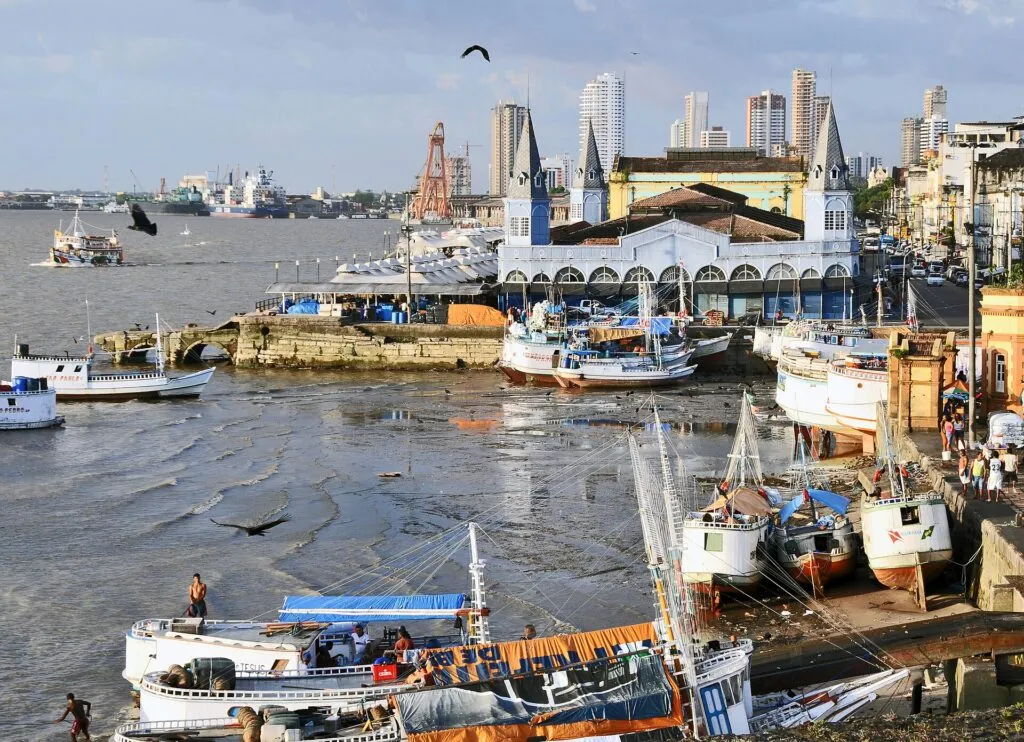
At Belém’s Ver-o-Peso market, boats unload baskets of purple açaí berries at dawn, fish sellers lay out catfish longer than your arm, and a woman ladles steaming yellow broth into gourd bowls for the first tacacá of the day.
Amazonian food is built on three things the rainforest gives in abundance: river fish, cassava (manioc) and fruit. Across Brazil, Peru, Colombia and Ecuador, the region’s cooks turn them into dishes found nowhere else: tacacá and pato no tucupi in Belém, tambaqui ribs and the tucumã sandwich in Manaus, juane and tacacho in Iquitos, maito in Ecuador.
This guide covers the key ingredients, the dishes to try country by country, the fruits most visitors have never heard of, where to eat in the main gateway cities, what to avoid for health, conservation and dietary reasons, and what food costs on the river in 2026.
The Three Pillars of Amazonian Cooking
- River fish. The Amazon basin holds more fish species than any other river system on Earth. Tambaqui, pirarucu (paiche in Peru), catfish and even piranha are everyday food.
- Cassava (manioc). The region’s staple carbohydrate, eaten as farinha (toasted cassava flour sprinkled on everything), tapioca, and tucupi, a yellow broth pressed from bitter cassava.
- Fruit. Açaí, cupuaçu, camu camu, aguaje, bacuri and dozens more, eaten fresh, as juice and ice cream, and in sauces.
Indigenous and riverside (ribeirinho) communities developed these foods over thousands of years. European, African and later Japanese and Lebanese influences added ingredients and techniques, especially in the big cities.
Brazil: Belém, Manaus and the Lower Amazon
Tacacá
Belém’s favourite street food is a scalding soup served in a cuia (gourd bowl): tucupi broth thickened with tapioca starch, with dried shrimp and jambu leaves, which make your lips and tongue tingle and go slightly numb. The same plant, called brède mafana, flavours Madagascar’s romazava. It descends from an Indigenous soup that 16th-century travellers already described. Locals sip it straight from the bowl in the late afternoon.
Pato no Tucupi
Duck simmered in tucupi with jambu, Pará’s most iconic dish. It is the traditional family meal of the Círio de Nazaré, the huge religious procession that fills Belém’s streets every October and draws around two million people.
Tambaqui and Pirarucu
Tambaqui is the fish the region cooks most, and its salted, charcoal-grilled ribs (costela de tambaqui) are a Manaus classic with farinha and lime. Pirarucu, one of the largest freshwater fish in the world, is often salted and dried like cod, or served as steaks and in stews.
Açaí the Amazonian Way
Forget the sweet smoothie bowls sold abroad. In Belém and Manaus, açaí is a thick, unsweetened, savoury purple purée eaten as part of a meal, with farinha and fried fish or dried shrimp. Ask for it puro (pure) at a market stall.
X-Caboquinho and Tapioca
Manaus’s breakfast sandwich, the X-caboquinho, is a roll filled with tucumã palm fruit, fried plantain and white cheese, sold at bakeries and street stalls from dawn. Tapioca crêpes, folded around cheese, coconut or tucumã, are everywhere too.
Peru: Iquitos and the Northern Amazon
Iquitos, the largest city in the world that cannot be reached by road, has a lively jungle food culture centred on the Belén market.
- Juane: rice seasoned with turmeric and spices, wrapped around chicken, egg and olive in a bijao leaf and boiled. It is the dish of the San Juan festival on 24 June; fish and vegetarian versions are also made.
- Tacacho: grilled green plantain mashed with fat into balls, eaten at breakfast. It is traditionally served with cecina (smoked pork) and made with pork fat, so see the dietary notes.
- Patarashca: fish seasoned with chilli, garlic and coriander, wrapped in leaves and grilled.
- Inchicapi: a soup of chicken, peanut, cassava and coriander.
- Paiche: the Peruvian name for pirarucu, served grilled, fried or as ceviche in Iquitos restaurants.
Ecuador and Colombia
In Ecuador’s Amazon, around towns such as Tena and Puyo, maito is the signature dish: fish (often tilapia or local catfish) wrapped in leaves and grilled over coals, served with cassava and plantain. Some markets also sell chontacuro, grilled palm grubs.
In Colombia, Leticia sits on the three-way border with Brazil and Peru, and its food mixes all three: grilled river fish, farinha, and juices from fruits such as copoazú (cupuaçu) and camu camu.
Fruits of the Amazon
| Fruit | What it tastes like | How it is used |
|---|---|---|
| Açaí | Earthy, like unsweetened berries and cocoa | Savoury purée with meals; sweetened bowls in southern Brazil and abroad |
| Cupuaçu (copoazú) | Tangy, with notes of pineapple and chocolate; a cacao relative | Juice, ice cream, sweets |
| Camu camu | Very sour, extremely high in vitamin C | Juice, ice lollies |
| Aguaje | Oily, tangy, slightly carrot-like | Juice and ice lollies (aguajina) in Iquitos |
| Bacuri | Sweet-sour, fragrant | Ice cream and sweets in Belém |
| Tucumã | Rich, oily, orange palm fruit | X-caboquinho sandwiches, farofa |
| Taperebá (cajá) | Sharp and tropical | Juice and ice cream |
| Cacao | Fresh pulp is sweet and tangy | Fruit pulp, chocolate; see our chocolate tour guide |
Belém’s ice cream shops and juice stalls are the easiest way to try many of these in one afternoon.
Where to Eat in the Gateway Cities
- Belém (Brazil): Ver-o-Peso market for açaí, fish and tacacá stalls; tacacá sellers on street corners in the late afternoon; restaurants specialising in regional food for pato no tucupi.
- Manaus (Brazil): the Adolpho Lisboa municipal market and fish market; grilled tambaqui restaurants; tacacá stalls near the Teatro Amazonas.
- Iquitos (Peru): Belén market for tacacho, juane and exotic produce; the riverside Malecón for restaurants.
- Tena and Puyo (Ecuador): markets and roadside grills for maito.
- Leticia (Colombia): the market and riverside restaurants for grilled fish.
On river cruises and jungle lodges, meals are usually set menus of fish, rice, beans, cassava and fruit. On public river boats, travellers on forums advise bringing your own water and snacks, because food on board is basic.
Health and Safety Notes
- Tucupi and maniçoba are cooked for a reason. Bitter cassava and its leaves contain natural compounds that release cyanide; tucupi is boiled for hours and maniçoba leaves for about a week. Eat them only from established cooks, never raw.
- Drink bottled or treated water, and be careful with ice and raw salads in remote areas.
- Açaí should come from reputable sellers. Fresh açaí pulp must be handled hygienically; in Brazil it is often pasteurised for safety.
- Jambu numbs your mouth. It is harmless, but surprising the first time.
Conservation: What Not to Order
Some foods sold in the Amazon come from threatened animals. Avoid turtle, caiman and wild game (bushmeat), which are often illegal or unsustainable. Pirarucu is a success story where it comes from managed community fisheries, so ask whether it is manejado (managed). Choose farmed tambaqui and seasonal fish, and respect fishing seasons.
Dietary and Halal Notes
Halal note: much Amazonian food is naturally easy for Muslim travellers: river fish, cassava, plantain, fruit and açaí. Watch for pork in maniçoba (cassava leaves with pork and sausage), tacacho con cecina (smoked pork, with plantain mashed in pork fat) and some stews, and remember that chicken and duck at ordinary places are not halal-slaughtered. Tacacá contains dried shrimp, which most scholars permit; some Hanafi scholars permit only fish, so check with your own scholar. Insects such as palm grubs and ants are sold in some markets; most scholars do not consider them halal. Halal restaurants are very rare in the region, so fish and vegetarian dishes are the easiest choice. See our halal food travel guide.
Vegetarians eat well on fruit, cassava, plantain, rice, beans, tapioca and juices, but ask about fish stock and pork fat.
What Food Costs in the Amazon in 2026
| Item | Typical price |
|---|---|
| Tacacá from a street stall, Belém | About BRL 20–35 |
| Grilled tambaqui plate, Manaus | About BRL 50–90 |
| Açaí with fish at Ver-o-Peso | About BRL 25–45 |
| Juane or tacacho, Iquitos market | About PEN 8–15 |
| Maito plate, Ecuadorian Amazon | About USD 5–8 |
Plan the rest of your budget with our calculator for Brazil or Peru.
Frequently Asked Questions
What do people in the Amazon eat every day?
River fish, cassava in the form of farinha or tapioca, plantain, rice and beans, and fruit. Açaí is a daily staple in parts of Pará.
What is tucupi?
A yellow broth pressed from bitter cassava root and boiled for hours to remove its natural toxins. It is sour and savoury, and is the base of tacacá and pato no tucupi.
What is jambu?
A leafy herb from the Amazon that makes your mouth tingle and go slightly numb. It goes into tacacá and pato no tucupi.
Is açaí in the Amazon sweet?
No. Traditionally it is unsweetened and eaten as part of a savoury meal with farinha and fish. Sweet açaí bowls are a southern Brazilian and international style.
Can you eat piranha?
Yes. Piranha is eaten across the Amazon, usually fried or in a soup said to be restorative. It is bony but tasty.
What is pirarucu (paiche)?
One of the largest freshwater fish in the world, with firm white meat. It is eaten fresh, salted and dried. Choose pirarucu from managed fisheries where possible.
What is the most famous dish of the Brazilian Amazon?
Pato no tucupi, duck in tucupi broth with jambu, especially associated with Belém’s Círio de Nazaré festival in October. Tacacá is the best-known street food.
What is juane?
A Peruvian Amazon parcel of seasoned rice with chicken, egg and olive, wrapped in a bijao leaf and boiled, eaten especially for the San Juan festival on 24 June.
Is food on Amazon river cruises good?
On cruise ships and jungle lodges, food is usually good and focused on local fish and fruit, with options for dietary needs if requested in advance. On public river boats, it is basic, so bring snacks and water.
Is it safe to eat street food in Belém and Manaus?
Generally yes at busy, established stalls. Choose places with high turnover, eat food that is cooked hot, and drink bottled water.
What is farinha?
Toasted cassava flour, coarse and crunchy, sprinkled over fish, beans and açaí. In the Amazon it is often yellow and especially crunchy (farinha d’água).
Do people eat insects in the Amazon?
In some places, yes: palm grubs (suri in Peru, chontacuro in Ecuador) are sold grilled in markets, and some Indigenous communities eat ants. They are optional for visitors.
What fruit should I try first?
Cupuaçu for its unusual pineapple-chocolate flavour, camu camu for its intense sourness, and fresh unsweetened açaí to understand why it matters so much locally.
Can I bring Amazonian fruit home?
Usually not fresh, because of plant import rules. Frozen pulp, chocolate, dried products and sealed jams are easier, but check your country’s customs rules.
More from South America: quinoa in the Andes, ceviche in Lima, chimarrão, feijoada in Rio, churrasco, all Latin America and Caribbean food guides.
Sources
- Amazonian food: typical dishes in Brazil, Planeta Exo (tambaqui, tucumã, Círio de Nazaré)
- Amazon rainforest food, Rainforest Cruises (Peruvian dishes, maniçoba)
- Typical Amazon rainforest food, Quito Trip (Ecuadorian Amazon, prices)
- Tacacá, Wikipedia