Crete has eleven protected olive oil names, and several mills and estates on the island open their doors to visitors. This guide covers the protected oils you will see on labels, when the harvest happens, where you can tour a mill or see an ancient olive tree, and how to choose a bottle to take home.
Crete’s protected olive oils
The EU register of geographical indications lists ten protected designations of origin (PDO) and one protected geographical indication (PGI) for olive oil from Crete. A PDO oil must come from olives grown and pressed in the named area under its registered specification.
| Name on the label | Type | Area | Registered |
|---|---|---|---|
| Kolymvari Chanion Kritis | PDO | Kolymvari, Chania | 1997 |
| Apokoronas Chanion Kritis | PDO | Apokoronas, Chania | 1998 |
| Exeretiko Partheno Eleolado Selino Kritis | PDO | Selino, Chania | 2010 |
| Chania Kritis | PGI | Chania | 1996 |
| Vorios Mylopotamos Rethymnis Kritis | PDO | North Mylopotamos, Rethymno | 1996 |
| Peza Irakliou Kritis | PDO | Peza, Heraklion | 1996 |
| Archanes Irakliou Kritis | PDO | Archanes, Heraklion | 1996 |
| Viannos Irakliou Kritis | PDO | Viannos, Heraklion | 1996 |
| Messara | PDO | Messara, Heraklion | 2013 |
| Sitia Lasithiou Kritis | PDO | Sitia, Lasithi | 1998 |
On Greek labels these appear as ΠΟΠ (PDO) or ΠΓΕ (PGI) with the place name. Terra Creta, a producer in Kolymvari, notes that a good label also shows the producer, the variety, the region and a best-before date.
When the harvest happens
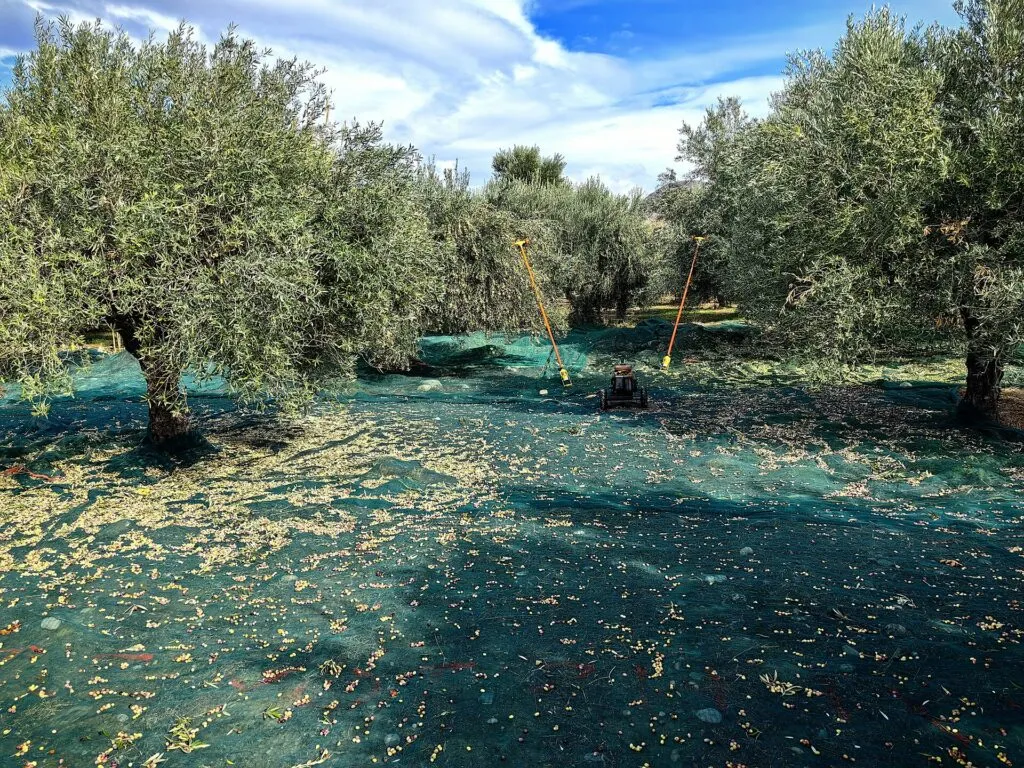
According to Terra Creta, the olive harvest in Greece starts in late September or early October and is over by February, depending on the variety, the grove and the weather; in some areas it continues until May. The traditional Greek variety Koroneiki needs an average of about five and a half kilos of olives for each kilo of extra virgin oil. If you want to see a mill working rather than standing still, plan your visit for the harvest months.
Mills and estates you can visit
Biolea, Astrikas (Chania)
Biolea is a family-owned estate that makes organic olive oil with millstones and modern presses, using only olives from its own estate. Its mill is set up for visitors all year, its classic guided tours run between April and October and must be booked in advance, and its restaurant at the Astrikas estate is open Tuesday to Sunday, 10:00 to 17:00. At the time of checking, a one-hour guided tour and tasting cost from €7 per adult.
Terra Creta, Kolymvari (Chania)
Terra Creta runs its own olive oil mill at Kolymvari and takes tour bookings through its website. Kolymvari is one of Crete’s PDO areas, and the mill is close to the olive tree of Vouves.
The olive tree of Vouves and its museum
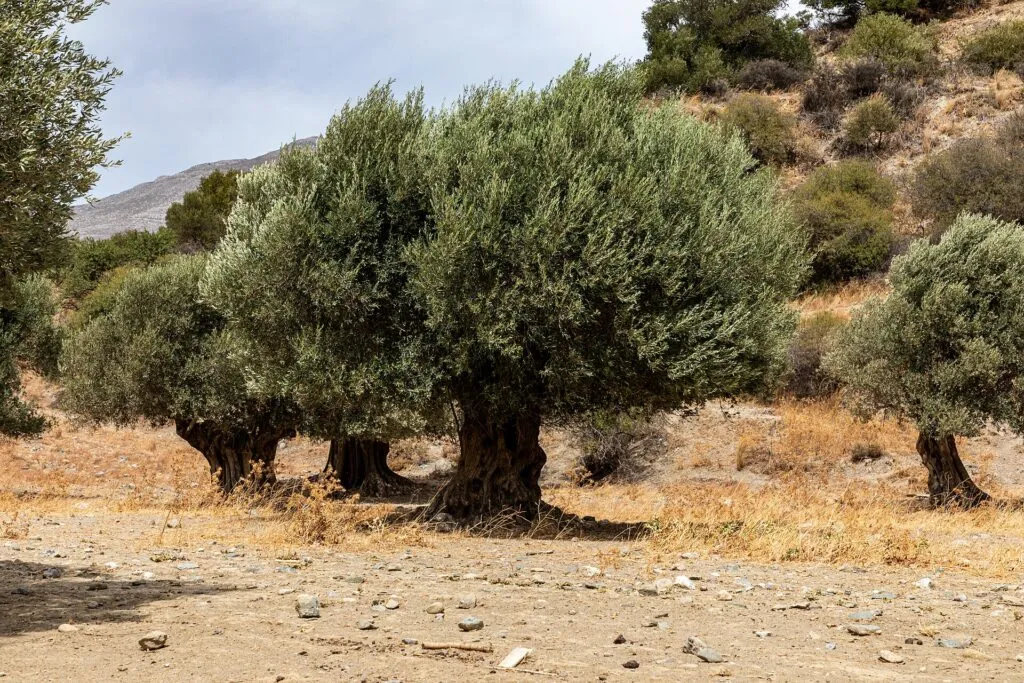
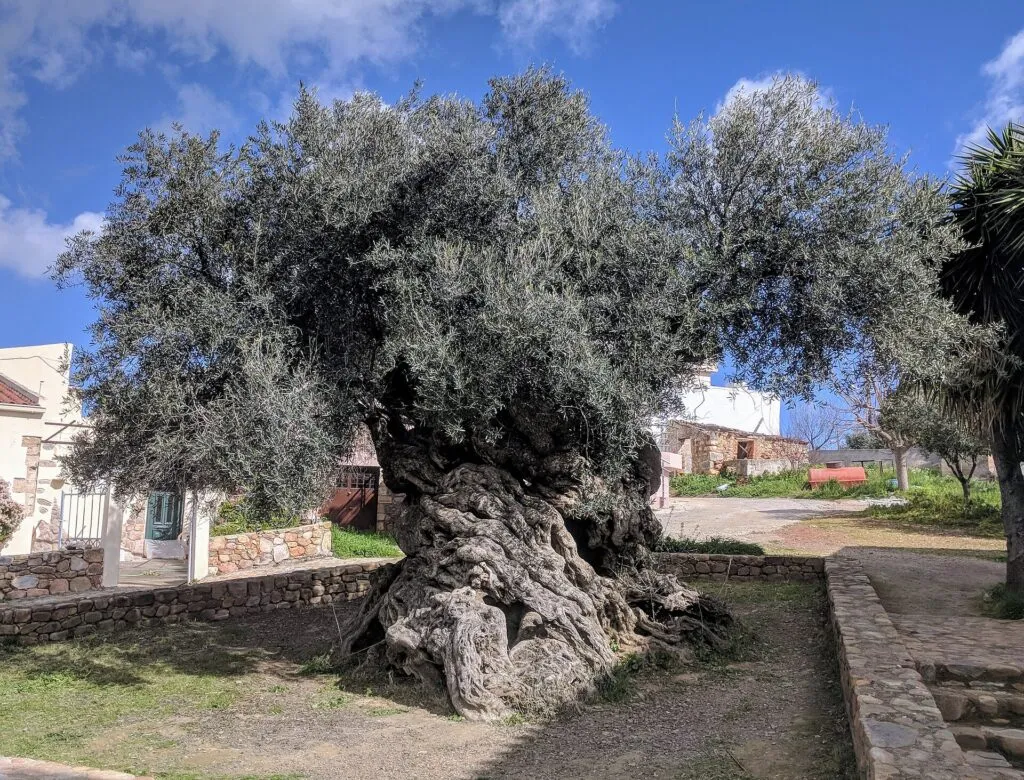
In the village of Ano Vouves, near Kolymvari, stands one of the oldest olive trees in the world. It was declared a natural monument by the Region of Crete in 1997 and still produces olives. The Olive Tree Museum of Vouves, in a traditional house next to the tree, shows the tools used to grow olives and make oil until the mid-1950s. Crete Travel lists it as open daily from 10:00 to 19:00 between April and October, by arrangement from November to March, with free entry.
Our advice: western Crete is the easiest place to combine a mill tour, the Vouves tree and a PDO oil in one day, because Kolymvari, Astrikas and Vouves are all in the Chania area. Book mill tours ahead, and if you buy oil to fly home with, pack tins or wrapped bottles in your checked luggage.
How to choose a bottle: our checklist
- Look for “extra virgin” and, if you want a place-specific oil, a PDO or PGI name from the table above.
- Check the harvest or best-before date. Fresher is better: olive oil does not improve with age.
- Bitterness and a peppery catch in the throat are good signs. Terra Creta describes bitter and pungent as positive attributes of high-quality extra virgin oil.
- Store it away from light and heat once opened.
Frequently asked questions
When is the olive harvest in Crete?
Generally from autumn into winter: Terra Creta puts the Greek harvest from late September or early October to February.
Which Cretan olive oils are protected?
Ten PDOs (Kolymvari, Apokoronas, Selino, Vorios Mylopotamos, Peza, Archanes, Viannos, Messara, Sitia and their full registered names) and one PGI, Chania Kritis.
Can I visit an olive mill in Crete?
Yes. Biolea near Chania runs booked tours from April to October, and Terra Creta in Kolymvari takes tour bookings online.
How old is the olive tree of Vouves?
Its exact age cannot be determined. It is one of the oldest olive trees in the world and is protected as a natural monument.
Sources
- eAmbrosia, EU register of geographical indications (entries for the Cretan olive oils listed above)
- Terra Creta, Kolymvari: harvest period, labels and tour booking
- Biolea, Astrikas estate: production, tours and opening hours
- Olive Tree Museum of Vouves, Crete Travel
- Olive tree of Vouves, Wikipedia
- The monumental olive tree at Vouves, ABEA
Facts checked on 7 November 2026. The tour price is from the producer’s website on that date and can change.