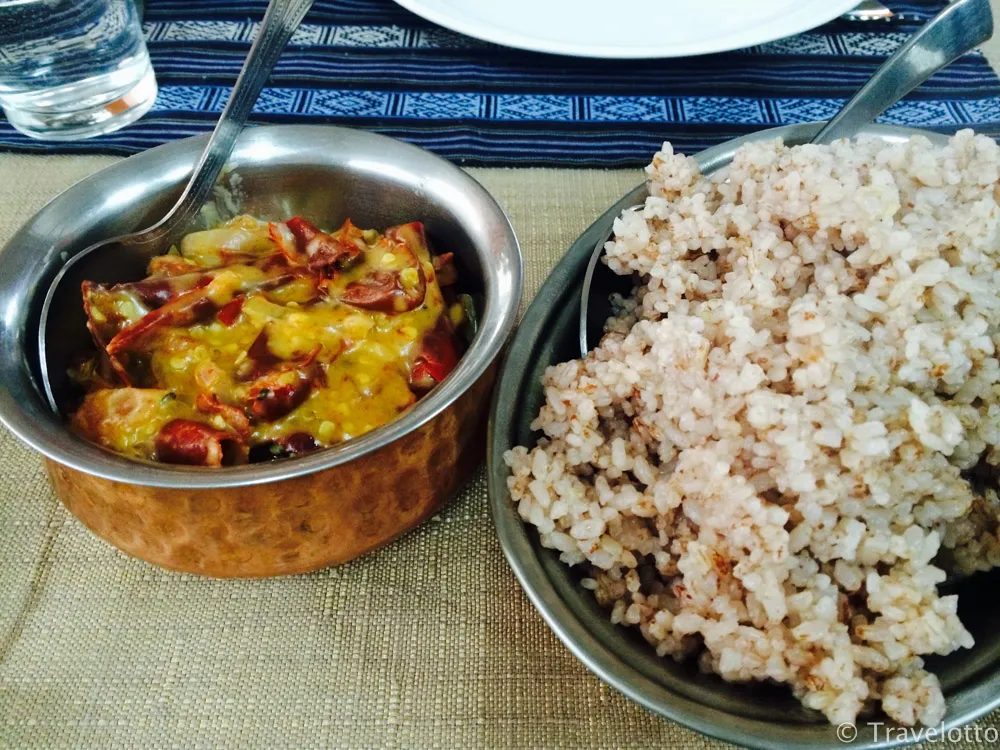
Ema datshi is Bhutan’s national dish: whole chillies cooked in melted cheese, eaten with red rice. The name says it: ema is chilli and datshi is cheese. If you are going to Bhutan, you will see it on almost every menu, and the useful question is not what it is but which version to order and how hot it will be.
This guide explains what goes in it, the versions you will meet (including a mild mushroom one), how to order, what it costs to eat Bhutanese food in Thimphu and Paro, and how to cook a home version if you cannot find real datshi. It is part of our Asia food guides.
What ema datshi is
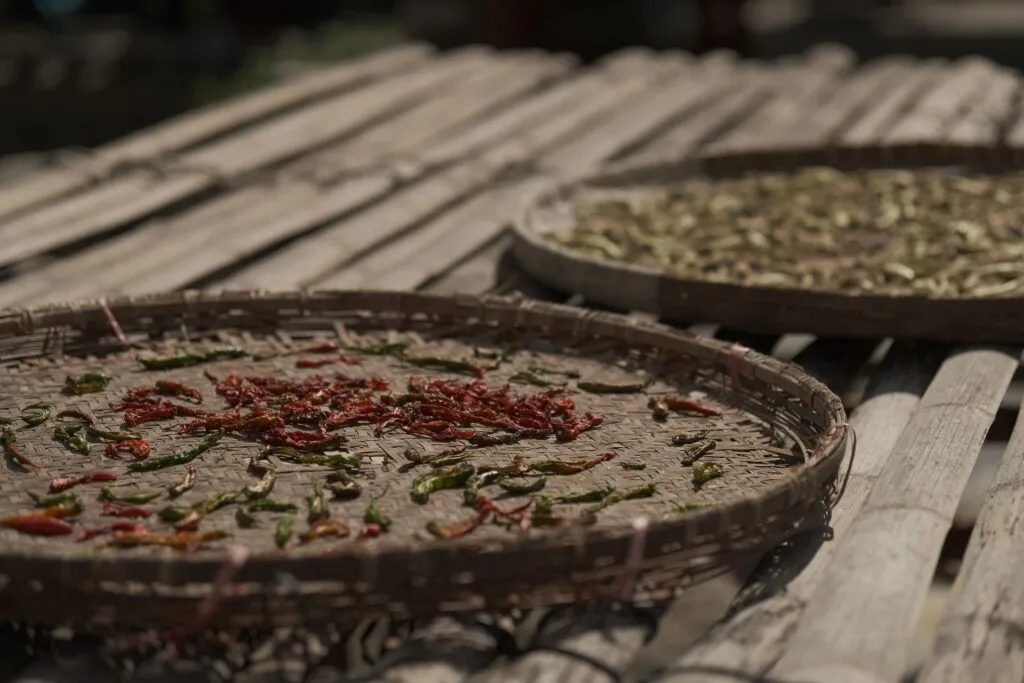
Wikipedia describes it as a spicy stew of hot chillies and cheese, and says its roots lie in Tibetan cooking. The usual ingredients are chillies, spring onions, farm cheese, vegetable oil and salt. The cheese, datshi, is a soft cottage-style cheese usually made at home from the curd of cow’s or yak’s milk. The chillies can be green, red or white (green chillies washed in hot water and dried in the sun), and fresh or dried.
The chilli is the main vegetable, not a seasoning. That is why ema datshi is hotter than most cheese dishes, and why people who like heat love it. The Bhutanese cuisine article on Wikipedia adds that the dish may be called the national dish for how common it is and how proud Bhutanese people are of it.
Chillies are a relatively recent addition. Before they arrived, Bhutanese cooks used a plant called namda for seasoning, and chillies were possibly brought in by Indian pilgrims in later years.
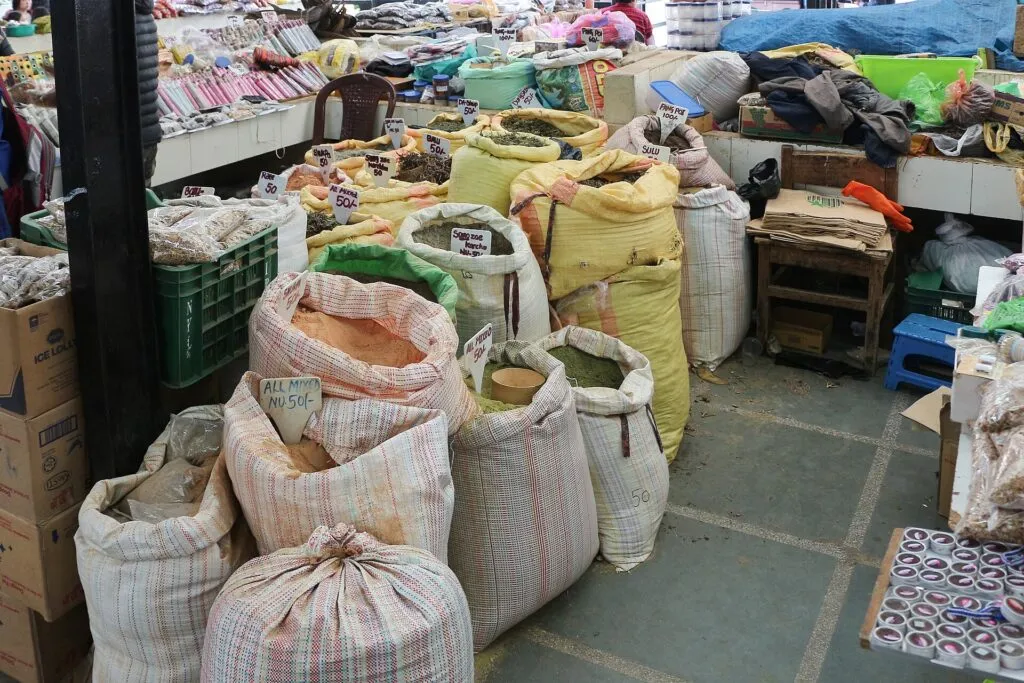
The versions you will see
| Name | What is in it | Heat | Best for |
|---|---|---|---|
| Ema datshi | Chillies and cheese | Hot | The classic; order it first |
| Kewa datshi | Potatoes and cheese | Varies | A side dish; a good first bite |
| Shamu datshi | Mushrooms and cheese (no chillies) | Mild | Anyone who does not like heat; Bamboo Travel recommends it for people who are not fans of spice |
| Semchung datshi | Beans and cheese instead of chillies | Mild | A vegetarian option |
| Shakam datshi | Dried beef, chillies and cheese | Chilli-based, so usually hot | A hearty main with red rice |
| Sikam datshi | Pork, lots of chillies and cheese | Hot (lots of chillies) | A rich main; not for pork-free diets |
| Buff ema datshi | Buffalo meat, chillies and cheese | Chilli-based, so usually hot | A meat version |
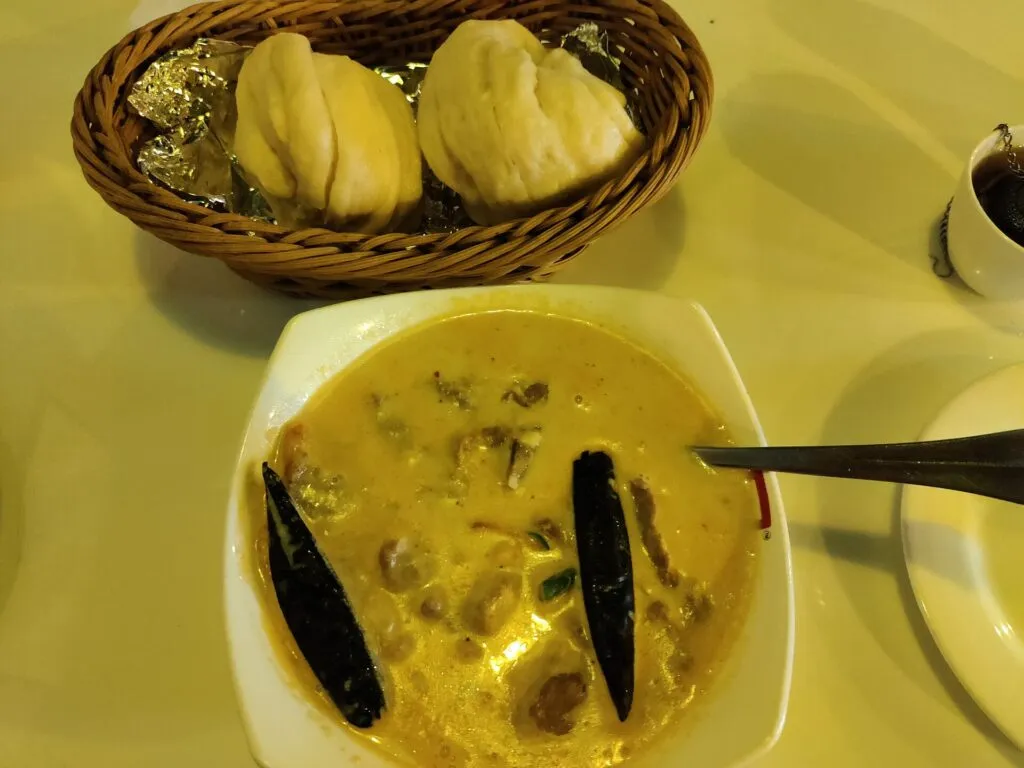
How to eat it
Ema datshi is usually eaten as a main course with red rice, according to Wikipedia. Bhutanese red rice is a medium-grain red japonica rice, semi-milled so it cooks a little faster than brown rice; cooked, it is pale pink, soft and slightly sticky, and it is the staple rice of Bhutan. Some versions are served with buckwheat pancakes or a Bhutanese salad. Bamboo Travel notes that ema datshi is served throughout Bhutan, and that hotels tend to play it safe with spice.
Bhutanese manners are worth knowing. When you are offered food, the polite reply is to say “meshu meshu” and refuse, and then accept on the second or third offer, according to the Bhutanese cuisine entry on Wikipedia.
How to order if you are not sure about the heat: start with kewa datshi or shamu datshi, and say you want it mild. Our advice is to ask the restaurant to make it milder before it is cooked, because heat comes from the chillies themselves.
Where to eat it and what it costs
Almost any restaurant serving Bhutanese food has it. Bamboo Travel names ZaSa in Thimphu for local Bhutanese food, and Soechey Restaurant and Red Rice (a more upmarket one) in Paro. The same guide gives these rough prices: a simple local lunch or dinner about £3 to £4, a mid-range local meal £8 to £12, and an upmarket local meal £12 to £18. Prices change, so treat these as a guide.
A home version
Real datshi is hard to find outside Bhutan. The Foreign Fork, an American food blog that cooks a dish from every country, says the recipe is meant to use yak cheese, which the author could not find, so she used a blend of feta, farmer’s cheese and sharp cheddar. That is a Western adaptation, not the traditional dish, and the author does not claim Bhutanese expertise. The method it describes is simple:
- Remove the seeds from a mix of chillies (the recipe uses red bell pepper, poblano and jalapeño) and cut them into thin strips. Slice an onion and some garlic.
- Cook the chillies, onion and garlic with a little water, salt and oil, covered, over low heat for about 20 minutes until tender.
- Stir in the cheese and let it melt.
- Serve in a bowl or over red rice.
Farmer’s cheese does not melt as smoothly, so a mixture gives a wetter, soupier result. For more heat, use hotter chillies. Authentic recipes vary by household and region.
Frequently Asked Questions
What does ema datshi mean?
Ema means chilli and datshi means cheese, so it is literally “chilli cheese”.
Is ema datshi really the national dish of Bhutan?
Yes, it is widely described as the national dish. Wikipedia says it may be called that because it is so common and the Bhutanese are proud of it.
Is ema datshi vegetarian?
The classic chilli-and-cheese version has no meat. Kewa, semchung and shamu datshi are also meat-free. Shakam datshi has dried beef and sikam datshi has pork. Ask how it was made if you avoid meat or animal products.
How spicy is ema datshi?
Hot, because chillies are the main ingredient. Shamu datshi (mushroom) and kewa datshi (potato) are milder.
What do you eat ema datshi with?
Red rice, usually. Some versions come with buckwheat pancakes or a Bhutanese salad.
What cheese is used in ema datshi?
Datshi, a fresh cheese usually made at home from cow’s or yak’s milk. Outside Bhutan, cooks often use a blend such as feta, farmer’s cheese and cheddar.
Sources
- Ema datshi, Wikipedia
- Bhutanese cuisine, Wikipedia
- Bhutanese red rice, Wikipedia
- Eating and drinking in Bhutan, Bamboo Travel
- Ema datshi recipe, The Foreign Fork (updated July 2024)
Facts checked on 7 November 2026. Prices are from a UK tour operator and change.