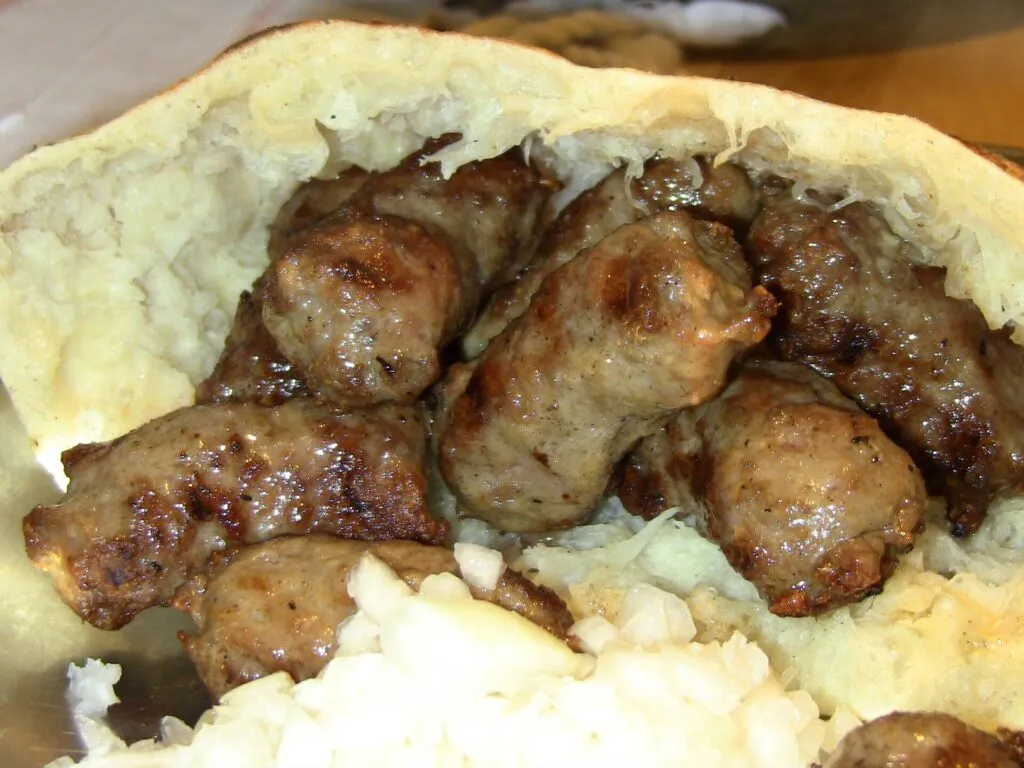
In Baščaršija, Sarajevo’s old Ottoman bazaar, the smell of charcoal smoke and grilling meat drifts down the stone lanes. At a small, busy grill house you sit at a wooden table and order “deset ćevapa”: ten small grilled sausages arrive tucked inside a warm, puffy flatbread, with a pile of raw chopped onion and a spoonful of creamy kajmak on the side.
Ćevapi (ćevapčići) are small hand-shaped sausages of minced beef, sometimes mixed with lamb, grilled over charcoal and served in somun, a soft Bosnian flatbread, with raw onion and kajmak (a rich, slightly tangy dairy spread). Sarajevo’s version is widely considered the benchmark in the Balkans. In 2026 a portion of ten costs about BAM 9–12 (EUR 4.50–6) at a good ćevabdžinica.
This guide is for visitors to Sarajevo, from Europe, the Gulf, Türkiye and Asia, and for the Bosnian diaspora: how to order, the best-known grill houses, regional styles, what to drink, and why Sarajevo is one of Europe’s easiest cities for halal food.
What Sarajevo Ćevapi Are Like
Sarajevo ćevapi are small, finger-sized and juicy, made from hand-minced meat seasoned simply with salt. They are grilled until browned outside and tender inside. The somun is warmed on the grill so it soaks up the juices, and the onion and kajmak balance the richness.
How to Order
- Walk in and take a seat, or stand at the counter; both are normal.
- Choose your portion: pet (five), deset (ten, the standard) or petnaest (fifteen).
- Ask for sa lukom (with onion) and sa kajmakom (with kajmak) if you want them.
- Order a drink: most people choose cold jogurt, a thick, plain drinking yoghurt.
- Pay in cash, in convertible marks (BAM); cards are not always accepted.
| Phrase | Meaning |
|---|---|
| Deset ćevapa, molim | Ten ćevapi, please |
| Pet ćevapa | Five ćevapi |
| Sa lukom / bez luka | With / without onion |
| Sa kajmakom | With kajmak |
| Jedan jogurt | One yoghurt drink |
| Račun, molim | The bill, please |
Where to Eat Ćevapi in Sarajevo
Locals argue endlessly about the best ćevabdžinica, and forums and review sites keep returning to the same names, most of them in or near Baščaršija:
- Željo: on Kundurdžiluk, open since the 1960s, with two branches side by side; the city’s most famous name. Weekend queues start before midday.
- Petica: a few minutes from Baščaršija, often praised for its kajmak and calmer atmosphere.
- Hodžić: popular with locals, with slightly larger portions and crisper ćevapi.
- Ferhatović and Nune: frequently recommended by locals on Reddit and by reviewers on Tripadvisor.
Restaurants directly on the busiest tourist strip sometimes charge more for smaller portions. Go where locals queue, and visit before 11:30 or after 14:00 to avoid the lunch rush.
When to Eat Ćevapi
Any time from mid-morning: locals eat them for a late breakfast, a quick lunch or an afternoon snack. They are not a traditional dinner dish, and some grill houses close in the evening. During Ramadan, ćevabdžinicas are busy after iftar.
Ćevapi Across the Balkans
| Place | How it differs |
|---|---|
| Sarajevo | Small, thin, beef (sometimes with lamb), ten in somun |
| Banja Luka | Joined in squares of four, often more heavily seasoned |
| Travnik | A respected regional style with its own loyal fans |
| Serbia | Ćevapčići, sometimes larger and in some places made with pork |
| Croatia and North Macedonia | Similar grilled sausages, often served with ajvar |
For another Sarajevo classic, read about burek in Bosnia. In Serbia and elsewhere, try them with ajvar, the roasted red pepper relish.
Halal Food in Sarajevo
Halal note: Sarajevo has a Muslim majority, and the traditional ćevabdžinicas of Baščaršija serve beef and lamb ćevapi with no pork, and usually no alcohol. Bosnia also has its own national halal certification agency, and many restaurants display its certificate, which makes Sarajevo one of the easiest cities in Europe for halal food. Elsewhere in the Balkans, especially in Serbia and Croatia, ćevapi may contain pork and grill houses often serve alcohol, so ask. See our halal food travel guide.
Ćevapi are gluten-free on their own, but somun is wheat bread. Kajmak and jogurt are dairy.
What It Costs in 2026
| Item | Typical price |
|---|---|
| Ten ćevapi in somun with onion | About BAM 9–12 |
| Five ćevapi (half portion) | About BAM 5–7 |
| Kajmak (extra) | About BAM 1–3 |
| Jogurt | About BAM 2 |
The convertible mark (BAM) is pegged to the euro at about 1.96 marks per euro.
Frequently Asked Questions
What are ćevapi?
Small grilled sausages of minced beef, sometimes with lamb, served in flatbread with onion and kajmak. They are Bosnia’s best-known dish.
What is the difference between ćevapi and ćevapčići?
They are the same dish; ćevapčići is a diminutive form used more in Serbia and Croatia.
What meat is in Sarajevo ćevapi?
Beef, often mixed with some lamb. Traditional Sarajevo ćevapi contain no pork.
Where are the best ćevapi in Sarajevo?
Željo, Petica, Hodžić, Ferhatović and Nune are the names locals and reviewers recommend most often.
How many ćevapi should I order?
Ten is the standard portion for one person. Five is a lighter meal.
What is kajmak?
A rich, creamy dairy spread made from the skimmed top of milk, slightly tangy and salty, served with grilled meats.
What is somun?
A soft, round Bosnian flatbread, warmed on the grill and split to hold the ćevapi.
Are ćevapi in Sarajevo halal?
Traditional ćevabdžinicas serve beef and lamb without pork, and many are halal-certified. Ask if you want to be sure.
What do you drink with ćevapi?
Cold jogurt, a thick plain drinking yoghurt, is the classic choice.
How much do ćevapi cost in Sarajevo?
About BAM 9–12 for ten in 2026.
Can I pay by card?
Not always. Bring cash in convertible marks.
Are ćevapi from Bosnia or Serbia?
Both countries claim them. They came to the Balkans with Ottoman grilled-meat traditions, and Sarajevo’s version is widely considered the classic.
Where can I eat ćevapi outside the Balkans?
In cities with large Bosnian communities, such as Vienna, Berlin, Stockholm and St. Louis in the United States.
More from the Balkans: burek, tavë kosi in Albania and Balkan meze.
Sources
- Best ćevapi in Sarajevo, Bosnia Spirit (meat, ordering, 2026 prices, grill houses)
- The best ćevapi in Sarajevo, Kathi Daniela
- Ćevapi, Discover Bosnia and Herzegovina
- Ćevapi, Wikipedia