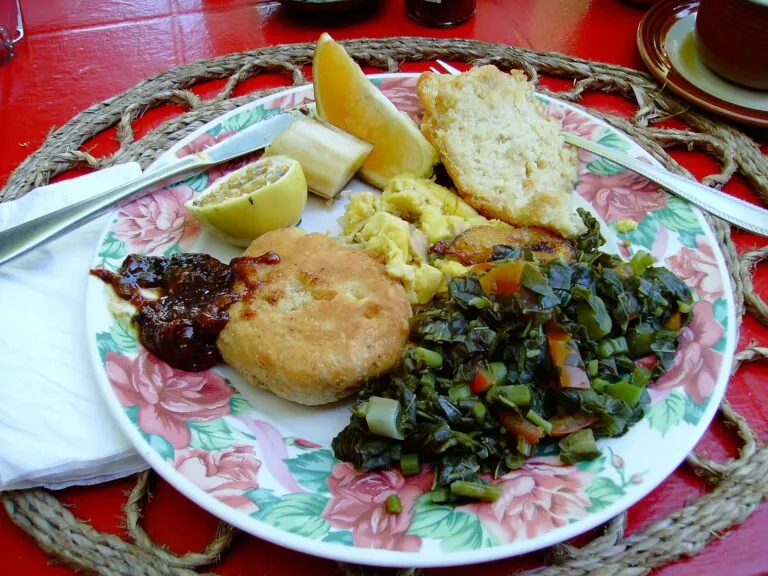
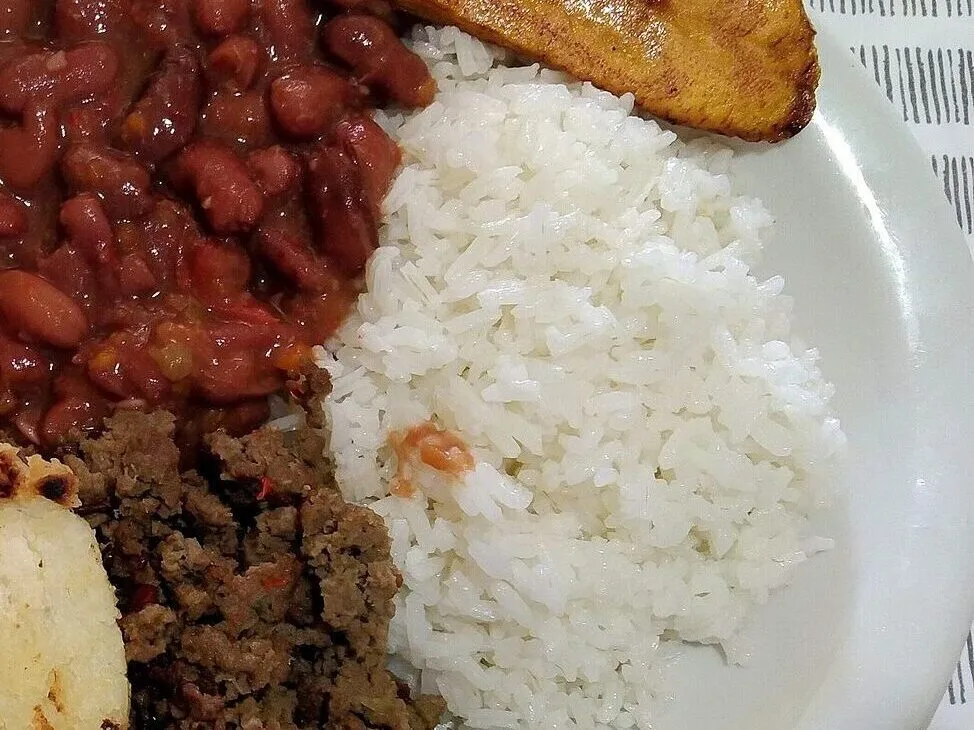
It is called a bandeja, a tray, because a normal plate is not big enough. Red beans, white rice, minced beef, a fried egg, sweet plantain, avocado, a small arepa, sausage and a slab of crackling pork belly all arrive at once, and first-timers often ask whether it is meant for two.
Bandeja paisa is the signature platter of Antioquia, the mountain region around Medellín, and you can order it all over Colombia. It is a lunch dish, and in 2026 it costs roughly COP 25,000–45,000 at a traditional Medellín restaurant.
This guide covers what is on the tray and what each part is called, where the dish came from, how Colombians eat it, where to order it, and lighter Paisa dishes to try. Notes for anyone avoiding pork are in their own section.
What Is on a Bandeja Paisa
| Component | What it is |
|---|---|
| Frijoles | Large red cargamanto beans, slow-cooked, often with a piece of pork for richness |
| Hogao | Tomato and spring onion sauce, spooned over the beans |
| Arroz blanco | Plain white rice |
| Carne molida or carne en polvo | Seasoned minced beef, or finely ground “powdered” beef |
| Chicharrón | Deep-fried pork belly with crackling skin |
| Chorizo and morcilla | Pork sausage, and sometimes blood sausage |
| Huevo frito | A fried egg with a runny yolk |
| Tajada de maduro | Fried ripe plantain, sweet and soft |
| Arepa and aguacate | A thin white corn arepa and slices of avocado |
Restaurants vary: some add grilled steak, some leave out the blood sausage, and some serve mazamorra, a cold corn and milk drink, on the side. The beans, rice, chicharrón, minced meat, egg and plantain are the core.
Beans and Hogao: The Base of Paisa Cooking
Ask people from Antioquia what really matters on the tray and many will say the beans. Paisa cooking is built on red beans and corn, and the bandeja is a showcase for both.
Cargamanto beans are large and mottled, grown in the Colombian Andes. They are soaked overnight, simmered until creamy, then finished with hogao, tomato and spring onion softened in oil with garlic. Hogao also goes on rice, arepas and eggs; if you see a small dish of red-orange sauce on a Colombian table, that is it.
The arepa beside the beans is the plain Paisa kind: thin, white and barely salted, there to soak up the beans rather than to carry a filling.
Where Bandeja Paisa Came From
The usual story links it to the arrieros, the mule drivers and farmers who opened up the Antioquian mountains in the 19th century and needed one huge meal to work on. That is why one of its other names is bandeja de arriero.
Food historians point out that the tray as it is served today is more recent. There are no written references to the dish before about 1950, and it was probably shaped by restaurants in Medellín, which brought together foods that farm families ate on separate occasions. Beans, chicharrón and minced meat were the early core; the egg, sausages and extras came later.
In 2005 the Colombian government planned to name it the national dish under the name bandeja montañera (mountain tray), so as not to leave out people from outside the Paisa region. The idea caused debate, and Colombia still has no single official national dish.
How Colombians Eat It
Bandeja paisa is a midday meal, and a big one. Locals take a little of several things in each forkful: beans with rice, a piece of plantain, some egg yolk, a bite of avocado to cut the richness.
It is not daily food for most Colombians. Many eat it occasionally, on weekends, when visiting the countryside or when showing guests the region’s cooking. Some Colombians on forums even call it an overrated version of the everyday set lunch, which shows how strongly people feel about it either way.
Sharing one tray between two people is common, and some restaurants offer half portions (media bandeja). In Medellín, some places aimed at visitors serve an extra-large bandeja trifásica with grilled steak added.
Eating in Antioquia Without Pork
Bandeja paisa is one of the hardest Colombian dishes for people who avoid pork, because pork appears in several places at once.
Halal note: the usual bandeja paisa is not halal. Chicharrón, chorizo and morcilla are pork, the beans are often cooked with pork, and the beef is not halal-slaughtered at ordinary restaurants. Asking to remove the pork does not fix the beans or the shared frying oil, so it is better to order something else. Colombia’s best-known Muslim community is in Maicao on the Caribbean coast, home to one of the largest mosques in Latin America, and Bogotá has some halal restaurants; in Medellín halal options are limited, so ask locally. See our halal food travel guide for how to ask.
These Paisa favourites are easy to order without meat:
- Arepa antioqueña con quesito: a plain white corn arepa with fresh soft cheese, the everyday breakfast.
- Buñuelos and pandequeso: fried cheese dough balls and cheese breads from any bakery. Ask what oil they are fried in.
- Mazamorra: cooked white corn in milk, served cold with a piece of panela (cane sugar).
- Trucha (trout): fried or grilled, at restaurants in the mountain towns around Medellín and in the city.
- Fresh fruit and juice: lulo, maracuyá, guanábana and many fruits most visitors have never tried, sold at every market.
Vegetarian travellers asking on forums get similar advice: lean on arepas, cheese, eggs, fruit and juices, and ask whether beans were cooked with pork.
Where to Eat It in Medellín
The question travellers ask most is where to find a good bandeja without paying tourist prices.
- Traditional Antioquian restaurants, including long-running chains such as Hacienda and Mondongo’s, which locals and visitors both recommend for regional food.
- Small lunch places (corrientazos), which serve cheaper set lunches and often a simpler bandeja.
- Fondas and roadside restaurants on the way to Guatapé, Santa Fe de Antioquia and other towns, where farm-style cooking is the point.
These names are for orientation only, and none of them is halal-certified.
What It Costs in 2026
| Where | Typical price |
|---|---|
| Set lunch at a small local restaurant | About COP 18,000–25,000 |
| Bandeja paisa at a traditional restaurant | About COP 25,000–45,000 |
| Arepa with quesito at a bakery | About COP 4,000–8,000 |
Plan your daily food costs with our food budget calculator for Colombia and check service customs in the tipping guide for Colombia: many restaurants add a suggested 10% tip that you can accept or decline.
Spanish Phrases for Ordering
| Say | Meaning |
|---|---|
| Una media bandeja, por favor | A half portion, please |
| ¿Los frijoles tienen cerdo? | Do the beans contain pork? |
| No como cerdo | I don’t eat pork |
| Una arepa con quesito | An arepa with fresh cheese |
| ¿En qué aceite fríen? | What oil do you fry in? |
| ¿Hay trucha? | Is there trout? |
Frequently Asked Questions
How do you pronounce bandeja paisa?
Roughly “bahn-DEH-hah PIE-sah”. The “j” sounds like a soft English “h”.
What does bandeja paisa mean?
It means Paisa tray. Bandeja is a tray or platter, and paisa is the name for people and culture from Antioquia and the coffee region, including Medellín.
Is bandeja paisa Colombia’s national dish?
It is often called one, but Colombia has no official national dish. A 2005 plan to make it official was debated and never settled; ajiaco and sancocho are also strong candidates.
Do Colombians eat bandeja paisa every day?
No. It is too heavy for daily eating for most people. It is a weekend, family or special-occasion lunch, and a dish people proudly order for visitors.
Is bandeja paisa eaten for breakfast?
Today it is a lunch dish. Farm workers in the past ate similar hearty meals early in the day, which is where the breakfast idea comes from.
How many calories are in a bandeja paisa?
A full tray is very high in calories, often estimated well over 1,000, because of the fried pork, sausage, egg, plantain and large portions of rice and beans.
Is bandeja paisa spicy?
No. It is rich and savoury, not hot. Colombians add ají, a fresh chilli and herb sauce, at the table if they want heat.
Can vegetarians eat bandeja paisa?
Some restaurants offer a vegetarian bandeja with extra avocado, plantain, egg and cheese. Ask whether the beans were cooked with pork, because they often are.
What is carne en polvo?
Carne en polvo, “powdered beef”, is beef that has been cooked and then ground very fine, so it looks almost like a powder. Some traditional restaurants serve it instead of minced beef.
What is the difference between bandeja paisa and bandeja montañera?
They are essentially the same platter. Bandeja montañera, “mountain tray”, is a name used in other regions and was proposed in 2005 as a more inclusive national name.
More from the region: arepas in Bogotá, Venezuela’s arepas and pabellón, Dominican sancocho and all Latin America and Caribbean food guides.
Sources
- Bandeja paisa, Wikipedia (components, no references before 1950, 2005 national dish plan)
- Cocina antioqueña, más allá de la bandeja paisa, El Colombiano (recent origin of the modern tray)
- Bandeja paisa, My Colombian Recipes (carne en polvo, hogao)