Guangzhou wakes up to tea. From early morning the city’s big teahouses fill with families and retirees reading newspapers, pots of tea on every table and steam rising from stacks of bamboo baskets. They call it yum cha, “drinking tea”, but everyone is here for the dim sum.
Dim sum are Cantonese small dishes, steamed, fried or baked, eaten with tea at morning and lunchtime yum cha. Guangzhou is the birthplace of the tradition, with historic teahouses such as Tao Tao Ju (founded in the 1880s), Guangzhou Restaurant and Panxi Restaurant. In 2026 dishes cost roughly RMB 15–45 each, and a meal about RMB 60–150 per person. Many classic dim sum contain pork, so Muslim travellers should choose shrimp and vegetable dishes carefully or eat at one of Guangzhou’s halal (清真) restaurants.
This guide covers the dishes, which contain pork, how yum cha works, where to go, halal options, prices and Cantonese phrases.
Dishes to know
| Dish | What it is | Pork? |
|---|---|---|
| Har gow (虾餃) | Translucent shrimp dumplings | Usually no, but may use pork fat; ask |
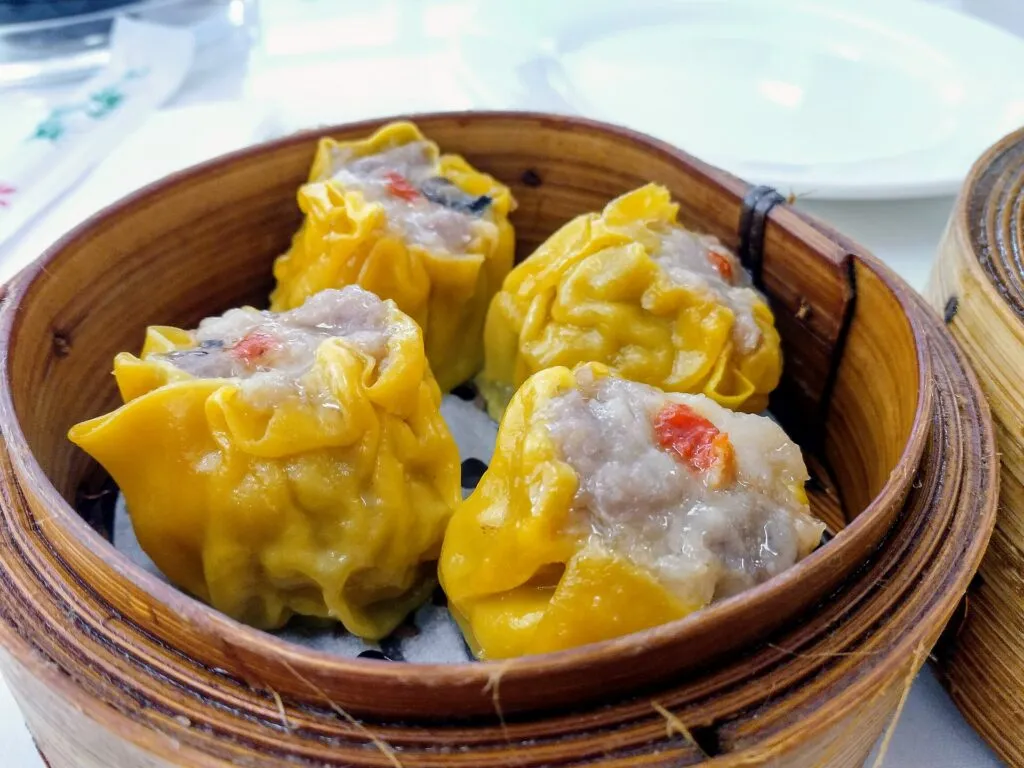
| Siu mai (烧卖) | Open-topped dumplings | Usually pork and shrimp |
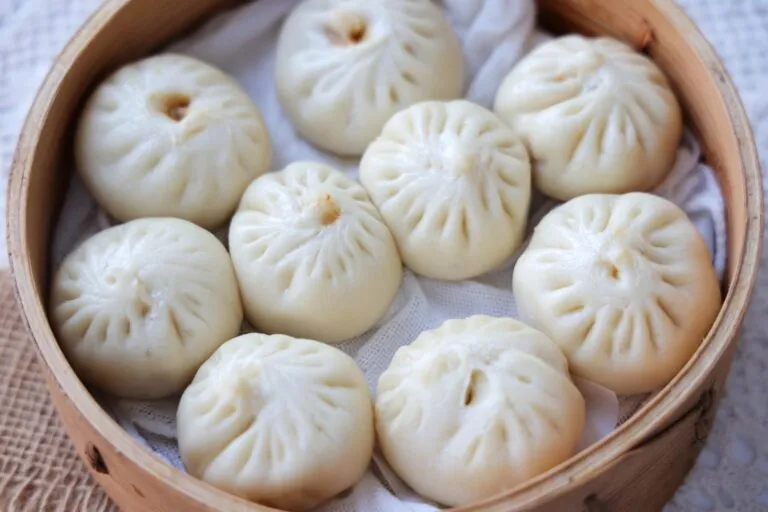
| Char siu bao (叉烧包) | Fluffy buns with barbecued pork | Yes |
| Cheung fun (肠粉) | Silky rice rolls with shrimp, beef or pork | Choose shrimp; ask about sauce |
| Lo mai gai (糯米鸡) | Sticky rice with chicken in lotus leaf | Often includes Chinese sausage (pork) |
| Lo bak go (萝卜糕) | Pan-fried turnip cake | Usually contains Chinese sausage |
| Dan tat (蛋挞) | Egg custard tarts | Pastry may use lard; ask |
| Steamed vegetable dumplings | Mushroom and greens | Usually no |
How yum cha works
- Choose your tea first: pu’er, jasmine or oolong are classics.
- Order from a tick-sheet menu or, in older places, from trolleys.
- Pour tea for others before yourself.
- To say thanks when someone pours for you, tap two or three fingers on the table.
- Want more hot water? Leave the teapot lid slightly open or on its side.
- Share everything; dishes come in threes or fours.
Halal note: pork and lard are common in dim sum, even in dishes that look like seafood or vegetables, and kitchens share steamers. Guangzhou has a long-established Hui Muslim community; halal restaurants marked 清真 (qīngzhēn) are found around the historic Huaisheng Mosque and elsewhere, serving beef and lamb dumplings and noodles. Most schools accept shrimp; the classical Hanafi view limits seafood to fish. See our halal food travel guide.
Where to go
- Tao Tao Ju, Shangxiajiu – one of the oldest teahouses in the city, in the old commercial district.
- Guangzhou Restaurant – a historic Cantonese restaurant group with several branches.
- Panxi Restaurant, by Liwan Lake – a garden restaurant with pavilions and ponds.
- Neighbourhood teahouses – cheaper, noisier and often the most local.
- 清真 restaurants – for halal dumplings, noodles and lamb dishes.
Go early (7–10am) for the classic morning atmosphere; weekends are very busy.
Compared with Hong Kong
Hong Kong’s dim sum grew from the same Cantonese tradition. See our guide to dim sum in Hong Kong.
What it costs (2026)
| Item | Typical price |
|---|---|
| Dim sum dish (basket) | About RMB 15–45 |
| Tea charge per person | About RMB 5–20 |
| Yum cha meal per person | About RMB 60–150 |
| Halal noodle or dumpling meal | About RMB 25–60 |
Plan your budget with the China food budget calculator.
Phrases
| Cantonese | Characters | Meaning |
|---|---|---|
| Yam cha | 饮茶 | Drink tea (have dim sum) |
| Yau mou jyu yuk? | 有冇猪肉? | Is there pork? |
| M̀h yiu jyu yuk | 唔要猪肉 | No pork, please |
| Ching jan | 清真 | Halal |
| M̀h gōi | 唔該 | Thank you (for service) |
Frequently asked questions
What is yum cha?
The Cantonese custom of drinking tea with dim sum, usually in the morning or at lunch.
Is dim sum halal?
Much of it contains pork or lard. Choose carefully, or eat at 清真 (halal) restaurants in Guangzhou.
Where is the best dim sum in Guangzhou?
Historic teahouses such as Tao Tao Ju, Guangzhou Restaurant and Panxi Restaurant are famous.
How much does dim sum cost in Guangzhou?
About RMB 60–150 per person in 2026.
More from China: xiaolongbao and halal alternatives in Shanghai and China’s regional cuisines. See all China food guides.
Sources
- Dim sum and Huaisheng Mosque.