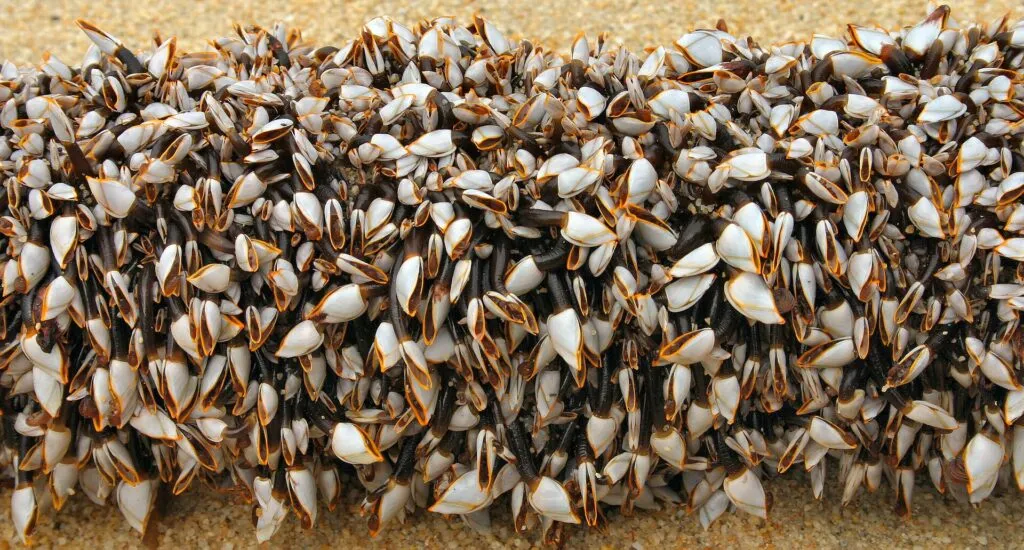
Percebes are goose barnacles (Pollicipes pollicipes), a shellfish that grows in clusters on rocks pounded by the Atlantic. In Galicia they are one of the most prized things you can order, partly because of how they are collected: percebeiros climb down to the rocks between waves to cut them. This guide covers how the harvest is controlled, where the best-known percebes come from, the summer festivals where you can eat them at fair prices, and how they are eaten.
Who is allowed to collect them
Collecting percebes in Galicia is a regulated profession. Under the Galician order of 6 March 2000 that governs the fishery, only people who hold the percebeiro certificate, have the right permit and are registered in an approved harvesting plan may take them. Permits exist both for harvesting on foot from the rocks and from boats, and an on-foot permit is personal, granted for a year at a time, and requires registration with the fishermen’s social security scheme.
Each plan belongs to a fishermen’s guild (cofradía) and sets the zones, the number of permits, the maximum number of fishing days and daily catch limits. For example, Baiona’s plan allowed 57 on-foot harvesters and up to 150 fishing days in 2017, and the 2018 plan for O Pindo capped each harvester on foot at 4 kg a day. The Galician government approved 153 management plans for specific resources and seaweed for 2025 to 2027, including plans for percebes. Catches are sold through authorised fish markets (lonxas).
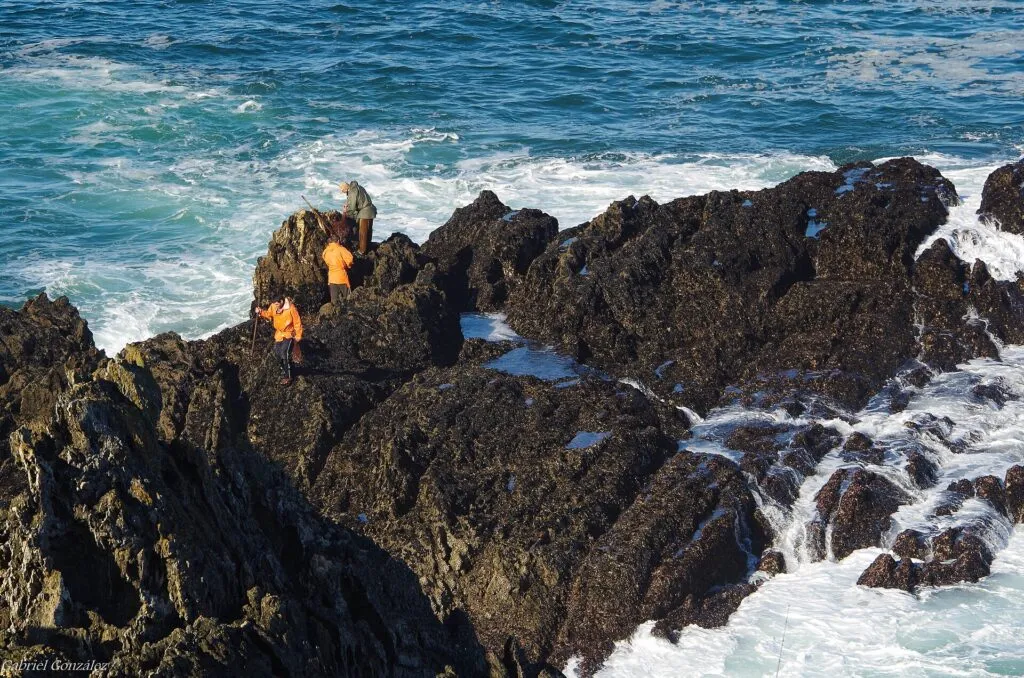
Where the famous ones come from
The best-known percebes come from O Roncudo, a rocky point beside the fishing village of Corme (Ponteceso) on the Costa da Morte. Turismo de Galicia says the tastiest specimens come from there, and that the percebeiros reserve the area with great care for special dates. Corme’s cofradía runs a plan with a separate zone for O Roncudo, from Corme harbour to Carreiro da Balea.
Percebes are also harvested and celebrated along much of the coast, from Cedeira and Xove in the north to Baiona and A Guarda in the south. Our advice: on a menu, the place name is a better clue to quality than a vague “de Galicia”. Ask where they were caught and when.
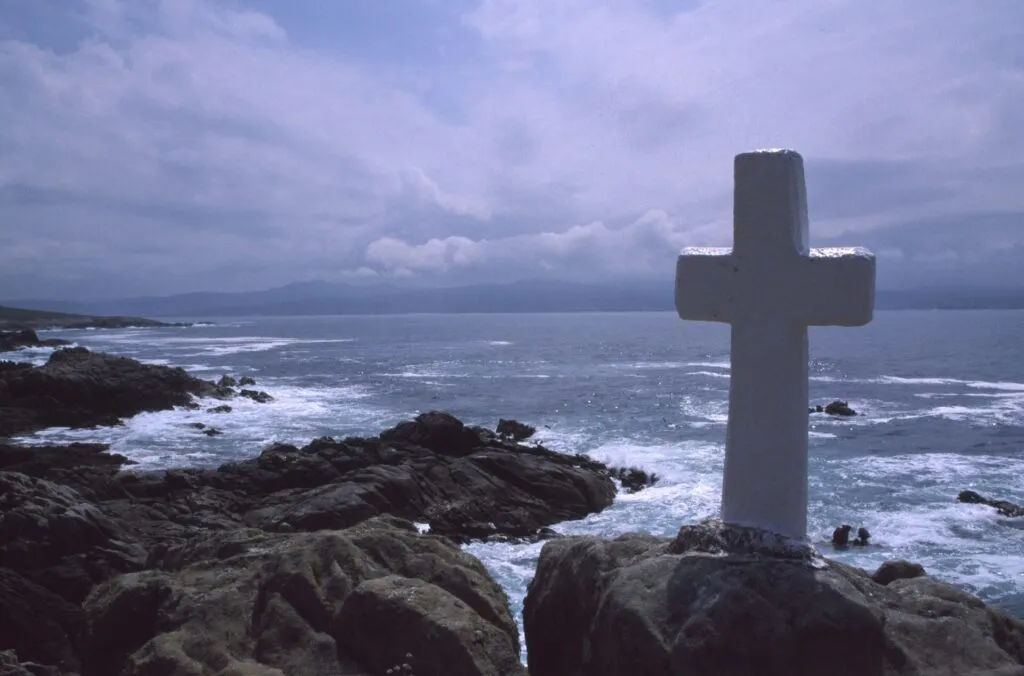
Percebe festivals
Summer is festival season, with tents on the harbourside selling percebes by the portion. The main ones in 2026 were:
| Festival | Where | 2026 date |
|---|---|---|
| Festa do Percebe do Roncudo | Corme harbour (Ponteceso) | 18 July |
| Festa do Percebe | Cedeira fishing port | Early August (23rd edition) |
The Corme festival has been held every year since 1992 and is a Festival of Galician Tourist Interest, according to the Xunta de Galicia. Other villages, including Xove, Aguiño (Ribeira), Rinlo (Ribadeo) and A Guarda, hold their own percebe festivals in July and August. Dates are announced each summer by the organisers, so check before you plan a trip around one.
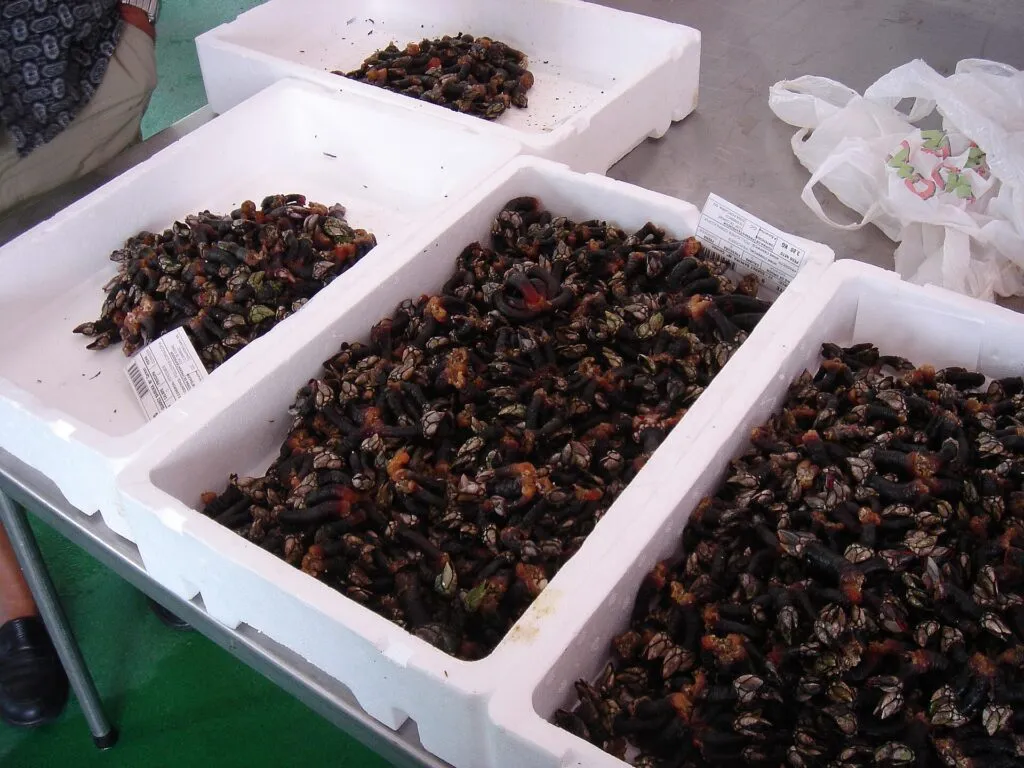
How they are eaten
Percebes are usually boiled very briefly in seawater or heavily salted water, sometimes with a bay leaf, and served warm in a heap. To eat one, hold the shell end, twist, and pull the skin off the stalk: the pink-orange flesh inside is what you eat.
Our advice for ordering: percebes are priced by weight and the price changes with the weather and the season, so check the price per kilo or per 100 g before you order. Short, thick percebes are generally prized over long, thin ones. Spain also sells percebes from other countries, so if origin matters to you, ask where they are from.
Frequently asked questions
What are percebes in English?
Goose barnacles, also called gooseneck barnacles. The species sold in Galicia is Pollicipes pollicipes.
Why are percebes so expensive?
They are collected by hand from dangerous wave-swept rocks by licensed percebeiros, with fishing days and daily catches limited by each cofradía’s plan.
Can I collect percebes myself?
No. In Galicia you need the percebeiro certificate, a permit and a place in an approved plan.
When are the percebe festivals?
Mostly in July and August. In 2026, Corme’s was on 18 July and Cedeira’s in early August.
Sources
- Orden de 6 de marzo de 2000 regulating the percebe fishery, Diario Oficial de Galicia
- Percebe harvesting plans of the cofradías of Baiona (2017), O Pindo (2018) and Corme (2017), Consellería do Mar
- 153 management plans for 2025-2027 and Festa do Percebe do Roncudo, Xunta de Galicia press releases
- Places to discover with or without fiestas, Turismo de Galicia
- Festa do Percebe 2026 in Corme, Costa da Morte tourism
- In Galicia, Spain, barnacles are a seafood sensation, Iberia’s Love2Fly magazine (2019)
- Cómo saber si los percebes son gallegos o marroquíes, El Debate (2 November 2025)
- August 2026 bulletin, Concello de Cedeira
Facts checked on 7 November 2026.