You are handed a paper bib, and you will need it. A bundle of blackened onions arrives on a roof tile, wrapped in newspaper to keep them hot. You grab one by the green end, pull off the charred skin, dunk the sweet white stem in orange sauce, tip your head back and lower it in.
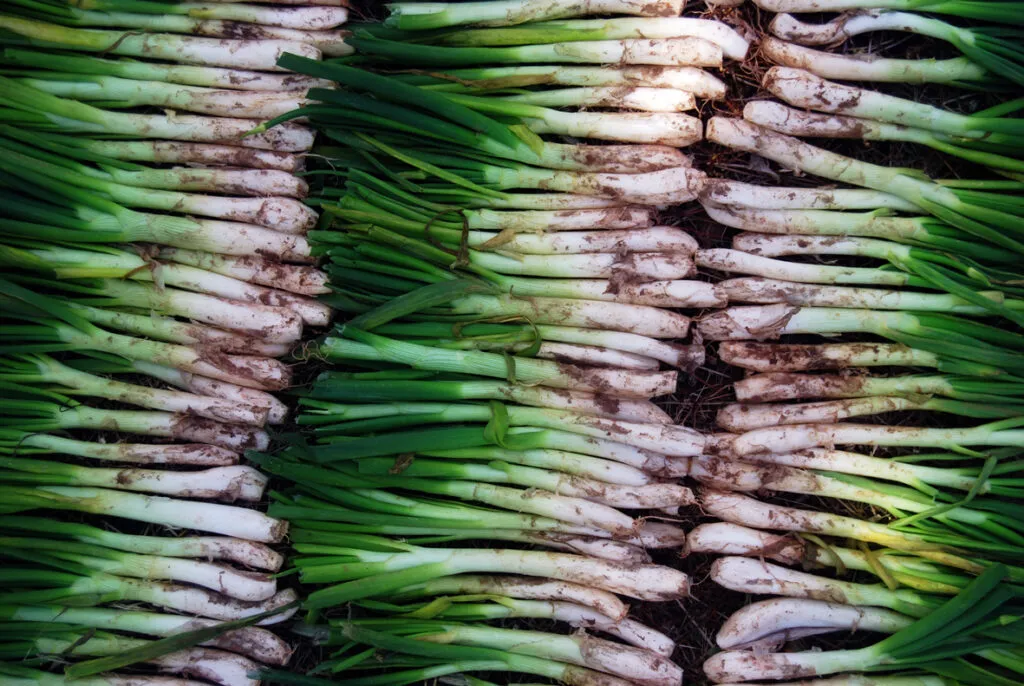
A calçotada is Catalonia’s winter feast of calçots, long, sweet spring onions grilled over a fierce fire until black, peeled by hand and dipped in salvitxada or romesco sauce. The season runs roughly from January to April, centred on the town of Valls near Tarragona, and many country restaurants around Barcelona serve set calçotada menus. In 2026 a full menu costs roughly €30–45 per person. The onions and sauce are naturally halal-friendly; the grilled meat and wine that usually follow are not, and are easy to skip.
This guide covers what calçots are, how the feast works, how to eat them without ruining your clothes, where and when to go, and how to order around pork and wine.
What is a calçot?
A calçot is a white onion replanted and earthed up as it grows, so it forms long, tender white stems instead of a bulb. The name comes from calçar, the Catalan word for piling soil around the plant.
The tradition is usually traced to Valls in the late 19th century. “Calçot de Valls” now has protected geographical status.
How a calçotada works
- The fire – calçots are grilled over a very hot open flame, traditionally vine cuttings, until the outside is burnt black.
- The wrap – they are bundled in newspaper for a few minutes to steam and soften.
- The sauce – salvitxada or romesco: roasted tomatoes, garlic, almonds or hazelnuts, dried ñora peppers, olive oil and a little vinegar.
- The eating – dozens per person, peeled and dipped by hand.
- The second course – grilled lamb, sausages and vegetables.
- Dessert – often crema catalana or oranges.
How to eat a calçot
- Put on the bib (pitet) and, if offered, gloves.
- Hold the calçot by the green leaves with one hand and the burnt root end with the other.
- Pull the charred outer layer down and off in one move. The tender white stem slides out.
- Dip generously in the sauce.
- Hold it above your face and lower it into your mouth. It is messy by design.
- Expect to eat 20 to 30 or more.
Halal note: calçots and the sauce contain no pork or alcohol (the sauce uses a little vinegar, which most scholars accept). The standard second course includes butifarra, a pork sausage, and lamb that is not halal-slaughtered, and wine is traditionally poured from a glass porró. Ask for a menu of calçots with grilled vegetables or fish, and water or juice instead of wine. Barcelona’s Raval neighbourhood has many halal Pakistani and Moroccan restaurants. See our halal food travel guide.
When and where to go
- Season: roughly January to April, best in February and March.
- Valls: the home of the calçot, about 1.5 hours from Barcelona. The big Calçotada festival is usually held on the last Sunday of January, with street grills and eating contests.
- Countryside around Barcelona and Tarragona: farmhouse restaurants (masíes) serve set menus at weekends.
- Barcelona city: some restaurants serve calçots in season, though the open-fire experience is better outside town.
Book ahead for weekends in February and March, when families and groups fill the masíes.
Romesco vs salvitxada
Both are nutty red-pepper sauces. Salvitxada is the Valls version made for calçots and tends to be looser. Romesco, from Tarragona, is often thicker and served with fish too. Most restaurants simply call it “the calçot sauce”.
What it costs (2026)
| Item | Typical price |
|---|---|
| Full calçotada menu at a masía | About €30–45 per person |
| Calçots only, as a starter | About €12–20 |
| Bunch of raw calçots at a market (to grill yourself) | About €5–10 |
Plan your Spain budget with the Spain food budget calculator, and see tipping in Spain.
Other Catalan food to try
| Dish | What it is | Halal check |
|---|---|---|
| Pa amb tomàquet | Bread rubbed with tomato, oil and salt | Fine on its own; often served with ham |
| Escalivada | Roasted peppers, aubergine and onion | Usually fine |
| Crema catalana | Custard with a burnt-sugar top | Usually fine |
| Suquet de peix | Catalan fish stew | Fish; ask about wine |
| Butifarra | Catalan sausage | Pork: not halal |
Phrases (Spanish / Catalan)
| Spanish | Catalan | Meaning |
|---|---|---|
| Un menú de calçots, por favor | Un menú de calçots, si us plau | A calçot menu, please |
| ¿Lleva cerdo? | Porta porc? | Does it contain pork? |
| Sin vino, por favor | Sense vi, si us plau | Without wine, please |
| ¿Es halal? | És halal? | Is it halal? |
| Con verduras o pescado | Amb verdures o peix | With vegetables or fish |
Frequently asked questions
When is calçot season?
Roughly January to April, peaking in February and March.
What is a calçotada?
A Catalan feast of grilled spring onions dipped in salvitxada or romesco sauce, usually followed by grilled meat.
Is a calçotada halal?
The calçots and sauce are. The usual second course includes pork sausage and non-halal lamb, and wine is common; ask for vegetables or fish and a non-alcoholic drink.
How much does a calçotada cost?
About €30–45 per person for a full menu in 2026.
More from Spain: horchata in Valencia and churros con chocolate in Madrid. See all Spain food guides.
Sources
- Catalunya Tourism – official Catalan tourism site.
- Calçot and Romesco.