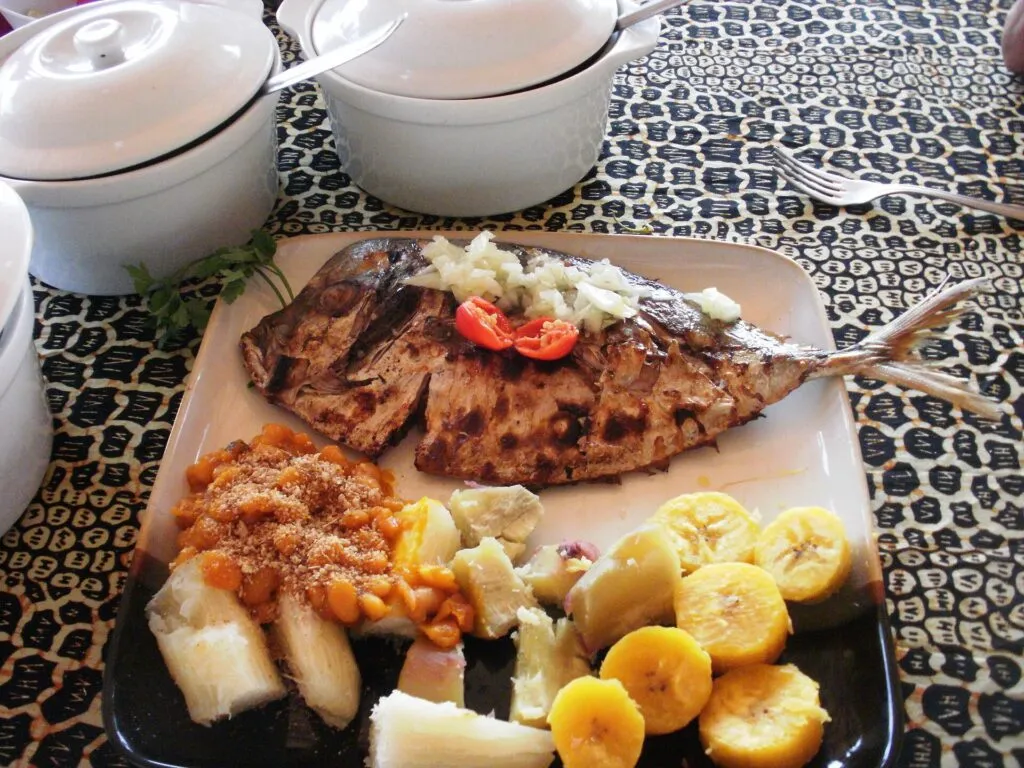
Saturday on the Ilha de Luanda: the sea breeze carries smoke from the grills, and families crowd the beach restaurants. Each table gets the same generous plate: a whole grilled fish, beans glossy with red palm oil, boiled plantain, cassava and sweet potato, a sprinkle of cassava flour, and a sharp sauce of onion, vinegar and chilli.
Mufete is Luanda’s classic weekend dish: whole grilled fish, often horse mackerel (carapau) or tilapia (cacusso), served with beans cooked in palm oil (feijão de óleo de palma), boiled plantain, cassava and sweet potato, cassava flour (farinha) and an onion and vinegar sauce. It comes from the Ilha de Luanda, the long sandbar peninsula off the capital, where it has been eaten since colonial times.
This guide explains each part of the plate, how to eat it, where to find it in Luanda and abroad, and dietary notes.
What Is on a Mufete Plate
| Part | What it is |
|---|---|
| Grilled fish | Whole fish such as carapau (horse mackerel), cacusso (tilapia) or peixe galo, seasoned with garlic, lemon and gindungo chilli and grilled over charcoal |
| Feijão de óleo de palma | Beans slow-cooked with red palm oil until creamy |
| Banana pão | Boiled cooking plantain |
| Mandioca and batata-doce | Boiled cassava and sweet potato |
| Farinha | Toasted cassava flour, sprinkled over the beans |
| Molho | A sauce of raw onion, vinegar or lemon, oil, salt and gindungo |
How to Eat Mufete
Take a piece of fish, some beans and a piece of plantain or cassava in each mouthful, then spoon over the onion sauce. The sharp sauce cuts through the rich palm-oil beans, and the farinha soaks up the juices. Many people eat with their hands, picking the fish off the bone.
How It Is Made
- The beans are soaked, then cooked slowly with onion, garlic and red palm oil until soft and creamy.
- The fish is cleaned, scored and seasoned with garlic, lemon, salt and gindungo, then grilled over charcoal.
- Plantain, cassava and sweet potato are boiled until tender.
- The sauce is made by mixing finely sliced onion with vinegar or lemon juice, oil, salt and chilli.
- Everything is served together on one plate, with farinha on the side.
When and Where to Eat It
- Saturdays are the traditional day for mufete, though many places serve it all week.
- Ilha de Luanda: beach restaurants along the peninsula are the classic setting, with sea views and grilled fish.
- Mussulo: the peninsula south of Luanda, popular for weekend trips and seafood.
- Angolan restaurants in Lisbon and other Portuguese cities often serve mufete at weekends.
For Angola’s other national favourite, see our guide to muamba de galinha.
Dietary and Halal Notes
Halal note: mufete is built around fish, beans and vegetables, so it suits halal-conscious diners in every school of thought. Check that the beans are cooked only with palm oil and onion, not with pork or sausage, and note that beach restaurants usually serve alcohol. See our halal food travel guide.
Mufete is naturally gluten-free. Without the fish, the beans, plantain, cassava and sweet potato make a filling vegetarian plate.
What It Costs in 2026
| Where | Typical price |
|---|---|
| Mufete at a beach restaurant on the Ilha de Luanda | Roughly USD 10–25, depending on the fish |
| Mufete at an Angolan restaurant in Lisbon | About EUR 12–18 |
Frequently Asked Questions
What is mufete?
An Angolan dish of whole grilled fish with palm-oil beans, boiled plantain, cassava and sweet potato, cassava flour and an onion and vinegar sauce.
Where does mufete come from?
From the Ilha de Luanda, the peninsula off Angola’s capital, where it has been a traditional dish since colonial times.
What fish is used for mufete?
Usually carapau (horse mackerel), cacusso (tilapia) or peixe galo, grilled whole.
When do Angolans eat mufete?
Traditionally on Saturdays, especially at beach restaurants and family gatherings.
What is feijão de óleo de palma?
Beans cooked slowly in red palm oil with onion and garlic until creamy, one of the essential parts of mufete.
What is farinha in Angola?
Toasted cassava flour, sprinkled over beans and fish to soak up the juices.
Is mufete spicy?
The fish and sauce include gindungo chilli, so it can be spicy. Ask for the sauce on the side if you prefer it milder.
Is mufete halal?
It is fish-based, so it is suitable for halal diets, provided the beans are cooked without pork. Check, as recipes vary.
Is mufete healthy?
It combines grilled fish, beans and vegetables, making it a balanced meal, though the palm oil makes the beans rich.
Can I make mufete at home?
Yes. Grill any firm whole fish, cook beans with red palm oil, boil plantain, cassava and sweet potato, and make a quick onion and vinegar sauce.
More from Africa: muamba de galinha, attiéké and seafood in Alexandria.
Sources
- Mufete, Wikipédia in Portuguese (Ilha de Luanda, components, Saturdays)
- Receita de mufete de peixe carapau, Angola 24 Horas
- Mufete, Maxi Angola