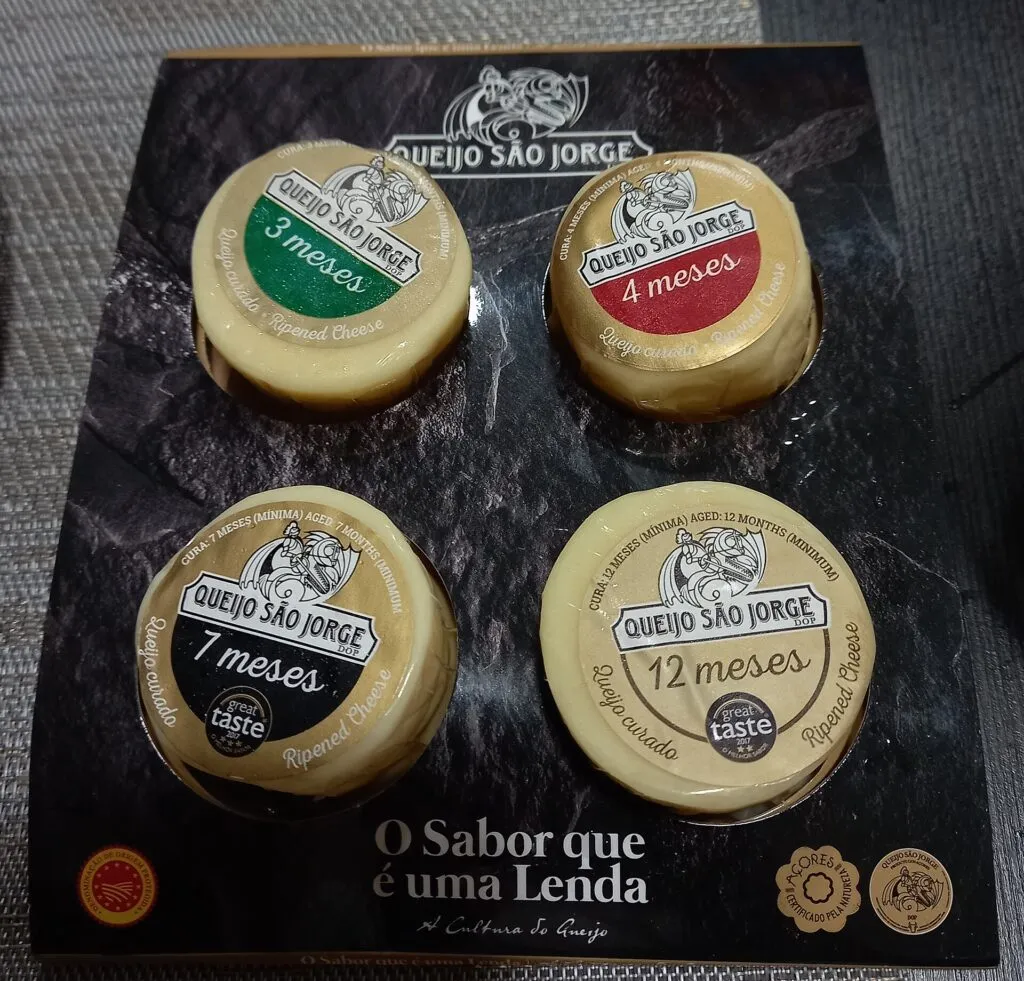
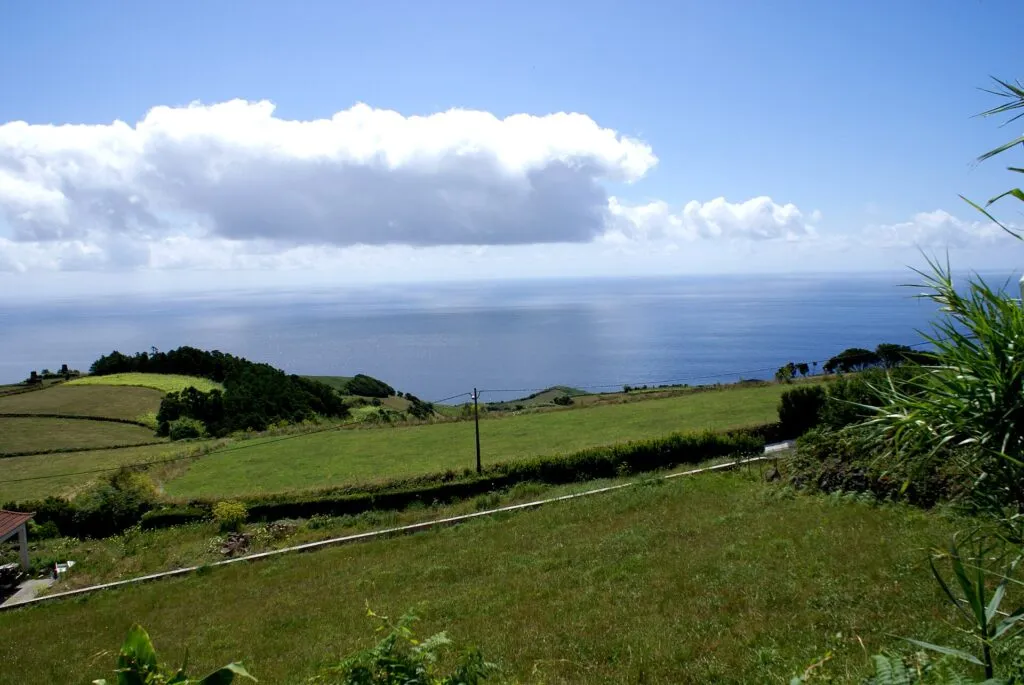
Queijo São Jorge is a hard to semi-hard cheese made only on São Jorge, an island in the central group of the Azores, from raw cow’s milk produced on the island. It is a protected designation of origin (PDO, or DOP in Portuguese), and its taste depends a lot on age: a young wheel is mild and buttery-sharp, an old one is dry, crumbly and peppery.
This guide covers what makes it São Jorge cheese, how the ages differ, where to taste and buy it on the island, and what to look for on the label elsewhere. It also clears up two points that other guides get wrong: the year it was protected and the size of a wheel.
What the rules say
The product specification registered with the European Union defines the cheese. The original 1994 file, published in the EU’s eAmbrosia register, sets these conditions:
- Made from whole, raw cow’s milk produced on São Jorge, by producers working only on the island.
- A cured cheese with a hard or semi-hard paste and at least 45% fat in dry matter.
- Cured for at least three months.
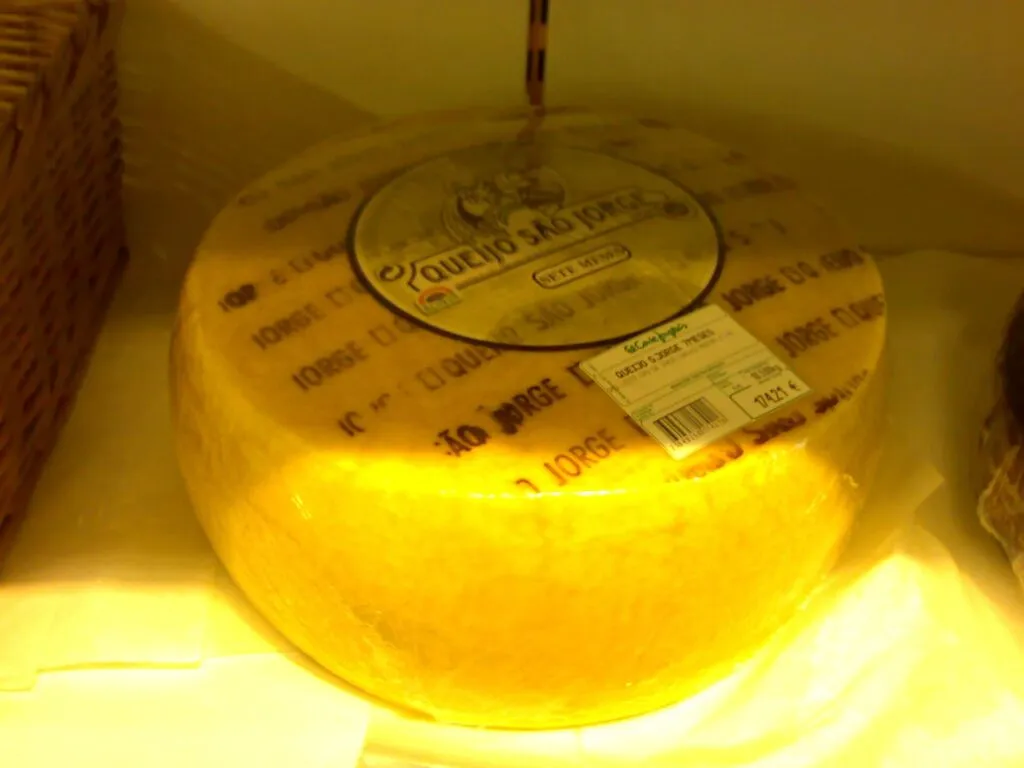
- Cylindrical wheels, usually 25 to 35 cm across and 10 to 15 cm high, with a weight that varies but is generally between 8 and 12 kg.
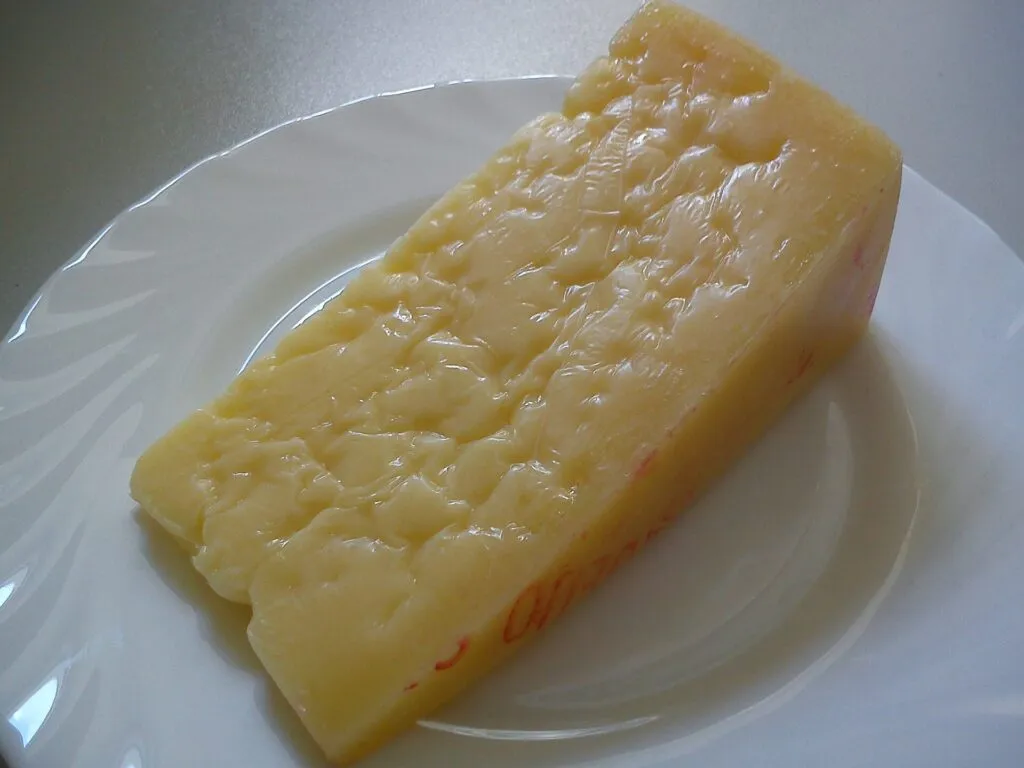
- A hard, dark yellow rind, sometimes with reddish-brown spots.
- A firm, sometimes crumbly yellowish paste with many small, irregular holes (eyes).
- A strong, clean, slightly spicy aroma and taste.
1986 or 1996?
Both years are right, for different things. In 1986 the Azores regional government created the Região Demarcada do Queijo São Jorge (the São Jorge cheese demarcated region) by Decreto Regulamentar Regional n.º 24/86/A, which limited the name to cheese made on the island from island milk. The EU registered “Queijo S. Jorge” as a PDO on 21 June 1996 (file PDO-PT-0267), which protects the name across the EU.
Who checks it
Certification is done by the Confraria do Queijo São Jorge, which was set up in 1991. In 2023 its president told the Lusa news agency that about 34% of the island’s cheese production was certified. The rest is sold as ordinary island cheese, so not every cheese made on São Jorge carries the name.
Who makes it
According to the same 2023 Lusa report, three cooperatives are authorised to make Queijo São Jorge DOP:
| Cooperative | Where | Notes |
|---|---|---|
| Uniqueijo (União de Cooperativas Agrícolas de Lacticínios de São Jorge) | Beira, Velas | Founded in 1986. Cures and packs the cheese and runs a café and shop at the factory. |
| Cooperativa Agrícola de Lacticínios dos Lourais | Ribeira Seca, Calheta | Has had a commercial agreement with Uniqueijo since 2007. Also sells Lourais island cheese. |
| Finisterra (Cooperativa Agrícola de Lacticínios do Topo) | Santo Antão, Topo, Calheta | Joined Uniqueijo in 2000. Also sells Topo cheese. |
Outside the island you will mostly see the cheese under the Queijo São Jorge DOP name, sold through LactAçores, the Azorean dairy group that Uniqueijo is part of. The same group sells Beira and Lourais as “queijo ilha” (island cheese), not as DOP.
How the ages taste
Producers sell the DOP cheese by curing time. LactAçores describes its ages like this:
| Age | Texture | Taste (producer’s description) | Producer’s serving idea |
|---|---|---|---|
| 4 months | Semi-hard | Strong, clean, slightly spicy | Cooking (pasta, gratins, salads) or a board with craft beer or a mature Port |
| 7 months | Semi-hard | Strong, clean, spicy | A cheese board with a full-bodied wine |
| 12 months | Hard, drier | Strong, clean, spicy | Eat in shards with a fortified wine or a young Port |
| 24 months | Hard, drier | Strong, clean, spicy | As for 12 months |
The peppery note is part of the cheese, not an added spice. The specification describes the flavour as slightly spicy, and it gets stronger with age.
Our advice for a tasting: try three ages side by side, youngest first, so the older ones do not overpower the younger. Take the cheese out of the fridge about half an hour before serving, and cut the older ones into thin shards rather than cubes, because they crumble.
Where to taste and buy it on São Jorge
Uniqueijo’s factory is at Canadinha Nova, Beira, 9800-501 Velas. Its website says you can book a visit to see how the cheese is made, and that its café and grocery shop at the factory serve the cheese and sell every format, along with other Azorean products. Book ahead through the form on uniqueijo.pt.
Buying it elsewhere
- Look for the name Queijo São Jorge with the DOP or PDO mark. Cheese labelled only “queijo da ilha” or “queijo ilha” is not the certified cheese, even when it comes from São Jorge.
- Check the age on the label. The minimum is three months; 7, 12 and 24 months are common.
- It is sold whole, in quarters, as wedges and grated, according to the producers.
- It is a raw-milk cheese. If you avoid raw-milk cheese for health reasons, follow your own medical advice.
Frequently asked questions
Is Queijo São Jorge made with raw milk?
Yes. The specification requires whole, raw cow’s milk from São Jorge.
How big is a São Jorge cheese?
The specification gives 25 to 35 cm across, 10 to 15 cm high and generally 8 to 12 kg.
When did it get protected status?
The demarcated region was created by a regional decree in 1986. The EU registered the PDO on 21 June 1996.
What does it taste like?
Strong, clean and slightly spicy, with a firm, sometimes crumbly texture. Older cheeses are drier and sharper.
Is it the same as queijo da ilha?
No. Queijo da ilha (island cheese) is a general name. Only cheese certified under the São Jorge rules can be sold as Queijo São Jorge DOP.
Sources
- Queijo S. Jorge (PDO-PT-0267), EU eAmbrosia register, including the product specification file
- Decreto Regulamentar Regional n.º 24/86/A, Diário da República
- Uniqueijo, history, facilities and contact pages
- Queijo São Jorge DOP, LactAçores product pages (4, 7, 12 and 24 months)
- Uniqueijo, Visit Azores
- Queijo São Jorge DOP presente no mercado dos cinco continentes, Lusa via Agroportal (22 October 2023)
Facts checked on 7 November 2026.