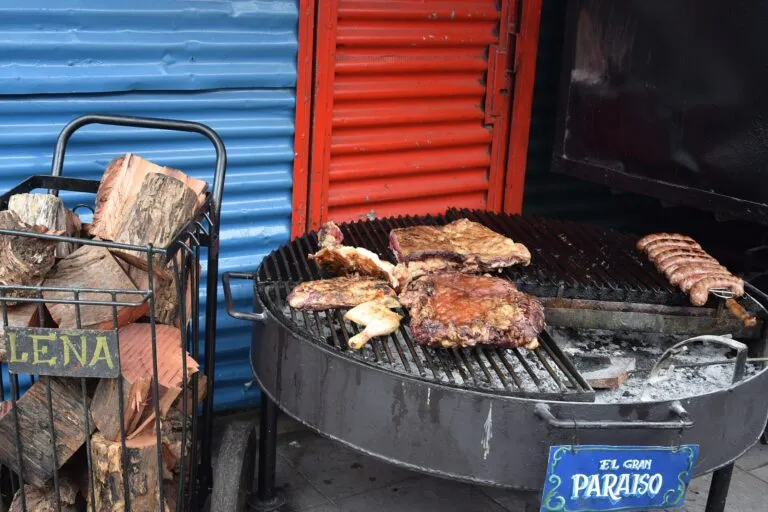
On a Friday night at Oistins, on Barbados’s south coast, smoke rises from a row of grills, music spills out of the fish stalls, and the queue for fried flying fish stretches back towards the road. Locals and visitors eat side by side at long tables, plates piled with fish, macaroni pie and salad.
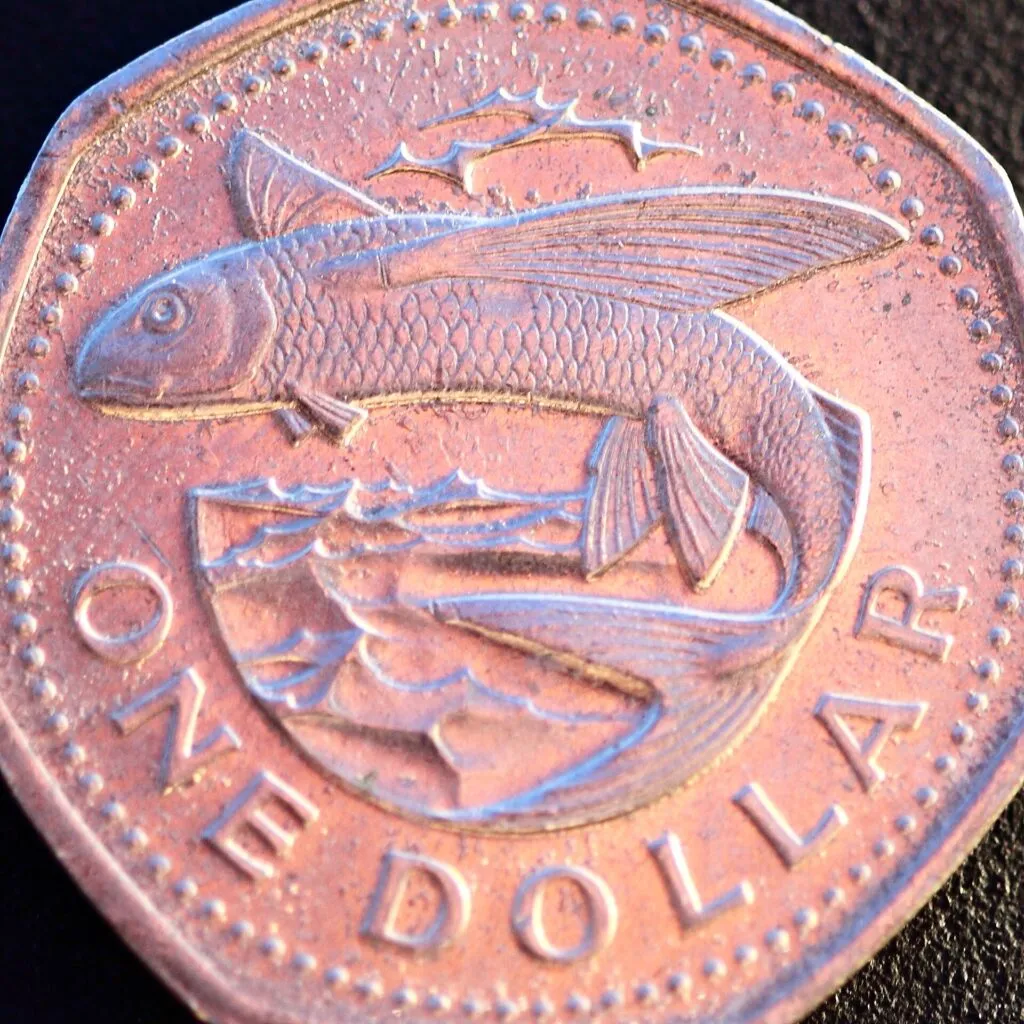
Cou-cou and flying fish is the national dish of Barbados: flying fish steamed in a tomato, onion and herb gravy, served with cou-cou, a smooth, firm cornmeal and okra mash. Flying fish is so central to the island that it appears on the one-dollar coin and the tourism logo, and Barbados calls itself “the land of the flying fish”.
There is a catch in 2026. Flying fish landings have fallen sharply since sargassum seaweed began swamping the region in 2011, so the fish is sometimes scarce. This guide explains the dish, how and where to eat it, what to expect if flying fish is short, and the island’s other classic dishes.
What Is Flying Fish?
Flying fish are small, silver fish with long, wing-like fins. When chased by predators they burst out of the water and glide for long distances over the waves, a sight you may catch from a boat or the beach.
The meat is white, mild and slightly sweet, with fine bones. Fish vendors at Bridgetown’s markets are expert at boning them in seconds, opening each fish into a flat, boneless fillet ready for seasoning.
For generations flying fish made up most of the island’s catch; in a typical year it accounted for around two-thirds of all fish landed in Barbados.
What Is Cou-Cou?
Cou-cou is cornmeal cooked with okra and its cooking water until it forms a thick, smooth mass, stirred hard with a flat wooden stick called a cou-cou stick. It is shaped in a buttered bowl and turned out onto the plate.
The texture is like firm polenta or grits, with the okra adding body and a gentle silkiness. The dish has West African roots, brought to the island by enslaved Africans, and relatives exist across the Caribbean, such as fungi in the Virgin Islands and Antigua.
How the National Dish Is Made
- Flying fish fillets are rubbed with lime and salt, then seasoned with Bajan seasoning: a green paste of spring onion, thyme, marjoram, parsley, garlic, hot pepper and lime.
- For the gravy, onion, tomato, sweet pepper, garlic and herbs are softened in butter or oil, then simmered with a little water.
- The seasoned fish is rolled or laid in the gravy and steamed gently for a few minutes until just cooked.
- Meanwhile, sliced okra is boiled, then cornmeal is whisked into the okra water and stirred constantly until thick enough to hold its shape.
- The cou-cou is shaped in a bowl, turned out, and served with the fish and plenty of gravy.
Fried flying fish, crisp and golden, is just as common, especially at fish fries and lunch spots.
Ways to Eat Flying Fish in Barbados
- Steamed with cou-cou: the national dish, traditionally a Friday lunch.
- Fried: battered or crumbed, at Oistins and other fish fries, with macaroni pie, rice and peas, or salad.
- Flying fish cutter: fried flying fish in a salt bread roll with lettuce, tomato and hot pepper sauce, the island’s favourite beach lunch.
- In a buffet or lunch plate at local restaurants, alongside macaroni pie, breadfruit and coleslaw.
Can You Still Get Flying Fish in Barbados?
Usually, yes, but less reliably than before. Since 2011, large mats of sargassum seaweed have drifted into the eastern Caribbean, and Barbados’s Chief Fisheries Officer has reported that flying fish landings fell by about half after the seaweed arrived. Hurricane Beryl in 2024 also damaged fishing boats, and fishmongers described an unusually poor catch at Christmas 2025.
In practice this means some restaurants use frozen or imported flying fish, some substitute other fish when supplies run out, and markets may have none on a given day. If eating fresh local flying fish matters to you, ask the restaurant whether it is fresh today, and go to the fish markets or Oistins early.
Barbados imports much of the fish it eats to meet tourist demand, so choosing local fish when it is available supports island fishers.
Where to Eat It
- Oistins Fish Fry: the island’s most famous food night, held every Friday on the south coast, with Saturday also busy. Grilled and fried fish, music and a local crowd. Arrive early to avoid long queues.
- Bridgetown fish markets: the Bridgetown Fisheries Complex and the public market are where to see flying fish being boned and to buy fresh fish if you are cooking.
- Local lunch spots and rum-shop kitchens: cou-cou and flying fish is often a Friday lunch special. Ask your hotel staff where locals eat it.
- Hotels and resorts: many add the national dish to their menus, especially on Barbados theme nights.
Abroad, Bajan and Caribbean restaurants in London, Birmingham, Toronto and New York often serve cou-cou and flying fish, usually with frozen imported fish.
Other Bajan Dishes to Know
- Macaroni pie: baked macaroni and cheese, firm enough to slice, served with almost everything.
- Fish cakes: salt-fish fritters, often eaten with bakes (fried dough) as a snack.
- Rice and peas: rice cooked with pigeon peas, a standard side.
- Breadfruit: boiled, fried or as a cou-cou-style mash.
- Pudding and souse: a Saturday tradition of pickled pork with steamed sweet potato pudding. It is pork-based, so see the note below.
Halal and Dietary Notes
Halal note: cou-cou and flying fish is fish, cornmeal, okra and vegetables, so it suits fish-only and all-seafood diners alike, provided the gravy contains no wine (it usually does not) and the fish is not fried in oil shared with pork. Pudding and souse, a Saturday favourite, is pork, and some stalls cook pork chops beside the fish, so ask about the fryer. Barbados is famous for rum, which appears in cakes and desserts, so check before ordering sweets. Our halal food travel guide has more tips.
Cou-cou is naturally gluten-free. Fried flying fish is usually coated in flour or breadcrumbs, and macaroni pie contains wheat and dairy.
What It Costs in 2026
| Item | Typical price |
|---|---|
| Cou-cou and flying fish lunch plate | About BBD 25–45 |
| Fried flying fish plate at Oistins | About BBD 30–50 with sides |
| Flying fish cutter | About BBD 12–20 |
| Fresh flying fish at the market | Sold by the pack, recently around BBD 35–40 for ten fish |
The Barbados dollar is fixed at about two to one US dollar, and US dollars are widely accepted. Many restaurant bills include VAT and a service charge, so check before adding a tip.
Frequently Asked Questions
What is the national dish of Barbados?
Cou-cou and flying fish: steamed flying fish in a tomato and herb gravy with a cornmeal and okra mash.
How do you pronounce cou-cou?
“Koo-koo”. Barbadians are called Bajans (“BAY-jans”), and their food is Bajan food.
What does flying fish taste like?
Mild, slightly sweet and delicate, somewhere between sardine and whiting but less oily. Bajan seasoning and gravy give it most of its flavour.
Why is flying fish so important in Barbados?
It was the island’s most plentiful fish for generations, and it became a national symbol: it appears on the one-dollar coin, in the tourism logo and in Barbados’s nickname, the land of the flying fish.
What day do Bajans eat cou-cou and flying fish?
Traditionally on Fridays, and sometimes Saturdays. Many local restaurants serve it as a Friday special.
Is flying fish endangered?
Flying fish as a group are not considered endangered, but Barbados’s catch has dropped sharply since sargassum seaweed influxes began in 2011, which is why supplies are sometimes short.
What is a flying fish cutter?
A sandwich of fried flying fish in a Bajan salt bread roll, usually with lettuce, tomato and pepper sauce. It is a classic beach lunch.
What can I substitute for flying fish at home?
Any small, mild white fish works: whiting, sea bass, snapper or sole fillets. Outside the Caribbean, frozen flying fish is sometimes sold in Caribbean grocery shops.
What is Bajan seasoning?
A fresh green seasoning paste of spring onion, thyme, marjoram, parsley, garlic, hot pepper and lime, used on fish, chicken and meat across Barbados.
When is the Oistins Fish Fry?
Every Friday night is the main event, with Saturdays also busy. Stalls serve food on other evenings too, but Friday has the biggest crowd and the liveliest atmosphere.
Is cou-cou the same as polenta?
They are similar, both made from cornmeal, but cou-cou is cooked with okra, which gives it a smoother, slightly silky texture, and it is shaped in a bowl before serving.
More from the Caribbean: our Caribbean food guide, Bahamian conch salad, Jamaican jerk, Trinidad doubles, Dominican sancocho and all Latin America and Caribbean food guides.
Sources
- Flying fish industry impacted by sargassum influxes, CBC Barbados (51% fall in landings)
- Xmas fish tradition under threat as catches plunge, Barbados Today (2025)
- Hurricane Beryl scars remain on fishing industry, Barbados Today (market prices)
- Barbados looks into the deep blue, IPS (FAO catch data, fish imports)
- Cou-cou, Wikipedia