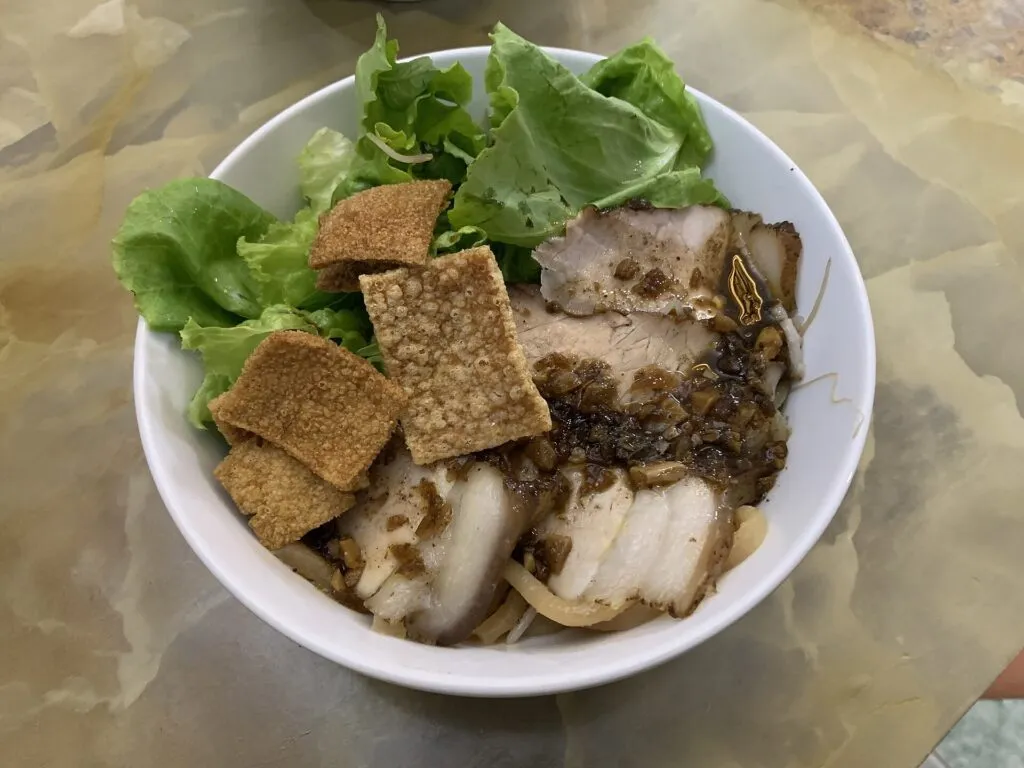
Cao lầu is the dish Hoi An claims as its own. A small bowl of thick, chewy, yellowish noodles, a little dark sauce, slices of roast meat, fresh herbs and crunchy squares of fried noodle dough. You will not find the real thing anywhere else in Vietnam.
Cao lầu is a noodle dish unique to Hoi An, in central Vietnam: firm, chewy noodles served with sliced pork (usually char siu-style), herbs, bean sprouts, crispy noodle crackers and a spoonful of rich broth. It is sold at street stalls and restaurants all over Hoi An’s old town, and in 2026 a bowl costs roughly 30,000–70,000 dong. Because the classic topping is pork, standard cao lầu is not halal. This guide explains the dish and points you to what Muslim travellers can eat in Hoi An instead.
Why it is special
Local tradition says true cao lầu noodles are made with water from a particular old well in Hoi An and alkaline lye made from wood ash, which gives them their colour and chewy bite. Much of the story is hard to verify, but the texture is unlike any other Vietnamese noodle.
The dish shows Hoi An’s history as a trading port: the thick noodles are sometimes compared with Japanese udon, and the roast pork with Chinese char siu.
What is in the bowl
- Chewy cao lầu noodles, served warm with only a little broth.
- Slices of pork, marinated and roasted or braised.
- Crispy fried squares of noodle dough.
- Fresh herbs, lettuce and bean sprouts.
- Chilli jam and lime on the side.
Halal note: classic cao lầu is made with pork and often a pork-based sauce, so it is not halal. Some restaurants offer versions with chicken, shrimp or tofu, but the noodles and sauce may still be made with pork stock or in shared pots; ask carefully. Vietnam’s vegetarian restaurants (quán chay), common in Hoi An, are a good fallback. Da Nang, about 45 minutes away, has halal restaurants. See our halal food travel guide.
What else to eat in Hoi An
| Dish | What it is | Halal check |
|---|---|---|
| Mì Quảng | Wide turmeric noodles with a little rich broth, herbs and peanuts | Often pork or chicken; shrimp versions exist; ask about stock |
| Cơm gà Hội An | Turmeric chicken rice with shredded chicken and herbs | Chicken not halal-slaughtered |
| Bánh bao bánh vạc (white rose dumplings) | Translucent shrimp dumplings with fried shallots | Shrimp; ask about pork in the filling |
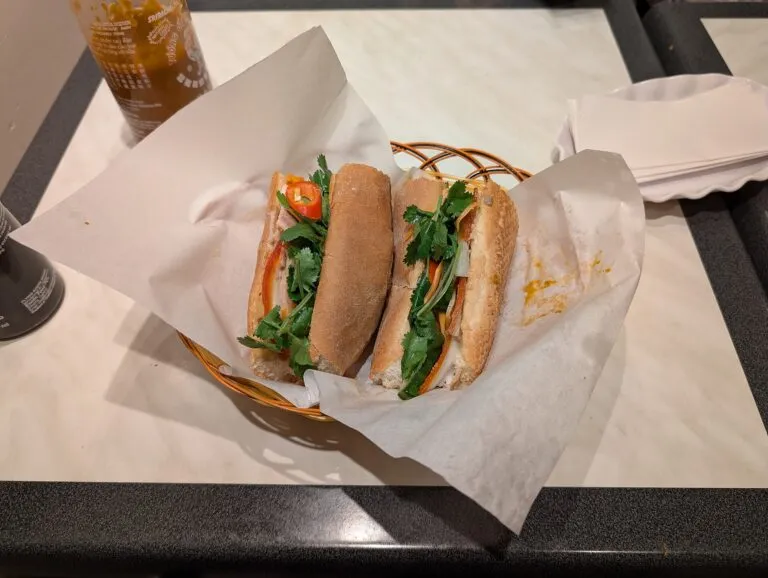
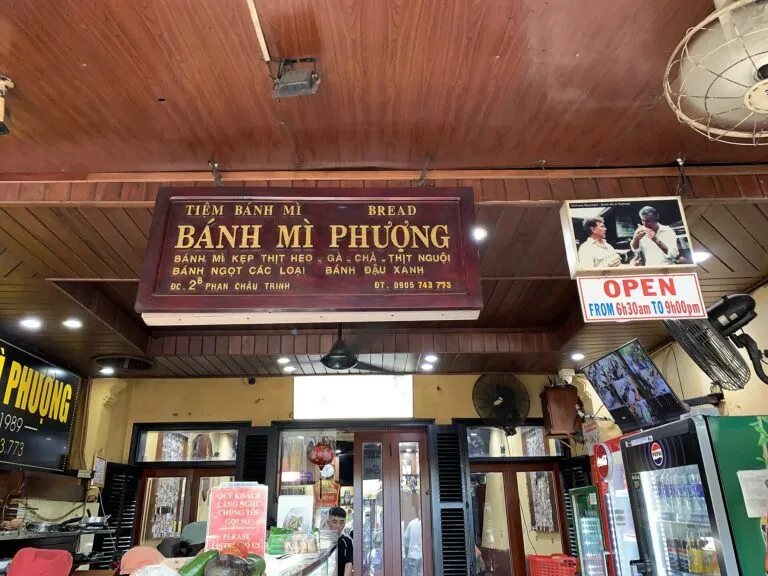
| Bánh mì | Hoi An is famous for its baguette sandwiches | Usually pork; egg or vegetarian options exist |
| Grilled fish and seafood | From nearby fishing villages | Usually pork-free; ask about sauces |
| Vegetarian (chay) dishes | Tofu, mushrooms and vegetables | Usually the safest choice |
For more on the sandwich, see our bánh mì class in Hoi An guide.
Where to try it
- Street stalls and small eateries in the old town – cao lầu is on almost every menu.
- The central market – food stalls with quick, cheap bowls.
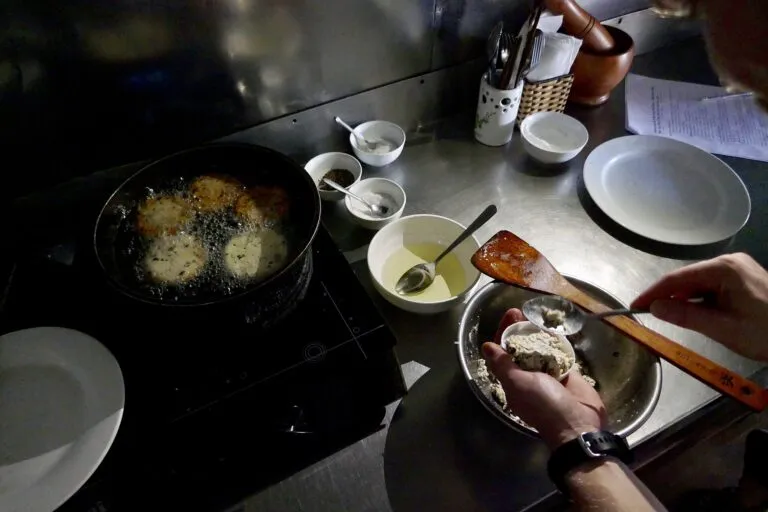
- Cooking classes – many Hoi An classes teach a version with other proteins; see our Hoi An cooking class guide.
What it costs (2026)
| Item | Typical price |
|---|---|
| Cao lầu at a street stall | About 30,000–50,000 dong |
| Cao lầu at a restaurant | About 50,000–90,000 dong |
| Vegetarian dishes | About 30,000–80,000 dong |
Plan your Vietnam budget with the Vietnam food budget calculator and check tipping in Vietnam.
Vietnamese phrases
| Say | Meaning |
|---|---|
| Có thịt heo không? | Is there pork? |
| Không thịt heo | No pork |
| Có halal không? | Is it halal? |
| Món chay | Vegetarian dish |
| Không cay | Not spicy |
| Bao nhiêu tiền? | How much? |
Frequently asked questions
What is cao lầu?
A Hoi An noodle dish of chewy noodles with pork, herbs and crispy noodle crackers in a little broth.
Is cao lầu halal?
No, the classic version is made with pork. Ask about chicken, shrimp or tofu versions, or choose vegetarian food.
Can you get cao lầu outside Hoi An?
Versions exist elsewhere, but locals say the real noodles are only made in Hoi An.
How much is cao lầu?
About 30,000–90,000 dong in 2026.
More from Vietnam: bánh mì in Saigon and bánh xèo in Da Nang. See all Vietnam food guides.
Sources
- Vietnam Tourism – official tourism site.
- Cao lầu.