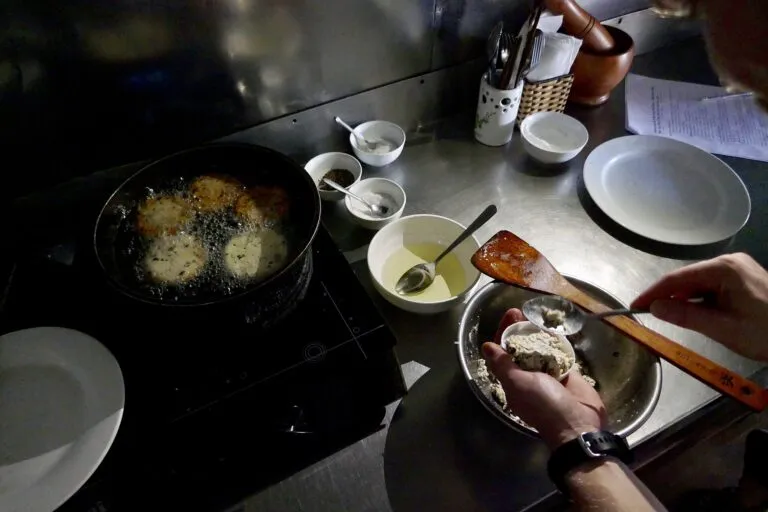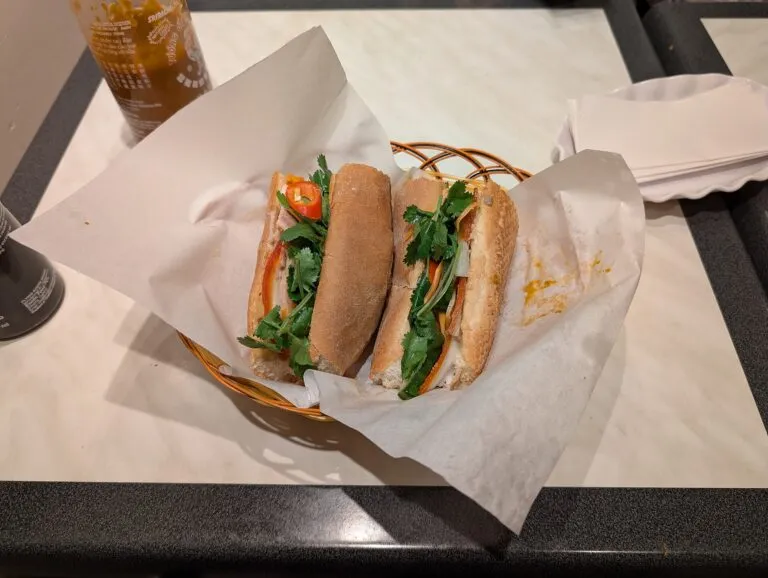
A good bánh mì crackles. The baguette is thin-crusted and airy, split along one side and packed with layers: something rich, something pickled, something fresh, something hot. In a Hoi An class you learn to build that balance yourself.
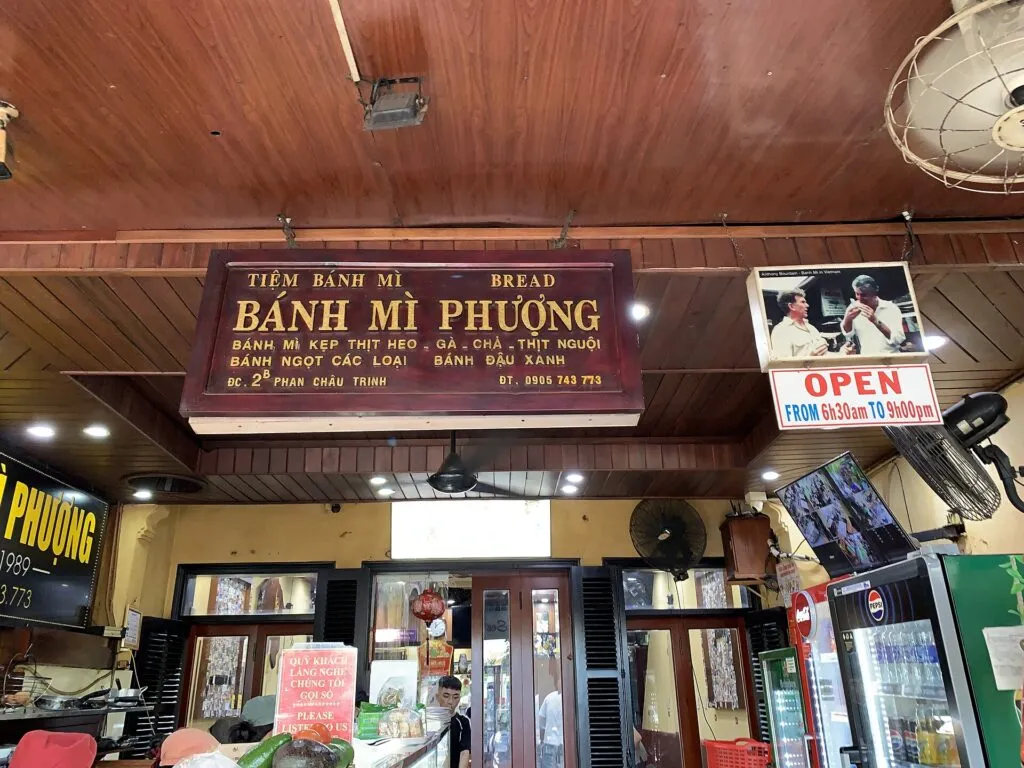
A bánh mì class in Hoi An is a short, hands-on cooking session where you learn to make the fillings and sauces for Vietnam’s famous baguette sandwich, including pickled carrot and daikon, chilli sauce and a grilled or fried filling, then assemble and eat your own. Hoi An is known for bánh mì thanks to famous stalls such as Bánh Mì Phượng and Madam Khanh. In 2026 classes cost roughly US$15–40 per person. Traditional fillings are mostly pork, but most classes can teach egg, tofu, fish or chicken versions if you ask when booking.
This guide covers what goes into a bánh mì, what you do in a class, how to make it pork-free, where to eat the famous ones and prices.
What goes into a bánh mì
| Layer | Traditional | Pork-free swap |
|---|---|---|
| Bread | Light, crisp Vietnamese baguette | Same |
| Spread | Pork liver pâté and mayonnaise | Mayonnaise, butter or chilli sauce |
| Main filling | Cold cuts, roast pork, grilled pork | Fried egg, grilled fish, tofu, lemongrass chicken |
| Pickles | Carrot and daikon in sweet vinegar | Same |
| Fresh | Cucumber, coriander, chilli | Same |
| Seasoning | Soy or Maggi seasoning, chilli sauce | Same |
What you do in a class
- Visit a market (in some classes) to buy herbs and vegetables.
- Make quick pickles of carrot and daikon.
- Prepare a chilli sauce and a mayonnaise or butter spread.
- Marinate and cook the filling: grilled meat, egg or tofu.
- Warm and split the baguette, then assemble in the right order.
- Eat your bánh mì, and often take the recipe card home.
Most classes do not bake bread from scratch, since that takes hours; a few longer workshops do.
Halal note: classic Hoi An bánh mì uses pork pâté, pork cold cuts and roast pork, so it is not halal. When you book, ask for a class without pork; egg (bánh mì trứng), tofu, fish or seafood fillings are easy. Chicken in local markets is not halal-slaughtered. Check that the pans and grills are not shared with pork. Da Nang, 45 minutes away, has halal restaurants. See our halal food travel guide.
How to choose a class
- Length: 1–2 hours for a bánh mì-only class; half-day classes include more dishes.
- Group size: small groups mean more hands-on time.
- Dietary needs: confirm pork-free or vegetarian options in writing.
- Market visit: a nice extra for seeing local herbs and produce.
- Location: old-town kitchens are easy to reach; countryside classes may include transport.
For a wider class covering several Vietnamese dishes, see our Hoi An cooking class guide.
The famous Hoi An stalls
- Bánh Mì Phượng – became world-famous after appearing on international TV; long queues, with many fillings including egg.
- Madam Khanh – known as “the bánh mì queen”, a small old-town stall.
Both are known mainly for pork fillings; ask for egg or vegetarian versions. Hours vary.
What it costs (2026)
| Item | Typical price |
|---|---|
| Bánh mì class (1–2 hours) | About US$15–30 |
| Half-day cooking class | About US$25–45 |
| Bánh mì at a street stall | About 25,000–45,000 dong |
| Egg bánh mì | About 20,000–35,000 dong |
Plan your budget with the Vietnam food budget calculator and see tipping in Vietnam.
Vietnamese phrases
| Say | Meaning |
|---|---|
| Bánh mì trứng | Egg bánh mì |
| Không thịt heo, không pa-tê | No pork, no pâté |
| Có thịt heo không? | Is there pork? |
| Có halal không? | Is it halal? |
| Ít cay | A little spicy |
Frequently asked questions
Is bánh mì halal?
Classic bánh mì uses pork pâté and pork. Egg, tofu and fish versions are pork-free; check shared grills.
How much is a bánh mì class in Hoi An?
About US$15–45 in 2026, depending on length.
Where is the most famous bánh mì in Hoi An?
Bánh Mì Phượng and Madam Khanh are the best known.
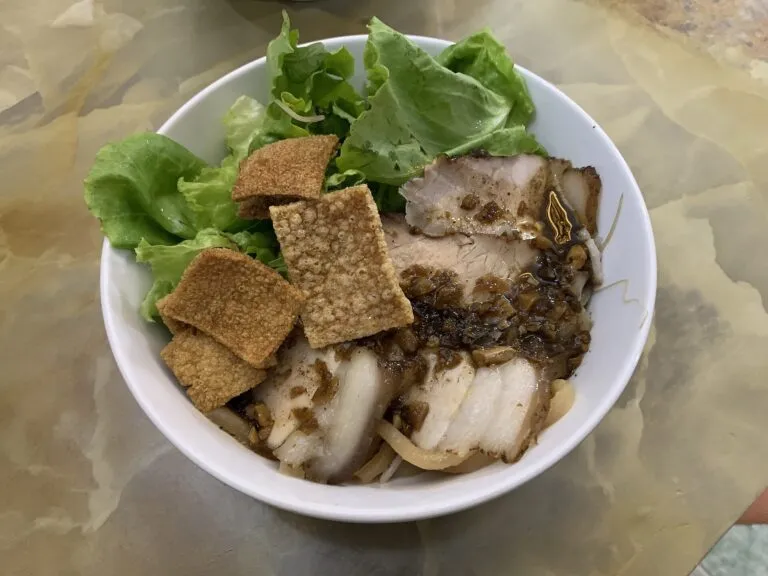
More bánh mì: bánh mì in Saigon. More Hoi An: cao lầu. See all Vietnam food guides.
Sources
- Vietnam Tourism – official tourism site.
- Bánh mì.