
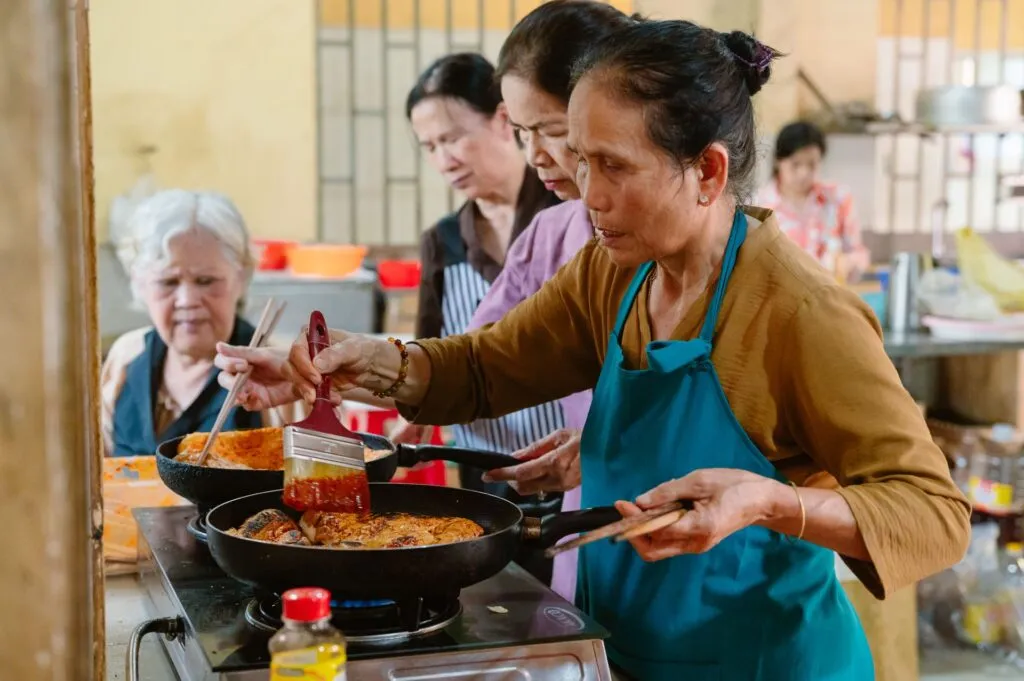
A good cooking class while travelling is one where you do the cooking, the group is small enough for the teacher to see what you are doing, and the menu is something you would want to cook again at home. Everything else, the market visit, the setting, the price, is secondary.
This page is a short checklist for comparing classes, followed by our guides to specific classes. We keep it short on purpose: prices, group sizes and menus differ from school to school and change often, so the detail belongs in the guide for each place, and you should always confirm it with the school.
Five questions that tell classes apart
- Do I cook, or watch? A participation class has you chopping and stirring. A demonstration has a chef cook while you eat. Both can be enjoyable, but they are different products, so ask which one you are buying.
- How many people are in the class? Fewer people means more time at the stove and more of the teacher’s attention. Ask for the maximum.
- What exactly will we cook, and can I choose? Ask for the full menu. If you have one dish you want to learn, check that it is on it.
- Is there a market visit, and how long is the whole class? A market visit gives context for the ingredients but makes the class longer. Plan the rest of your day around the real length.
- Can you cater for my allergy or diet? Ask before you book, and ask how cross-contact is handled in a shared kitchen. A good school will answer clearly.
Red flags
- The listing never says who does the cooking.
- There is no maximum group size or no menu.
- The reviews are old, all say the same thing, or the school’s own website does not work.
- A high price with no hands-on time.
Our guides to classes in specific places
- Cooking classes in Ubud: what you will learn about Balinese food
- Cooking classes in Hội An: what you will learn
- Thai cooking classes in Bangkok: how to choose one
- Farm-stay cooking holidays: what they are like
- Gelato schools in Italy: classes, the museum and Carpigiani Gelato University
Frequently Asked Questions
Do I need cooking experience?
Not for most visitor classes, which are designed for beginners. Tell the school if you are nervous with knives or hot oil.
Is a class at a home better than one at a school?
A home class tends to give you the family’s own recipes and conversation. A school tends to give you consistent teaching and facilities. Choose on what you want from the class.
What if I have food allergies?
Contact the school before booking and ask how it handles your allergy. If it cannot answer clearly, choose another class.
This checklist is our own editorial judgement, not survey data. Last reviewed on 7 November 2026.