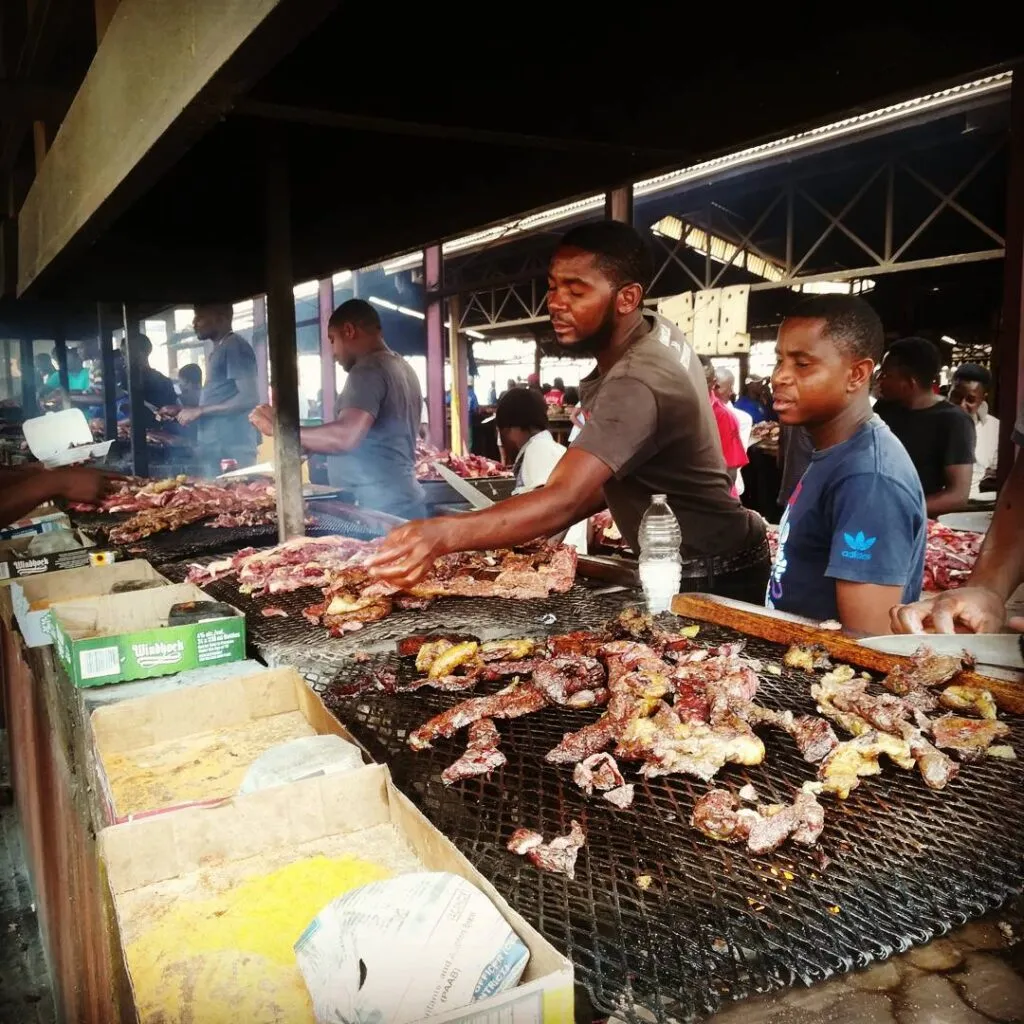
Smoke rolls across the market in Katutura, Windhoek’s biggest township. Behind long grills made from oil drums, vendors slice strips of fresh beef straight onto the coals. You tell one how much you want to spend, he slides that much meat to the side of the grill, and you eat it standing up, dipping each piece in a pile of spice and a little bowl of tomato and onion salsa.
Kapana is Namibia’s favourite street food: fresh beef cut into bite-sized strips, grilled over charcoal at open markets and eaten with a spice and salt mix and a salsa of chopped tomato, onion, chilli and vinegar. The most famous place to try it is the Single Quarters market (Oshetu Community Market) in Katutura, Windhoek, with other kapana markets across the country, from Swakopmund to Oshakati.
This guide explains how kapana works, how to order and eat it, where to go, what to eat with it, and safety, dietary and halal notes.
What Is Kapana?
Kapana is grilled meat, mainly beef, including lean strips, fatty trims and sometimes liver or kidney, sold by street vendors at markets and roadsides. It grew out of township markets, where butchers sold fresh meat and grilled it on the spot, and is now a source of pride and a must-try for visitors.
Namibia is cattle country, and its beef is known for flavour, so kapana is simple: good meat, salt, spice and fire.
How to Order and Eat Kapana
- Find a busy grill where meat is being cut fresh.
- Tell the vendor how much you want to spend; they portion the meat accordingly.
- The meat is grilled in front of you, then pushed to the side of the grill to keep warm.
- Pick up pieces with your fingers (or a toothpick) and dip them in the spice and salt mix.
- Add a spoonful of the tomato, onion and chilli salsa.
- Pay at the end, in cash.
What to Eat With Kapana
- Salsa: chopped tomato, onion, chilli and vinegar, always on the side.
- Vetkoek (fat cakes): fried dough balls, perfect with grilled meat.
- Pap or oshifima: stiff maize or millet porridge, eaten with the fingers.
- Cold drinks from nearby stalls.
Where to Eat Kapana
- Single Quarters (Oshetu Community Market), Katutura, Windhoek: the best known, open daily from early morning. Go with a local or on a guided township food tour if it is your first visit.
- Soweto Market, Katutura: another busy market with kapana grills.
- Mondesa, Swakopmund: popular with locals and visitors on township tours.
- Northern towns such as Oshakati and Ongwediva, where kapana is everywhere.
Forum regulars give the same advice to visitors asking about street food in Windhoek: go to Katutura for kapana, freshly cooked in front of you.
Safety Tips
- Choose busy grills with fresh meat cut in front of you and high turnover.
- Make sure the meat is cooked through, especially offal.
- Carry small cash and keep valuables out of sight at busy markets.
- Consider a guided tour for your first visit to Katutura; local guides explain the market and help you order.
Dietary and Halal Notes
Halal note: kapana is beef with salt, spice and salsa, with no pork or alcohol, but meat at Namibian markets is not halal-slaughtered. Namibia has a small Muslim community, and Windhoek has mosques and halal butchers, so you can grill halal beef kapana-style yourself or ask locally for halal options. See our halal food travel guide.
Kapana is naturally gluten-free, apart from vetkoek. It is entirely meat-based, so vegetarians should look for vetkoek, pap and salsa instead.
What It Costs in 2026
| Item | Typical price |
|---|---|
| Kapana at Single Quarters | You choose: roughly NAD 20–100 buys a snack to a full meal |
| Vetkoek | A few Namibian dollars each |
| Guided township food tour in Windhoek | Typically USD 30–60 per person |
The Namibian dollar (NAD) is pegged one-to-one to the South African rand, which is also accepted in Namibia.
Frequently Asked Questions
What is kapana?
Namibian street-grilled beef, cut into small strips and eaten with spice, salt and a tomato and onion salsa.
Where can I eat kapana in Windhoek?
At the Single Quarters (Oshetu Community Market) and the Soweto Market in Katutura.
How do you order kapana?
Tell the vendor how much you want to spend; they grill and set aside that amount of meat for you.
What meat is kapana?
Mainly beef, including lean strips and fatty trims, and sometimes liver or kidney.
Is kapana safe to eat?
Generally yes at busy grills where meat is fresh and cooked in front of you. Make sure it is well cooked, especially offal.
What is the kapana spice?
A mix of salt, chilli and other spices, sold in small piles at each grill for dipping.
What is eaten with kapana?
Tomato and onion salsa, vetkoek (fat cakes) and pap or oshifima.
Is kapana halal?
It contains no pork, but market beef is not halal-slaughtered. Halal butchers in Windhoek sell meat you can cook the same way.
Is Katutura safe for visitors?
Many visitors go to Single Quarters, especially with a local friend or guide. Take normal precautions at busy markets and go during the day.
Is kapana spicy?
The meat is not; the heat comes from the spice mix and salsa, which you add yourself.
Can I make kapana at home?
Yes. Cut beef into small strips, grill over hot charcoal, and serve with a salt and chilli mix and a fresh tomato and onion salsa.
More from southern Africa: seswaa in Botswana, bunny chow in Durban and nyama choma in Kenya.
Sources
- Kapana, Namibia’s soul food, Travel Namibia (Single Quarters, meat types, salsa)
- Tasting kapana in Katutura, Changes in Longitude (how to order and eat)
- Namibian street food: kapana, The Afrikan Store