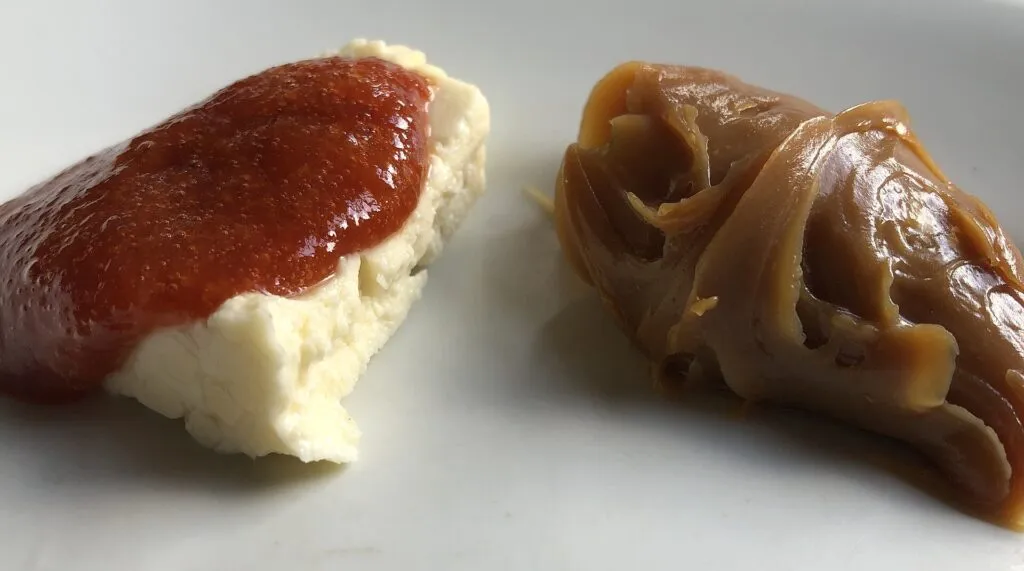
In Argentina, dulce de leche is not a dessert. It is a staple. It is spread on toast at breakfast, piped into pastries at the bakery, sandwiched between biscuits in the afternoon, and scooped as ice cream at night. Many Argentines keep a jar open at all times.
Dulce de leche is a thick, caramel-like spread made by slowly cooking milk and sugar until it turns golden brown and creamy. Argentina (and neighbouring Uruguay, home of the chivito) treat it as a national treasure, eating it on toast and in alfajores, pastries, pancakes and ice cream. In 2026 a jar costs roughly the equivalent of US$2–6 in a supermarket, and an alfajor about US$1–3. Dulce de leche itself is made from milk and sugar and is halal-friendly; check filled sweets for liqueur.
This guide covers what dulce de leche is, how Argentines eat it, where to try it in Buenos Aires, halal points and phrases.
What it is
Milk, sugar and a pinch of baking soda are cooked slowly for hours, stirred constantly, until the sugar caramelises and the milk thickens. The result is smoother and milkier than caramel sauce.
A popular story sets its invention in 19th-century Argentina, when a pot of sweetened milk was left on the fire too long. Similar sweets exist across Latin America under names like cajeta in Mexico and arequipe in Colombia.
How Argentines eat it
| Form | What it is |
|---|---|
| On toast | The breakfast classic, with coffee |
| Alfajores | Two soft biscuits sandwiching dulce de leche, often coated in chocolate |
| Facturas | Bakery pastries, many filled with dulce de leche |
| Panqueques con dulce de leche | Thin pancakes rolled around it; a restaurant dessert |
| Helado de dulce de leche | Ice cream; one of the top flavours at every heladeria |
| Flan con dulce de leche | Caramel custard with a spoonful on the side |
Types of dulce de leche
- Clásico – the everyday spreadable kind.
- Repostero – thicker, for baking and filling pastries.
- Colonial or artisanal – darker and more intense, made in small batches.
Halal note: dulce de leche is made from milk and sugar and contains no meat or alcohol. Some alfajores and desserts add liqueur, and a few pastries use lard, so ask. For halal meals in Buenos Aires, the Palermo area around the King Fahd Islamic Cultural Center is a good starting point. See our halal food travel guide.
Where to try it in Buenos Aires
- Bakeries (panaderías) – for facturas and simple alfajores.
- Ice-cream parlours (heladerías) – order dulce de leche granizado (with chocolate chips).
- Cafés – for panqueques and coffee.
- Supermarkets – for jars to take home; hard-sided jars pack best.
- Mar del Plata – the seaside city that made alfajores famous.
Taking it home
Dulce de leche counts as a gel in hand luggage, so pack jars in checked baggage, wrapped well. Alfajores travel easily in their boxes.
Spanish phrases
| Say | Meaning |
|---|---|
| Un alfajor de dulce de leche, por favor | One dulce de leche alfajor, please |
| ¿Tiene alcohol? | Does it contain alcohol? |
| ¿Tiene grasa de cerdo? | Does it contain lard? |
| Un cuarto de helado | A quarter kilo of ice cream |
| Gracias | Thank you |
Frequently asked questions
What is dulce de leche?
A thick, caramel-like spread made by slowly cooking milk and sugar.
Is dulce de leche halal?
Yes in principle: it is milk and sugar. Check filled sweets for liqueur or lard.
What is the difference between dulce de leche and caramel?
Caramel is made by melting sugar; dulce de leche is made by slowly cooking milk with sugar, so it is creamier and milkier.
More from Argentina: asado and alfajores across South America. See all Latin America food guides, the Argentina food budget calculator and tipping in Argentina.
Sources
- Argentina Travel – official tourism site.
- Dulce de leche.